Disclaimer: This article is for informational and career guidance purposes only and does not constitute medical advice.
Are you drawn to the healthcare field but prefer a non-clinical role over being a nurse or doctor? Do you want to build a stable, meaningful career at the forefront of patient service?
You might be wondering where to begin. What are the actual duties of a medical receptionist? Is it simply about answering phones, or does it involve a more complex skill set operating behind the scenes? The uncertainty can make it difficult to see a clear path forward.
This comprehensive guide breaks down the role, essential duties, critical skills, and concrete steps to become a professional medical receptionist in 2026, all from the perspective of a modern medical facility integrating today’s technology. A Medical Receptionist is an administrative professional who serves as the first point of contact in a healthcare facility, such as a clinic, hospital, or private practice. They are responsible for the seamless operation of the front desk and ensuring every patient has a positive, efficient, and supportive experience from the moment they connect with the facility.
What is the True Role of a Medical Receptionist?
The role of a medical receptionist extends far beyond that of a typical corporate receptionist. It is a specialized position that forms the administrative backbone of a patient care environment.
More Than Just a Standard Receptionist
Unlike a general office setting, a medical front desk operates under stringent regulations and deals with sensitive personal information. A key responsibility is strict adherence to patient privacy laws like the Health Insurance Portability and Accountability Act (HIPAA), which governs the protection of patient health information. Furthermore, the role requires a basic understanding of medical terminology to communicate effectively with both patients and clinical staff. This, combined with the often high-stress environment of healthcare, makes it a uniquely challenging and rewarding administrative position.
Where Do They Work?
The skills of a medical receptionist are in demand across a wide variety of healthcare settings, each offering a unique work environment.
- Private Practices: General practitioners, dentists, and other private doctors’ offices.
- Hospitals: Various departments, including emergency rooms, outpatient centers, and specialized wards.
- Specialty Clinics: Facilities focusing on areas like physical therapy, mental health, dermatology, or cardiology.
- Laboratories and Diagnostic Centers: Locations where patients go for tests like blood work or imaging.
- Ambulatory or Outpatient Care Facilities: Centers for same-day surgical procedures or treatments.
Core Duties and Daily Responsibilities of a Medical Receptionist
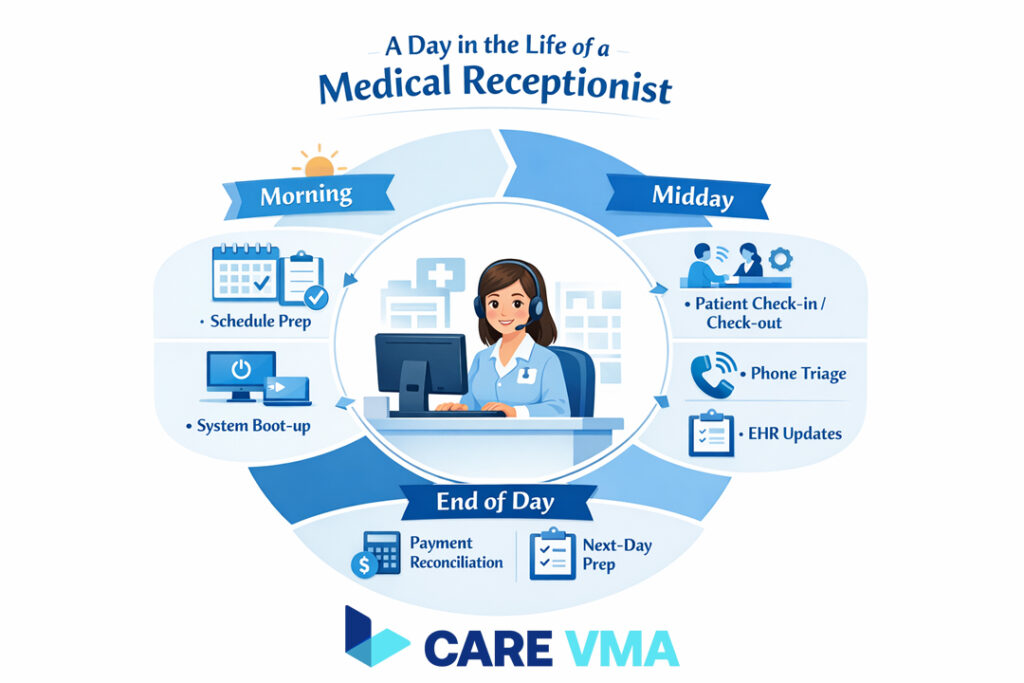
A medical receptionist’s day is a dynamic mix of patient interaction, administrative tasks, and financial duties. These responsibilities ensure the clinic operates efficiently and patients receive timely care.
Patient Management & Customer Service
- Greeting patients warmly and professionally, both in person and over the phone.
- Managing the patient check-in and check-out process efficiently.
- Calming anxious patients by providing clear information, managing expectations, and offering a reassuring presence.
Administration and Scheduling
- Scheduling, rescheduling, and canceling patient appointments using specialized software.
- Optimizing doctor and therapist schedules to maximize efficiency and minimize patient wait times.
- Answering multi-line phone systems, taking accurate messages, and making appointment reminder calls.
Medical Records and Data Management
- Creating, updating, and maintaining accurate electronic health records (EHR) for all patients.
- Ensuring the absolute confidentiality and security of patient data in compliance with privacy regulations.
- Processing and distributing correspondence, including emails, faxes, and medical record requests from other facilities.
Financial and Insurance Tasks
- Verifying patients’ insurance coverage and eligibility prior to their appointments.
- Collecting co-payments, deductibles, and any outstanding balances.
- Handling basic billing tasks and assisting with the processing of insurance claims.
Essential Skills for Success as a Medical Receptionist
To excel in this role, a candidate needs a balanced mix of technical proficiency and strong interpersonal abilities. These skills work together to create a competent and compassionate healthcare professional.
Hard Skills (Technical Abilities)
- Technological Proficiency: Expertise in using Electronic Health Records (EHR) systems, patient scheduling software, and billing applications is crucial for modern practice management.
- Medical Terminology: A foundational understanding of common medical terms is necessary for accurate communication and documentation.
- Typing Speed and Data Entry Accuracy: Fast and precise data entry is essential for maintaining error-free patient records.
- Multi-line Phone System Management: The ability to handle high call volumes efficiently and professionally is a core competency.
Soft Skills (Interpersonal Abilities)
- Communication and Empathy: The capacity to speak clearly, listen patiently, and show genuine understanding to patients who may be ill, in pain, or anxious.
- Organizational & Multitasking Skills: Juggling appointments, phone calls, and administrative tasks simultaneously in a fast-paced environment requires exceptional organizational skills.
- Attention to Detail: Precision is critical when scheduling appointments, entering patient data, and handling billing information to prevent errors that can impact patient care.
- Professionalism and Discretion: Building patient trust by maintaining a professional demeanor and upholding the strictest confidentiality with sensitive information.
- Problem-Solving: The ability to think on your feet to handle unexpected situations, such as scheduling conflicts or a distressed patient, is invaluable.
The Medical Receptionist in the Digital Age
The traditional front-desk role is evolving. Technology is reshaping how administrative tasks are handled, creating new opportunities for efficiency and career specialization. At Care VMA, we are at the forefront of this transformation.
The Evolving Role: From Front Desk to Virtual Services
Technology, particularly secure cloud-based EHR and communication platforms, now allows many core receptionist duties to be performed remotely. This shift has given rise to the Virtual Medical Assistant (VMA), a modern professional who provides administrative support from a remote location. This evolution not only offers greater flexibility but also represents a new, tech-focused career path within healthcare administration.
The Care VMA Advantage with Virtual Medical Assistants
Care VMA’s Virtual Medical Assistant Services are designed to help clinics and hospitals reduce their administrative burden, allowing their on-site staff to focus more on direct patient care. A VMA can seamlessly handle tasks like scheduling, appointment reminders, and insurance verification remotely. This hybrid approach streamlines operations significantly. For instance, with a VMA managing the phones and scheduling, clinics can reduce patient phone wait times by up to 40%, enhancing patient satisfaction and improving front-office workflow.
Practical Steps to Start Your Career as a Medical Receptionist
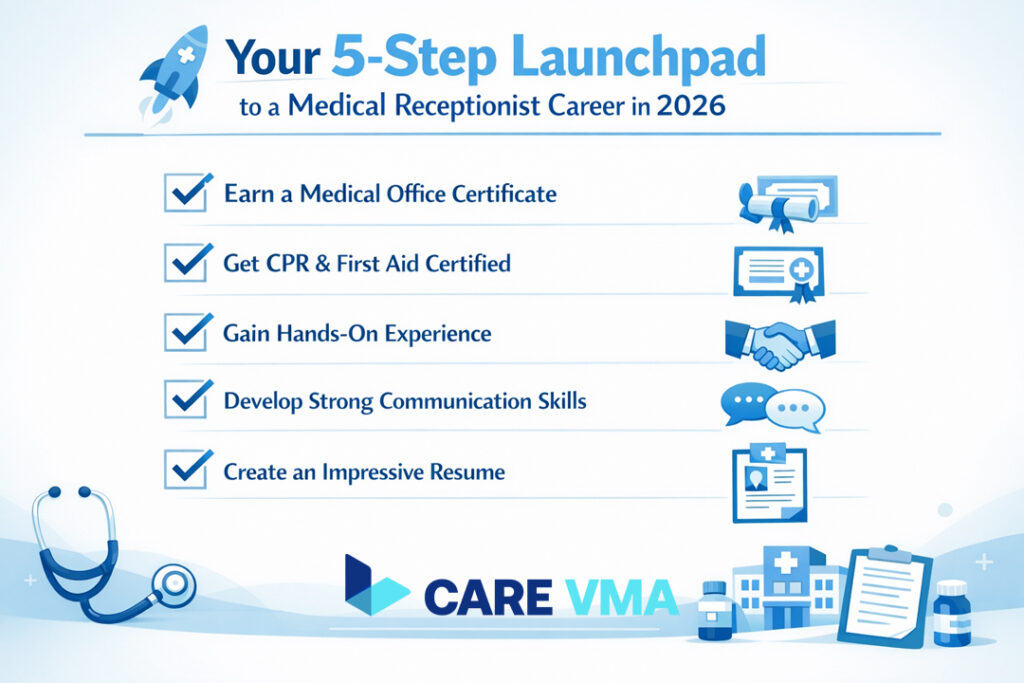
Beginning a career as a medical receptionist is an achievable goal with a clear, straightforward path. Here are five practical steps to get you started.
Step 1: Meet Basic Education Requirements
A high school diploma or GED is the standard minimum requirement. Coursework or a degree in office administration, communications, or a related field can provide a competitive advantage.
Step 2: Consider Professional Certification
While not always mandatory, a professional certification can make your resume stand out. Certifications like the Certified Medical Administrative Assistant (CMAA) from organizations such as the National Healthcareer Association demonstrate a commitment to the profession and a verified level of competence.
Step 3: Build Relevant Experience
Gain experience in roles that emphasize customer service, data entry, and administrative support. Positions in retail, hospitality, or general office administration can build a strong foundation of transferable skills. Volunteering at a local clinic or hospital is also an excellent way to gain exposure to the healthcare environment.
Step 4: Hone Your Communication and Empathy Skills
These soft skills are just as important as technical abilities. Practice active listening, clear communication, and putting yourself in others’ shoes. These skills are often developed through experience and are highly valued by employers.
Step 5: Prepare a CV Highlighting Key Skills
When crafting your resume, be sure to highlight your proficiency with any office software, your multitasking abilities, and any experience you have in customer-facing roles. Use specific examples to demonstrate your organizational skills and attention to detail.
FAQ (Frequently Asked Questions About a Medical Receptionist Career)
Do I need a medical background to become a medical receptionist?
A medical background is not required. While a basic understanding of medical terminology is very helpful, many healthcare facilities provide on-the-job training to teach you their specific systems and terminology. A strong administrative and customer service background is often more important.
What is the average salary for a medical receptionist?
Salaries can vary widely based on geographic location, the type of facility (e.g., a large hospital versus a small private practice), and your level of experience. It is a stable entry-level position that serves as an excellent gateway to the growing healthcare industry, with significant potential for career advancement.
What is the career path after being a medical receptionist?
The career path is robust and varied. With experience, you can advance to roles such as a Medical Office Manager, Patient Care Coordinator, or a Billing and Insurance Specialist. This role can also be a stepping stone toward higher-level healthcare administration positions or specialized roles in medical records management.
Conclusion & Next Steps
Becoming a medical receptionist is more than just an administrative job; it is a chance to be the empathetic and organized face of a healthcare service, playing a crucial role in every patient’s journey. By blending organizational prowess, technological fluency, and essential human skills like empathy, you can build a fulfilling and stable career that truly makes a difference. This role is fundamental to modern healthcare, ensuring that patient care is delivered smoothly and compassionately.
Ready to be part of the innovation that is shaping the future of healthcare? Explore career opportunities with Care VMA or learn how our Virtual Medical Assistant Services can help transform your practice by freeing up your team to focus on what matters most-patient care. Contact our team today to learn more.