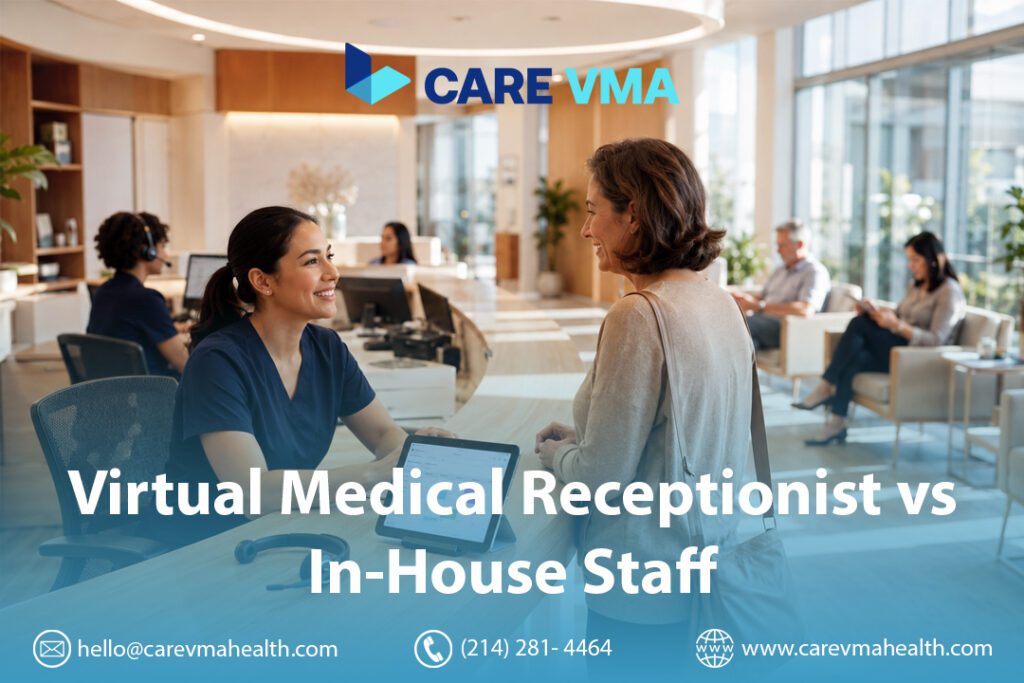
The landscape of US healthcare administration has shifted. In 2026, the traditional model of a fully on-site front desk is no longer just a management preference—it is a financial and operational risk. As medical practices face rising labor costs and the persistent challenges of the “Great Resignation,” the choice between a virtual medical receptionist vs in-house staff has become a pivotal decision for long-term practice viability.
The Hidden Burden of the Traditional Front Desk: Why In-House Staffing Is Reaching a Breaking Point
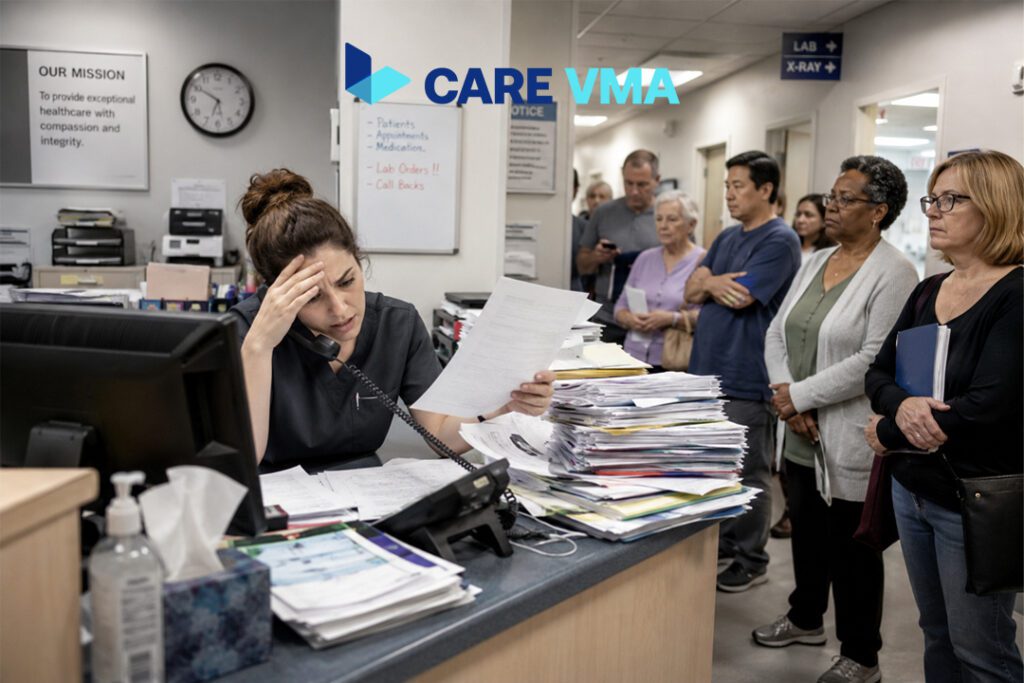
Traditional staffing models are buckling under the weight of administrative complexity. While having a physical presence at the front desk remains important, relying solely on on-site staff for high-volume tasks often leads to systemic inefficiency.
The “Silent Revenue Killer”: How Missed Calls Impact Your Bottom Line
Every missed call is a lost encounter. In a busy clinic, an on-site receptionist often has to choose between the patient standing at the window and the phone ringing on the desk. Data shows that 60% of patients who experience a missed call will not leave a voicemail; they simply call the next provider. This “silent revenue leakage” can cost a practice tens of thousands of dollars annually. To combat this, many offices are enhancing medical office efficiency with a virtual receptionist to ensure a 0% missed call rate.
The Great Resignation in Healthcare: The High Cost of Front-Desk Turnover
The administrative churn rate in healthcare is at an all-time high. The cost of recruiting, onboarding, and training a new medical receptionist—only for them to leave within six months—creates a cycle of instability. This constant turnover forces providers to spend more time on HR than on patient care, leading to significant front-desk burnout in medical clinics.
Virtual Medical Receptionist vs In-House Staff: A Direct Comparison for Practice Managers
Deciding the best path forward requires an objective look at the financial and operational metrics.
Financial Breakdown: Salary, Benefits, and Taxes vs. Fixed Monthly Rates
An in-house receptionist in the US involves much more than a base salary. You are responsible for payroll taxes, 401(k) contributions, health insurance premiums, and paid time off (PTO). In contrast, a Virtual Medical Receptionist through Care VMA operates on a fixed, predictable monthly rate. This eliminates the “hidden costs” of employment and allows for a 40-70% reduction in total administrative overhead.
Operational Scalability: Handling Peak Call Volumes Without Adding Headcount
If your practice sees a seasonal spike in patient volume, an in-house model requires you to hire and train another full-time employee—a slow and expensive process. A virtual solution allows you to scale your support instantly. Our virtual medical receptionist services act as an elastic extension of your team, absorbing peak volumes without the need for additional office space or hardware.
Training and Medical Literacy: Pre-Trained Experts vs. Continuous Onboarding
Most virtual assistants from Care VMA come pre-trained in medical terminology, EHR management, and HIPAA protocols. This removes the 4–8 week training lag common with local hires. You get an expert who is “ready-to-go” on day one, specialized in scheduling and patient intake.
Beyond the Price Tag: Navigating HIPAA Compliance and Data Security in Remote Operations
The most common “Fear” for Practice Managers is the security of patient data. However, modern remote operations often exceed the security standards of local offices.
Secure EMR/EHR Access: How Care VMA Integrates with Your Existing Systems
Our staff are trained to work directly within your existing EMR/EHR platforms (such as Epic, Athenahealth, or eClinicalWorks) via secure, encrypted VPNs. We don’t just “take messages”; we perform real-time data entry, ensuring your records are always up to date.
End-to-End Encryption and BAA: Ensuring Patient Privacy in Every Interaction
HIPAA compliance and data security are the foundation of Care VMA. We sign a Business Associate Agreement (BAA) with every client, and our virtual staff work in high-security environments with strictly enforced data privacy policies, ensuring every patient interaction is protected by end-to-end encryption.
The Hybrid Excellence Model: Why You Don’t Have to Choose One Over the Other
The most successful practices in 2026 utilize a Hybrid Model. This isn’t about replacing your local team; it’s about optimizing them.
- Optimizing In-Office Staff for High-Touch Patient Care: Let your on-site medical assistants focus on rooming patients, assisting with procedures, and providing the “personal touch” that only a physical presence can offer.
- Offloading High-Volume Administrative Tasks to a Virtual Receptionist: Move the high-stress, high-volume tasks—like insurance verification and prior authorization—to your virtual team.
This hybrid team culture creates a balanced environment where burnout is minimized and patient satisfaction scores skyrocket.
Zero-Friction Workflow: How a Virtual Medical Receptionist Hands Off Tasks to Your On-Site Team
A common concern is the “hand-off.” How does a remote person communicate with an on-site nurse?
- Workflow Mapping: The virtual receptionist receives a call, identifies the patient’s need, and updates the EMR in real-time.
- Real-Time Communication: Using secure internal messaging (like Slack or EMR chats), the virtual assistant alerts the on-site team of urgent patient arrivals or triage needs.
- The Result: The on-site team sees a clean, organized dashboard with no “phone tag” interruptions.
Featured Snippet: Quick Comparison Table
| Feature | In-House Staff | Virtual Medical Receptionist (Care VMA) |
|---|---|---|
| Cost Efficiency | High overhead (401k, insurance, taxes) | Fixed, predictable monthly rate (40-70% savings) |
| Availability | Limited to office hours & sick days | Consistent coverage, no downtime, no PTO gaps |
| Specialization | Multi-tasking stress (Phones vs Patients) | Dedicated focus on scheduling & billing |
| Onboarding | 4–8 weeks of training | Ready-to-go with HIPAA certification |
Use Case: Reducing Revenue Leakage in a Specialist Clinic
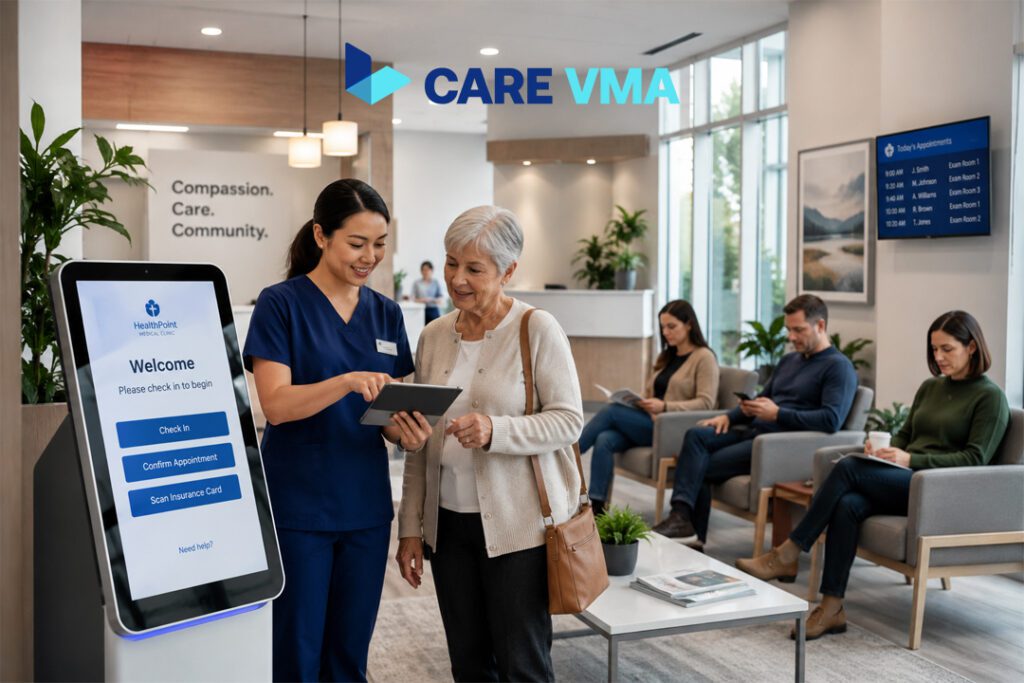
The Scenario: Managing High-Volume Referrals and Insurance Verifications
A multi-provider Cardiology clinic was struggling with a 25% missed call rate and a backlog of insurance verifications. Their on-site staff was so busy answering basic questions that high-value referral faxes sat unaddressed for days.
The Result: Increasing Appointment Fill Rates by 30% via Proactive Recall
By integrating a Care VMA virtual receptionist, the clinic was able to move all incoming calls and insurance checks off-site. The VMA also implemented a “Proactive Recall” system, calling patients who were due for follow-ups. Within three months, the clinic saw a 30% increase in appointment fill rates and a significant reduction in physician burnout.
Frequently Asked Questions
Can a virtual medical receptionist access our EMR/EHR securely?
Yes. Our assistants access your systems via encrypted VPNs and follow strict HIPAA protocols, ensuring all data entry happens directly in your secure environment.
How does a virtual assistant handle an escalated or angry patient on the phone?
Our VMAs are trained in de-escalation techniques and medical triage. If a call requires immediate clinical intervention, they follow a pre-defined protocol to warm-transfer the patient to your on-site medical staff.
What is the actual monthly savings compared to a full-time US-based medical receptionist?
When factoring in salary, taxes, benefits, and office space, the average US medical receptionist costs $4,500–$6,000/month. A Care VMA solution typically costs a fraction of that, often saving practices over $3,000 per month per headcount.
Will my patients notice they are speaking with a virtual assistant?
Our VMAs are highly professional and integrate seamlessly into your brand. Most patients simply perceive them as a dedicated member of your “front desk team” who answers the phone promptly and knows their history.
Conclusion: Auditing Your Practice Efficiency
The debate between a virtual medical receptionist vs in-house staff is no longer about “remote vs local.” It is about efficiency vs stagnation. By adopting a hybrid model, you empower your on-site team to focus on the patient in front of them while ensuring your digital front door is always open.
Ready to stop the revenue leakage and stabilize your team?