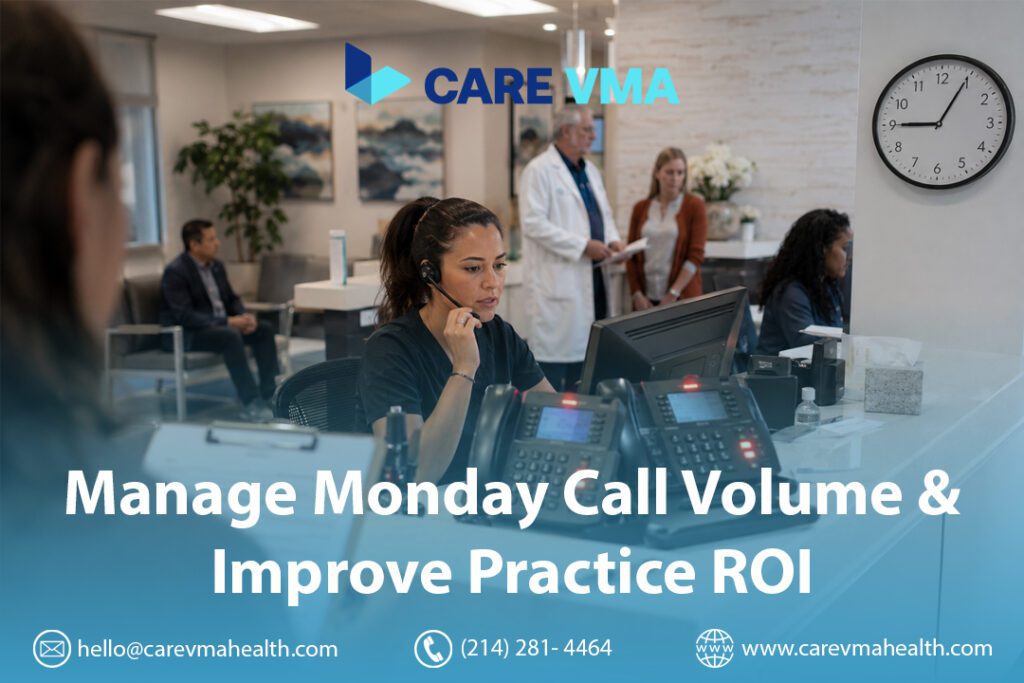
Every Monday at 8:00 AM, a predictable chaos descends upon private practices across the country. The phones begin to ring incessantly, creating a “Front-Desk Tug-of-War” where staff must choose between the patient standing at the window and the three lines blinking on hold. For many providers, a 90-second hold time is considered “normal” during these peaks, but in reality, it is a silent revenue killer.
Beyond the Busy Signal: The Reality of Monday Morning Call Surges
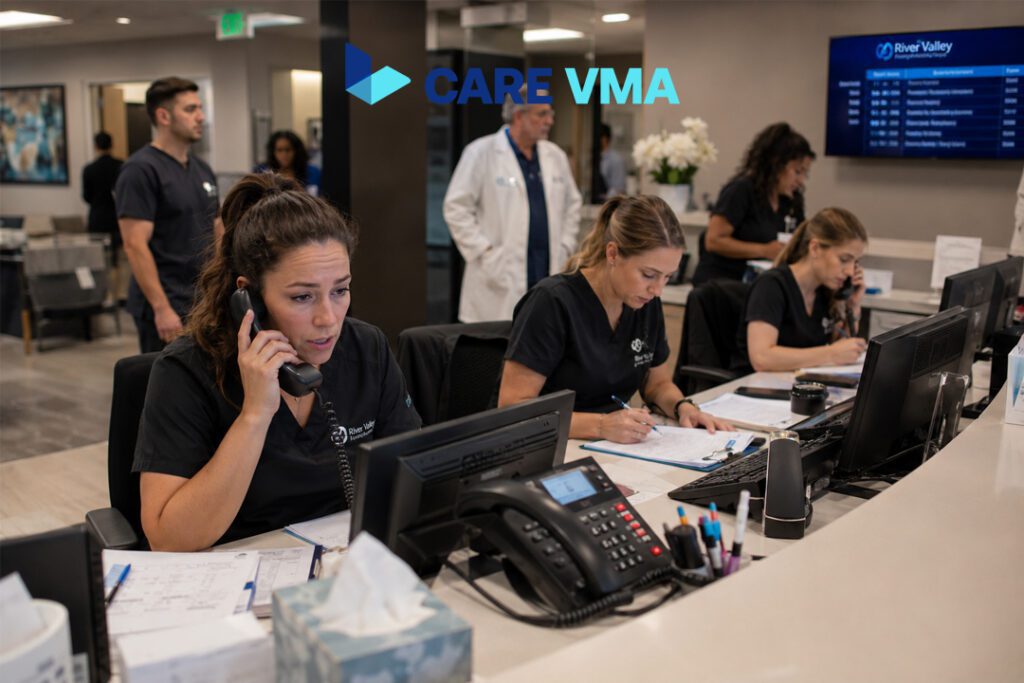
The Monday morning surge is not just an administrative hurdle; it is a catalyst for operational failure. When your team is overwhelmed, they experience “operational fatigue,” leading to higher front-desk burnout in medical clinics.
From the patient perspective, the impact is psychological. After a weekend of worrying about a health concern, being placed on an immediate hold creates a sense of neglect. This friction at the very first point of contact drives patients to seek alternatives where they feel prioritized.
The Hidden Cost of Patient Leakage: Calculating the ROI of Every Missed Call
In healthcare, the Call Abandonment Rate refers to the percentage of patients who hang up before reaching a staff member. Industry data suggests that a rate above 5% signals significant revenue leakage.
If your practice misses just five “new patient” calls during the Monday rush, and the lifetime value of a patient is estimated at $1,500, you have effectively lost $7,500 in potential revenue before noon. This missed patient calls in medical practice problem doesn’t just affect your immediate schedule; it erodes your brand. A loyal patient who hits a busy signal on Monday is three times more likely to visit the urgent care clinic down the street.
The Monday Bottleneck: Why Traditional Staffing Fails During Peak Hours
Most practices attempt to solve the “Monday Mayhem” by hiring more full-time staff. However, hiring a local receptionist to solve a problem that only lasts four hours a week is a financial drain.
Furthermore, the average cost of missed calls in healthcare is often lower than the overhead of a full-time employee’s benefits, office space, and equipment. Traditional answering services also fail here because they are “passive”—they take messages but cannot schedule appointments or perform triage, leaving the work for your already-burdened staff to handle later.
Elastic Staffing: How a Care VMA® Filters Your Monday Morning Call Overflow
The solution lies in Elastic Staffing. Instead of over-hiring, practices are now integrating a Virtual Medical Receptionist as an “overflow filter.”
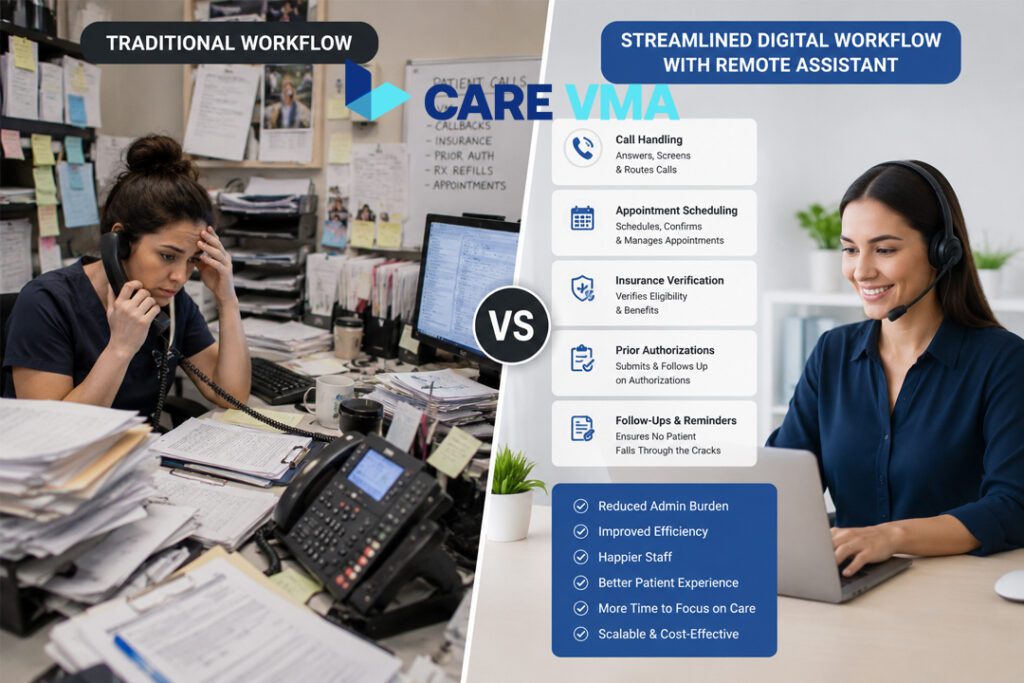
A Care VMA® (Virtual Medical Assistant) doesn’t replace your front desk; they activate only when your local lines reach capacity. Unlike a generic call center, a Care VMA® has direct access to your EMR (Athena, eClinicalWorks, Epic, etc.). This allows them to:
- Perform real-time appointment scheduling.
- Conduct instant insurance verification.
- Update patient demographics immediately.
Case Study: Monday Morning Workflow Transformation (Before vs. After)
The Old Workflow: “The Monday Mayhem”
- Wait Times: Exceeding 120 seconds.
- Abandonment Rate: 12-15%.
- Staff Morale: Low; clinical staff often pulled away from patients to help with phones.
The Care VMA Workflow: “The Filtered Intake”
- Wait Times: Under 20 seconds.
- Capture Rate: 100%.
- Staff Morale: High; local staff focuses entirely on the patients physically present in the office.
- The Outcome: By utilizing a Virtual Medical Assistant, the practice recaptured an average of 12 new patient appointments per month that were previously lost to abandoned calls.
Specialized Handling: Insurance Verification & Triage Under Pressure
Monday morning calls are rarely simple. They often involve complex insurance queries or urgent symptoms that require immediate triage.
A specialized Care VMA® is trained in Urgency Sorting. They ensure that acute patient needs are immediately escalated to the on-site clinical team, while routine follow-ups and billing questions are handled entirely in the cloud. Most importantly, every interaction is HIPAA-compliant, ensuring 100% data security even during high-volume periods.
The Financial Advantage: Comparing Local Staffing vs Virtual Surge Support
When comparing virtual medical receptionist vs. in-house staff, the financial metrics are clear:
- 60% Cost Savings: No payroll taxes, health insurance, or 401k contributions for the virtual support.
- Zero Overhead: No need for extra desks, computers, or phone hardware.
- Scalability: You pay for the support you need during the surge, rather than a flat salary for idle time on a slow Tuesday afternoon.
FAQ: Managing High Call Volume in Private Practice
How do I manage the Monday morning rush in my medical practice?
Implementing an elastic staffing model with a Care VMA® to handle overflow ensures that no patient is left on hold while your in-house team focuses on check-ins.
Is a VMA cheaper than hiring extra front desk staff for peak hours?
Yes. VMAs eliminate the costs of office space, benefits, and equipment, typically resulting in a 60% reduction in administrative overhead.
Can a virtual assistant schedule appointments directly in my EMR?
Absolutely. Specialized Care VMAs are trained to work within your specific EMR to book appointments and verify insurance in real-time, rather than just taking a message.
How can I reduce call abandonment rates in my clinic?
By using a virtual intake team as a “first-responder,” you can ensure every call is answered within three rings, preventing patients from hanging up and calling competitors.
What are the best ways to handle high incoming call volume in healthcare?
The gold standard is a combination of advanced VOIP routing and a HIPAA-compliant virtual team that provides “surge support” specifically during peak hours.
Ready to reclaim your Monday mornings? Stop losing patients to the hold button. Schedule a 15-Minute Workflow Demo with Care VMA today and discover how our surge-support model can protect your practice’s ROI.