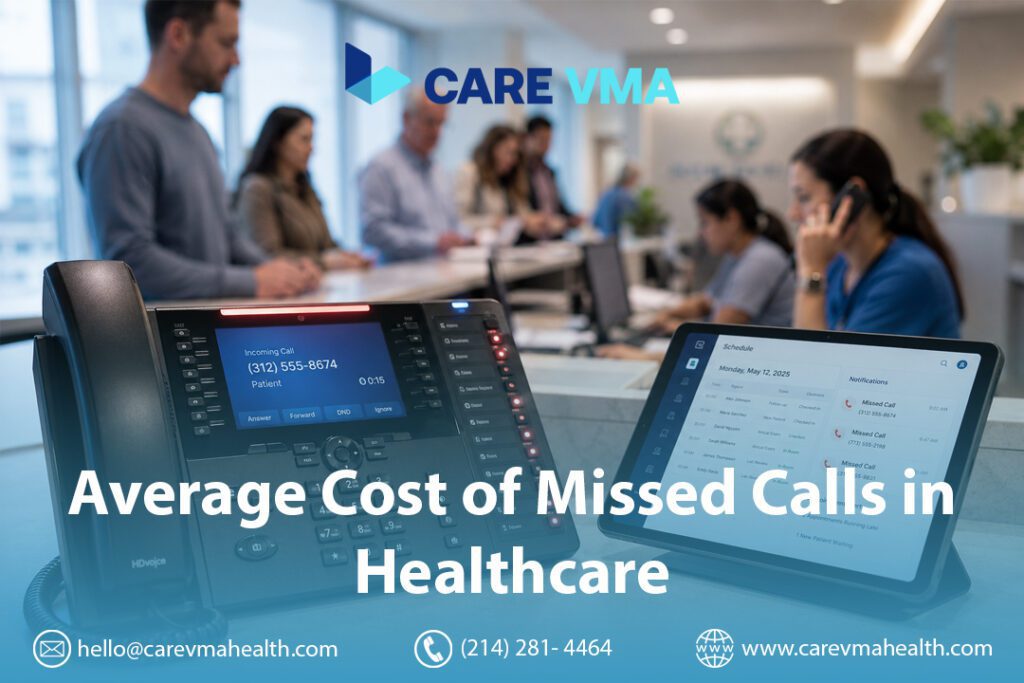
Every time your office phone rings and goes to voicemail, your practice isn’t just missing a message—it’s losing a high-value asset. In the competitive landscape of US healthcare, a missed call is the most direct form of revenue leakage. While many providers focus on clinical outcomes, the administrative “front door” is often where growth is quietly strangled.
The $30,000 Silent Leak: Calculating the True Cost of Missed Patient Leads
The financial impact of a missed call is far higher than most practice owners realize. When a prospective patient calls a clinic, they are usually in a “high-intent” phase. If they reach a voicemail, the majority will not leave a message; they will simply click the next listing on Google.
Why Traditional Voicemails Are Killing Your Patient Lifetime Value (LTV)
Patient Lifetime Value (LTV) represents the total revenue a patient generates over their relationship with your practice. When you miss an initial inquiry, you aren’t just losing a $150 consultation fee; you are losing the thousands of dollars in follow-ups, procedures, and referrals that patient would have provided over the years. Missed patient calls in a medical practice create a compounding deficit that stunts long-term scaling.
The Marketing Paradox: Wasting Ad Spend on Calls Your Staff Can’t Answer
Many practices invest heavily in SEO and PPC to drive leads. However, if your internal team is overwhelmed, you are essentially paying to send leads to your competitors. This marketing paradox—spending money to generate calls that go unanswered—is a primary driver of high Customer Acquisition Costs (CAC).
What is the Industry Standard for Call Abandonment in Healthcare?
In the US healthcare market, the industry standard for call abandonment should remain below 5%. However, many busy private practices see rates as high as 30%. With the average new patient lead valued between $100 and $250 (depending on specialty), a practice missing just 10 calls a month is facing a “hidden” revenue leakage of approximately $12,000 to $30,000 annually.
Beyond the Answering Service: Why “Just Taking a Message” Isn’t Enough for Modern Clinics
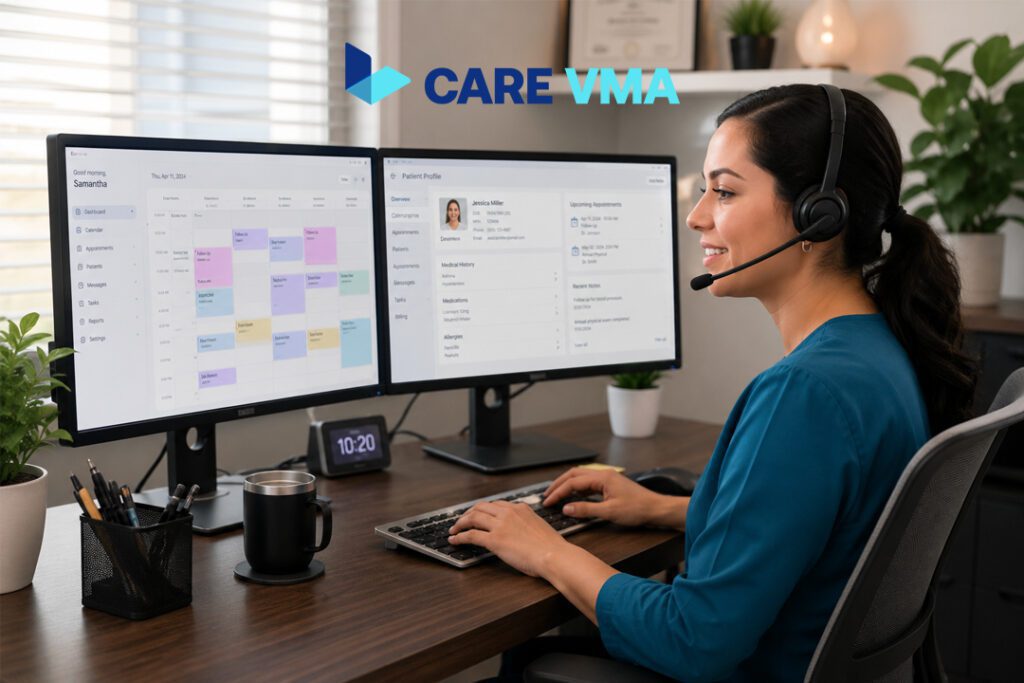
Many practices try to solve this with a traditional answering service. The problem? These services are passive. They take a name and number, creating a “callback” task for your already stressed staff. This delay in response allows the lead to go cold.
The Complexity of Patient Intake: Why Your Front Desk is Burned Out
The modern front desk is responsible for in-person check-ins, payment collection, and phone management. This multitasking leads to front desk burnout in medical clinics, which inevitably results in shorter tempers and more missed calls.
To solve this, proactive practices are transitioning to a Virtual Medical Receptionist. Unlike an answering service, a virtual receptionist acts as a live extension of your team, capable of handling complex intake workflows.
Clinical Integration vs Basic Dispatch: The Power of Real-Time EMR Scheduling
The “Revenue Protection” model relies on closing the loop immediately. A dedicated Virtual Medical Assistant (VMA) from Care VMA does not just take messages; they log directly into your EMR (Athena, eClinicalWorks, ModMed) to verify insurance and book appointments in real-time. This eliminates the “callback lag” and secures the patient before they call the clinic down the street.
The Local SEO Connection: How Rapid Phone Response Impacts Your Google Ranking
There is a direct correlation between your phone response and your digital visibility. Google’s algorithm prioritizes user experience, and “responsiveness” is a major factor in the “Local Pack” rankings.
Why “No One Answers the Phone” Is the #1 Driver of 1-Star Google Reviews
Analyze any 1-star review for a high-performing clinic, and you will likely see a common theme: “I called five times and no one answered.” These reviews destroy your reputation and lower your ranking, making it even harder to attract new leads.
Google Business Profile Visibility: How Response Latency Affects Your “Local Pack” Standing
If patients frequently “bounce” from your listing back to the search results after a short, unanswered call, Google perceives your practice as less relevant. High response latency signals poor service, potentially dropping you from the top 3 spots in local searches.
The Monday Morning Rush: How a Care VMA Rescues 5+ High-Value Appointments in a Single Shift
The Scenario: It’s 8:30 AM on Monday. Your in-house receptionist is checking in a line of three patients and handling a co-pay dispute. The phone rings four times.
- Before VMA: The calls go to a “hang-up” loop or a voicemail that won’t be checked until lunch. Three potential new patient surgeries are lost to the competitor.
- After VMA: The calls are routed to a Care VMA. While your local staff handles the patients in the room, the VMA triages the new callers, completes insurance verification, and books them directly into the EMR. By 10:00 AM, the VMA has secured five appointments that would have otherwise been missed revenue.
Comparing the Cost: Local Front Desk Staff vs HIPAA-Compliant Virtual Medical Assistants
Hiring local staff in the US is increasingly expensive due to rising wages and benefit expectations. When you compare a virtual medical assistant vs. in-house staff, the financial benefit is clear.
- Eliminating Overhead: With a VMA, there are no payroll taxes, health insurance premiums, 400k matches, or office space requirements.
- Revenue Protection ROI: A full-time VMA often costs less than one or two mid-level procedures. If your VMA saves just two surgeries a month, the service has paid for itself entirely, with every subsequent booking being pure profit.
Ensuring Compliance and Trust in the US Healthcare System
Security is non-negotiable. Care VMA ensures that your “Revenue Protection” doesn’t come at the cost of a data breach.
HIPAA-Certified Workflows: How We Secure Patient PHI Remotely
Every Care VMA undergoes rigorous HIPAA compliance and data security training. We utilize encrypted connections and secure VDI environments to ensure that Patient Protected Health Information (PHI) never leaves your secure ecosystem.
Value-Based Care: Improving HCAHPS and Patient Satisfaction Scores Through Better Communication
In the era of value-based care, communication is a metric. Improving your “first-ring” response rate directly boosts patient satisfaction scores, which can impact reimbursement levels and contract renewals with payers.
Stop the Leak: Get Your Free Practice Revenue Leakage Audit
Don’t let your marketing budget go to waste and your staff burn out. Protect your revenue by ensuring every call is answered by a trained medical professional.
Schedule Your Free Revenue Audit & Demo with Care VMA Today
FAQ: Questions Decision-Makers Are Asking About Call Handling
How much revenue is my practice losing to missed calls?
Most practices lose 20-30% of new inquiries. By multiplying your average new patient value by the number of missed calls per week, you can identify the “hidden” leakage. Our VMA solution typically pays for itself by capturing just 2-3 additional patients per month.
Should I hire a traditional answering service or a Virtual Medical Assistant (VMA)?
Answering services are passive. A Care VMA is proactive; they are trained in medical terminology, can verify insurance, and book appointments directly into your EMR, closing the lead instantly.
Can a VMA access my EMR to book appointments directly?
Yes. Care VMAs operate as a remote extension of your clinical team. Through secure, encrypted, and HIPAA-compliant connections, they log into your specific EMR/EHR system to manage schedules in real-time.
How do missed calls impact my practice’s Google Reviews?
The most common complaint in negative medical reviews is the inability to reach the office. Improving your “first-ring” response rate directly correlates with higher patient satisfaction scores and a stronger online reputation.
Is the VMA trained in my specific medical specialty?
Care VMAs are vetted for their medical background. Whether you are in Plastic Surgery, Dermatology, or General Practice, we provide specialized training on your specific workflow and triage protocols.