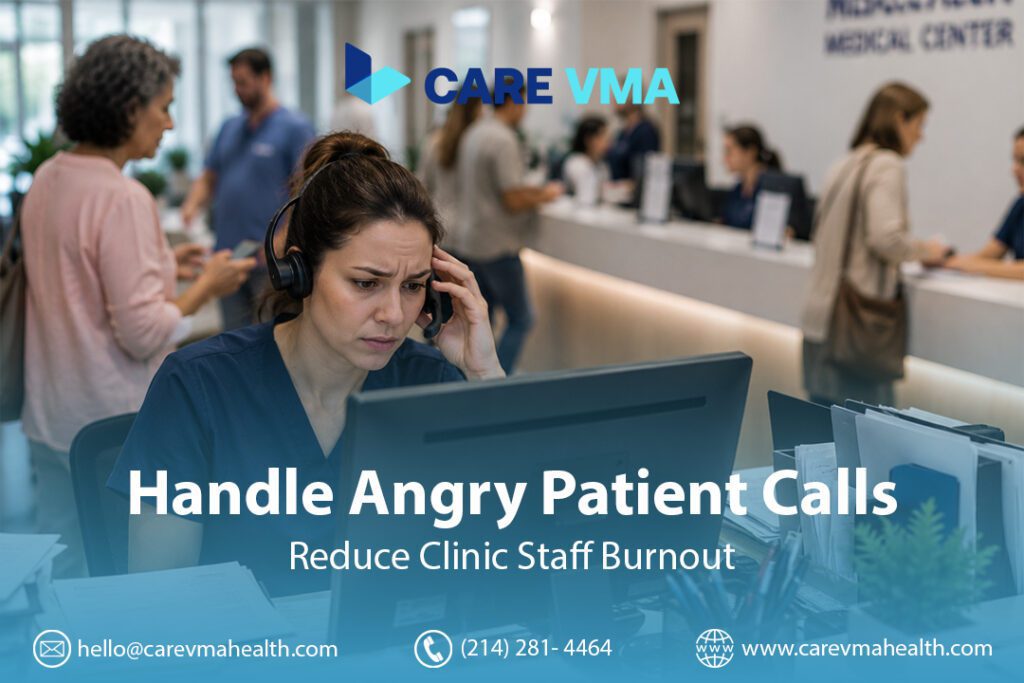
In the fast-paced environment of a modern medical practice, the front desk is often the “shock absorber” for patient frustration. However, when the volume of high-conflict calls increases, even the best-trained teams begin to crack. For many practice managers, the solution has always been “more training.” But as turnover rates climb, it is becoming clear that the problem isn’t a lack of skill—it’s a lack of a structural buffer.
The Silent Cost of Conflict: How Angry Patient Calls Drive Front-Desk Burnout and Physician Stress
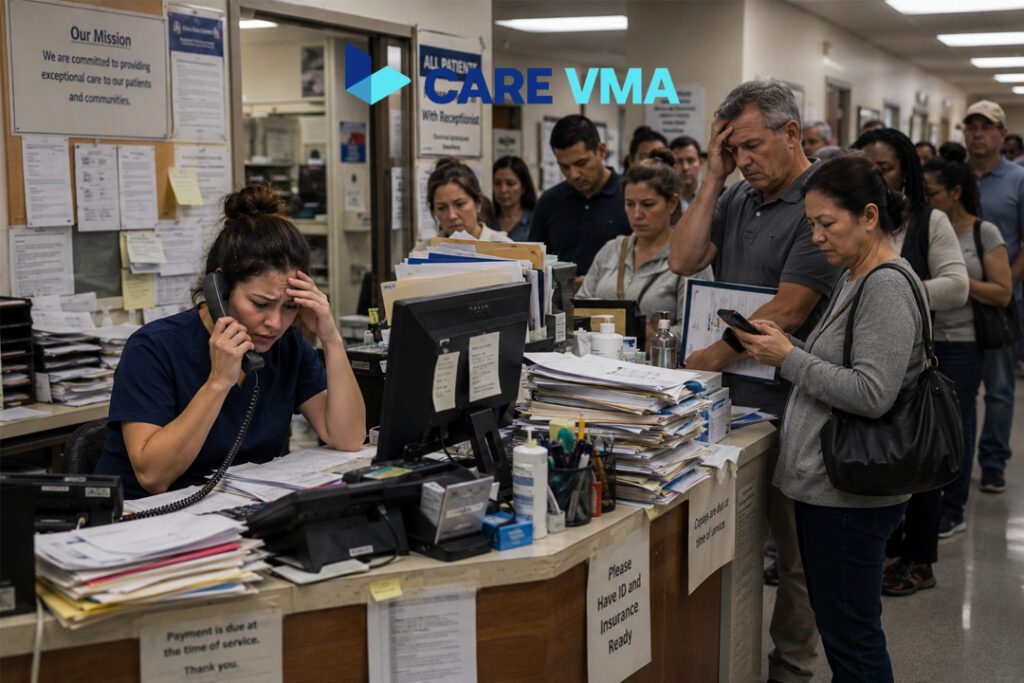
Every “difficult” phone call carries a hidden price tag. When a patient calls in an outrage over a billing error or a delayed appointment, the emotional labor required to de-escalate the situation drains the front-desk staff’s productivity for the rest of the hour.
Why “Not Taking It Personally” is an Unrealistic Strategy for In-Office Staff
In-office staff are juggling physical patient check-ins, HIPAA-sensitive paperwork, and physician requests simultaneously. Asking them to maintain a “Zen-like” state while being verbally abused on the phone is a recipe for medical front desk staff burnout. The proximity to the physical stress of the clinic makes it nearly impossible for staff not to carry that emotional weight throughout their shift.
The Correlation Between High-Conflict Calls and Staff Turnover Rates
High-conflict calls are a primary driver of the “revolving door” at the front desk. When staff feel unprotected from verbal abuse, they seek employment in less volatile industries. This turnover leads to increased hiring costs and disrupted continuity of care, which ultimately impacts the physician’s stress levels and the practice’s bottom line.
5 Professional Steps for Patient De-escalation in a Medical Setting
While systemic changes are necessary, your team still needs immediate tools to manage conflict. Here is a professional guide to de-escalation:
- Maintain a Neutral Tone: Prevent “emotional mirroring.” If the patient gets louder, lower your volume and slow your tempo to keep the situation from escalating.
- Active Listening Without Interruption: Allow the patient to vent fully. Often, the “outrage” is a mask for fear or pain. Identify the core issue before responding.
- Validate the Frustration: Use HIPAA-compliant empathy phrases. For example: “I understand why this delay in your results is frustrating; let me see how I can expedite this for you.”
- Shift to Solution-Oriented Language: Transition from the problem to actionable next steps. Avoid saying “I can’t”; instead, say “Here is what I can do right now.”
- Systematic Documentation: Record the incident for quality assurance. This protects the practice legally and helps identify recurring service gaps.
The Complexity Gap: Why Traditional Conflict Resolution Scripts Fail in a Busy Clinic Environment
Many practices provide their teams with scripts, but scripts fail when the environment is chaotic.
The Multitasking Trap: Managing the Front Desk vs. Handling Emotional Labor
A receptionist cannot effectively practice deep empathy while a line of five patients is staring at them in the waiting room. This “complexity gap” is where mistakes happen. When staff are rushed, they sound “jutek” or dismissive, which only fuels the patient’s anger. To solve this, practices are increasingly looking toward physician burnout solutions that involve redistributing the administrative load.
Legal and Compliance Risks: HIPAA Sensitivity During Heated Interactions
In the heat of a conflict, staff may inadvertently breach HIPAA protocols by speaking too loudly about patient details in a crowded waiting area. Handling these calls in a private, remote environment ensures that confidentiality remains the top priority.
A Strategic Shift: Using a Virtual Medical Assistant (VMA) as a Professional Neutral Buffer
The most effective way to handle angry patients is to remove the emotional burden from your local team entirely. This is where a Virtual Medical Receptionist from Care VMA changes the dynamic.
The “Buffer Concept”: Removing the Emotional Burden from Your Local Team
A VMA acts as a professional neutral buffer. Because they are not physically in the clinic’s “war zone,” they can maintain a calm, objective perspective. They have the dedicated time to listen to a patient’s complaint without the distraction of a ringing door or a waiting patient, ensuring the patient feels heard and valued.
Objective Resolution: How Remote Professionals Maintain Calm Under Pressure
Our VMAs are specifically trained in healthcare-specific conflict resolution. By outsourcing the front desk, you ensure that the person answering the phone is a specialist in communication, not a multitasker trying to survive the day.
Use Case: Resolving High-Conflict Scheduling Errors Without Disrupting In-Office Care
Scenario: The “Double-Booked” Outrage at Peak Hours It’s 10:00 AM on a Monday. A patient calls, furious because they were double-booked and have been waiting for 45 minutes.
- The In-Office Workflow: The local receptionist is overwhelmed, gives a short answer, and the patient hangs up to write a 1-star Google review.
- The Care VMA Workflow: The call is routed to a Virtual Medical Assistant. The VMA listens, validates the patient’s time, checks the EMR in real-time, coordinates with the back office via secure chat, and offers an immediate solution (such as a telehealth bridge or a priority slot).
The result? The patient is de-escalated, and the in-office staff never had to stop assisting the patients physically present in the clinic. This is how you boost patient trust while cutting wait times.
Business Impact: Improving HCAHPS Scores and Protecting Your Clinic’s Online Reputation
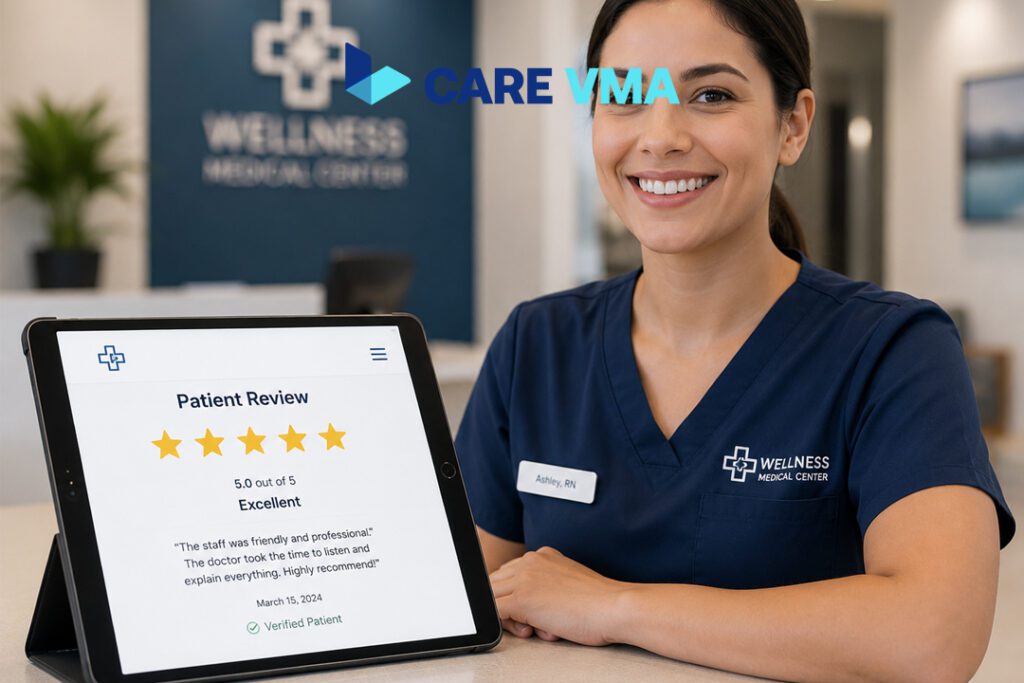
In the US healthcare market, patient satisfaction isn’t just about ethics—it’s about revenue. High HCAHPS scores and positive online reviews are critical for insurance reimbursements and new patient acquisition.
Preventing “Jutek” Staff Reviews by Outsourcing First-Response Communication
Most negative reviews aren’t about the doctor; they are about the “rude” staff on the phone. By using a Care VMA, you ensure that every “first response” is handled with professional courtesy, protecting your clinic’s online reputation.
The ROI of De-escalation: Protecting Revenue through Patient Retention
Replacing a front-desk staff member costs an average of $4,000 to $7,000 in recruiting and training. By reducing the emotional stress on your team through a VMA buffer, you protect your staff’s mental health, reduce turnover, and retain loyal patients who would otherwise leave due to poor communication.
Trust & Security: HIPAA-Compliant Conflict Management by Care VMA Professionals
All Care VMA professionals undergo rigorous training in HIPAA-compliant communication. We ensure that even the most heated interactions are documented securely and handled within the strict privacy frameworks required by law.
Ready to protect your staff and your reputation? Book a Consultation with Care VMA today to see how our Virtual Medical Assistants can handle the hard conversations for you.
FAQ: Strategic Conflict Resolution for Medical Practices
How to protect clinical staff from verbal abuse over the phone?
The most effective way is to implement a “VMA Buffer.” By routing initial calls and complaints through a remote professional, your in-office team is shielded from the direct emotional impact of verbal abuse.
Can a virtual medical assistant handle sensitive patient complaints?
Yes. Care VMAs are trained in medical etiquette and HIPAA compliance, allowing them to document and resolve sensitive complaints with a level of focus and professionalism that busy in-office staff often cannot provide.
Does outsourcing phone calls improve patient satisfaction scores?
Absolutely. By reducing hold times and ensuring that every patient speaks to a calm, dedicated professional, clinics consistently see improvements in HCAHPS scores and online review ratings.
What is the ROI of using a VMA for patient communication?
The ROI is realized through reduced staff turnover costs, increased patient retention, and the prevention of negative online reviews that deter new patients.
How to reduce front-desk burnout in a busy medical clinic?
Shift the burden of high-volume phone communication to a Virtual Medical Receptionist. This allows your local team to focus on face-to-face patient care, which is less emotionally draining than handling constant phone conflicts.