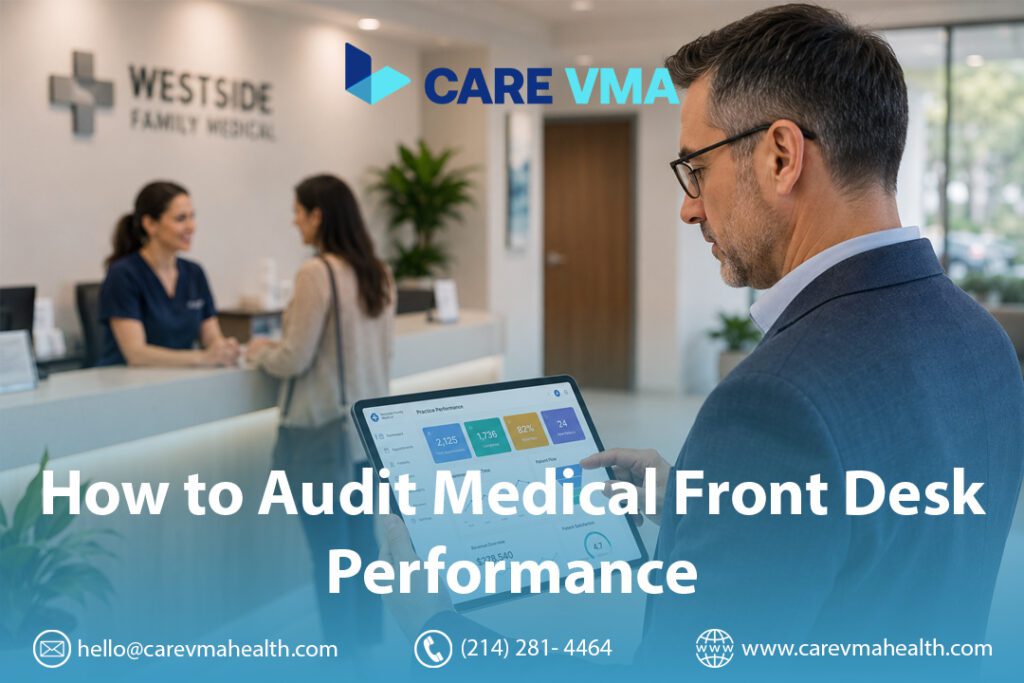
For many healthcare practice managers, the front desk is a “black box.” You know patients are coming in and claims are being filed, but the nuances of what happens at the first point of contact often remain hidden until a financial crisis occurs. Learning how to audit medical front desk performance is not just about catching mistakes; it is about securing your revenue cycle from the very beginning.
Beyond the Surface: Why Auditing Your Front Office is Critical for Revenue Retention
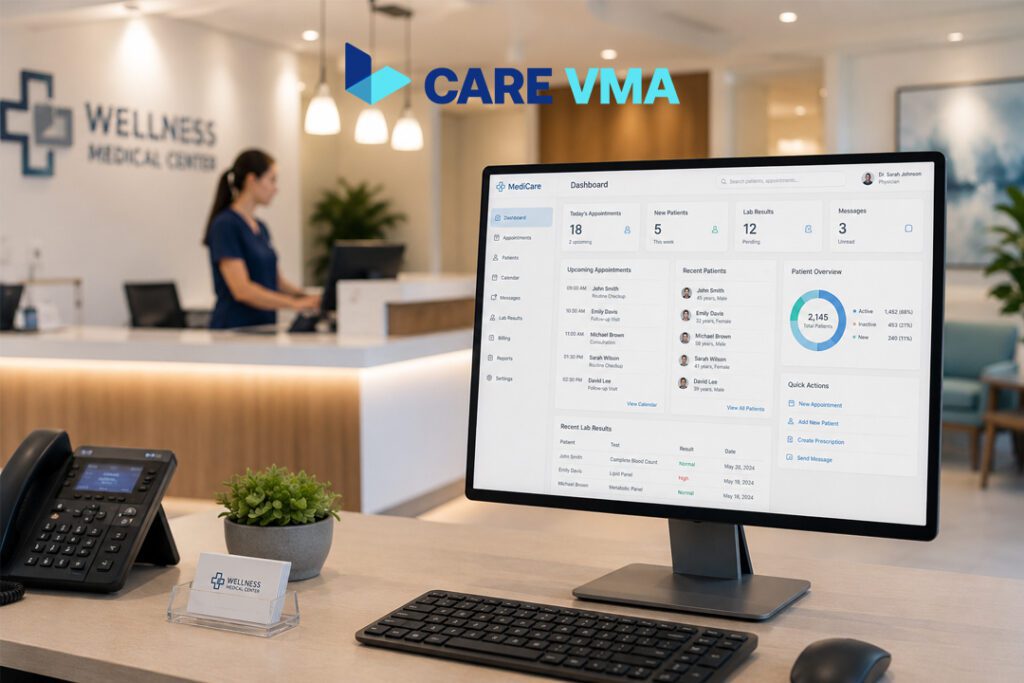
A medical practice’s financial health is won or lost at the front desk. While clinical care is the heart of the practice, the front office is the gatekeeper of the Revenue Cycle Management (RCM).
Identifying Revenue Leakage in Eligibility Verification
One of the most common findings in a front desk audit is “clean claim” failure due to improper insurance verification. If your staff isn’t verifying active coverage for every single encounter, you are essentially providing free care. Auditing helps identify if staff are simply “clicking through” the EMR or actually confirming the insurance verification and prior authorization requirements.
The Cost of Poor Patient UX: Tracking Phone Etiquette and Wait Times
Efficiency isn’t just about data; it’s about the patient experience. Long hold times or a dismissive tone on the phone leads to appointment cancellations. High average patient hold times are often a leading indicator that your front office is overwhelmed, necessitating a structural change rather than just a reprimand.
HIPAA Compliance Risks at the First Point of Contact
Auditing ensures that your staff isn’t inadvertently violating privacy laws. From leaving patient charts visible to discussing PHI (Protected Health Information) within earshot of the waiting room, the front desk is a high-risk zone for HIPAA compliance.
5 Essential Steps to Conduct a Comprehensive Medical Front Desk Audit
To get an accurate picture of your practice’s health, follow this structured blueprint for your next audit:
- Analyze Insurance Eligibility Accuracy: Randomly select 50 patient encounters from the last month. Cross-reference the EMR logs to see if real-time verification was performed at least 24–48 hours before the appointment.
- Evaluate Copay Collection Rates: Compare your daily schedule against your point-of-service collections. If the “Amount Owed” column doesn’t match the “Amount Collected” column for 95% of patients, you have a collection leak.
- Perform Mystery Calling: Call your own office as a “new patient” with a complex insurance question (e.g., an out-of-network PPO). Assess the staff’s ability to handle the query, their wait times, and their tone.
- Audit EMR/EHR Data Entry: Review demographic entries. Missing zip codes, misspelled names, or incorrect primary care physician (PCP) info are the “small” errors that lead to massive claim denials.
- Review Patient Check-in Efficiency: Use your EMR timestamps to measure the average “door-to-room” time. If patients are sitting in the waiting room for more than 15 minutes after their scheduled time, your check-in workflow is likely the bottleneck.
For a deeper dive into improving these metrics, see our guide on clinic workflow optimization.
The Administrative Trap: Why Auditing Often Fails to Solve High Staff Turnover
The traditional cycle in US healthcare management is: Audit, find errors, train the staff, and then watch that staff resign six months later.
The Audit-Train-Resign Cycle in US Healthcare
The labor crisis in healthcare has made medical front desk staff burnout an epidemic. When you audit an overworked receptionist and point out their mistakes, it often increases their stress levels, leading to attrition. You end up back at square one, hiring and training someone new.
Why Manual Audits Increase Practice Manager Burnout
Constantly monitoring every phone call and data entry point is unsustainable for a Practice Manager. The goal should be to build a system that is “audit-proof” by design, rather than one that requires constant manual oversight.
Bridging the Gap: Integrating Virtual Medical Assistants for an “Audit-Ready” Workflow
The most effective way to pass an audit is to use a team that is already trained to hit 100% accuracy. This is where a Virtual Medical Assistant (VMA) becomes a strategic asset.
- How Care VMA Eliminates Common Errors: Our VMAs specialize in insurance verification, ensuring that eligibility is confirmed before the patient ever walks through the door. Because they operate with dedicated SOPs, the “human error” factor in data entry is drastically reduced.
- Scaling Efficiency Without Overhead: Instead of hiring a new on-site employee (with the associated taxes and benefits costs), a Virtual Medical Receptionist handles the heavy lifting of scheduling and billing prep remotely.
Use Case: Transforming a High-Volume Specialty Clinic’s Revenue Cycle
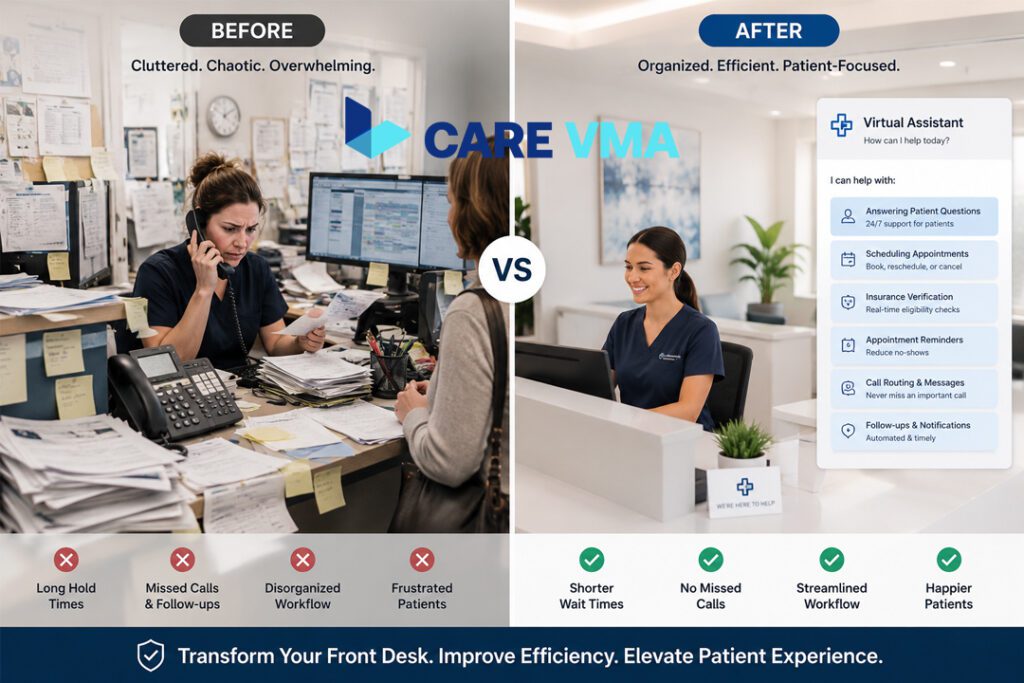
The Problem: A multi-provider cardiology clinic in Florida was facing a 25% claim denial rate. An audit revealed that the front desk was so busy answering phones that they were skipping the insurance verification step for “returning” patients, many of whom had changed plans.
The Solution: The clinic integrated a Care VMA specifically to handle all pre-visit administrative tasks. The VMA focused on scheduling and patient intake, ensuring every chart was 100% accurate 48 hours before the appointment.
The Outcome: Within 90 days, data accuracy rose to 98%, claim denials dropped by 30%, and the clinic saved over $5,000 monthly in labor costs compared to hiring a full-time local administrator.
The ROI of Outsourcing: Cost-Benefit Analysis of VMA vs In-House Performance Management
When you calculate the cost of a front desk audit, you must include the cost of the errors found. If an audit reveals $10,000 in uncollected copays, that is a direct hit to your bottom line.
By integrating a remote admin assistant, you shift from a reactive management style to a proactive one. You no longer need to spend 10 hours a week auditing; instead, you receive a weekly report of successfully verified patients and completed authorizations. This not only reduces burnout for your on-site team but also ensures professional, HIPAA-compliant remote operations that you can trust.
FAQ: Critical Questions for Practice Managers
How often should I audit my front desk staff performance?
For a healthy practice, a mini-audit (checking 10–20 random charts) should be done monthly. A comprehensive audit involving mystery calling and full RCM review should occur quarterly.
What are the top revenue-killing front desk mistakes?
The three biggest culprits are failing to verify insurance eligibility, failing to collect the patient’s balance at the time of service, and incorrect CPT/ICD-10 data entry during the intake process.
How does front desk accuracy impact claim denial rates?
Statistically, over 30% of claim denials are caused by simple registration and eligibility errors. Solving these at the front desk is the fastest way to increase cash flow.
Is it better to hire in-house or use a VMA for medical scheduling?
Hiring in-house provides physical presence, but VMAs provide specialized expertise, zero turnover issues, and significantly lower overhead costs. Most high-growth practices now use a hybrid model.
Secure Your Free Front Office Gap Analysis with Care VMA
Stop struggling with manual audits and inconsistent staff performance. Your practice deserves a workflow that is efficient, profitable, and stress-free.
Is your front desk leaking revenue? Let us help you find out. Schedule a Free Front Office Gap Analysis with Care VMA today. We will help you identify bottlenecks in your scheduling, verification, and billing workflows and show you how a specialized Virtual Medical Assistant can transform your practice.