Disclaimer: This article provides informational guidance and does not constitute direct business or medical consultation. Every organization should assess its unique context when implementing new strategies.
You have embraced the hybrid work model, but the promised benefits feel just out of reach. Productivity has plateaued, and you have a nagging feeling that your best employees are quietly updating their resumes.
This is a common diagnosis for many leaders today. You worry that proximity bias is creating an unfair two-tier system, that your managers are nearing burnout from the sheer effort of coordination, and that the vibrant company culture you once had is now fragmented and weak.
Building a successful hybrid team culture is not about finding the perfect software. It is about constructing a robust operational framework based on data, human psychology, and intentional design. The solution lies in treating your organization’s health with the same rigor as a clinical diagnosis.
The hybrid team culture is a shared set of values, behaviors, and norms governing how a team operates when split between office and remote environments. As of 2026, this model is no longer an experiment but the dominant operational standard for knowledge work, demanding a remote-first approach to ensure equity and productivity for all.
Dissecting the Anatomy of a Hybrid Culture: 3 Foundational Pillars
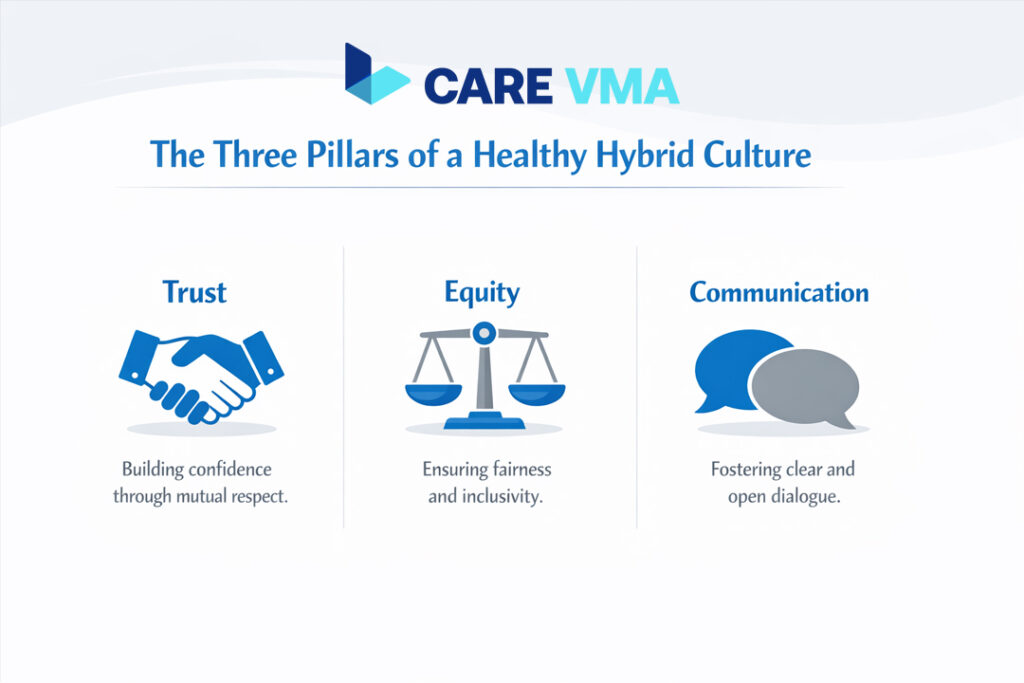
A resilient and high-performing hybrid culture is built upon three non-negotiable pillars. Without these, any attempt to optimize productivity is merely treating a symptom while ignoring the underlying condition.
Pillar 1: Trust over Proximity
The old metric of success was physical presence. The new metric is trust. Leadership must shift from evaluating “hours at a desk” to focusing on outcomes and results. This requires clear goal-setting, objective performance metrics, and empowering employees with the autonomy to deliver their best work, regardless of location.
Pillar 2: Inclusion & Equity
Proximity bias is the natural human tendency to favor those we see and interact with in person. In a hybrid model, this is a critical vulnerability that can lead to remote employees being overlooked for promotions and key projects. A healthy culture actively combats this by standardizing access to information, ensuring remote team members have equal voice in meetings, and training managers to evaluate performance based on contribution, not location.
Pilar 3: Asynchronous-First Communication
Relying on spontaneous hallway conversations for important decisions is a recipe for exclusion. An asynchronous-first approach prioritizes written, documented communication in shared digital spaces. This ensures that every team member, regardless of their time zone or work schedule, has access to the same context and can contribute thoughtfully, creating a more inclusive and efficient workflow. This model is crucial for successful telehealth administration and other remote operations.
2026 Trends and Best Practices: Strategies from Industry Leaders
The landscape of hybrid work is evolving rapidly. Staying ahead means adopting the proven strategies that leading companies are using to maintain their competitive edge.
The “Remote-First” Meeting Rule A simple but powerful rule: if one person joins a meeting remotely, everyone joins from their own device. This eliminates the “us vs. them” dynamic between people in a conference room and those on screen. It levels the playing field, ensuring no side conversations or non-verbal cues are missed by remote participants.
Team Charters: The Digital Social Contract High-performing hybrid teams do not leave expectations to chance. They create a “Team Charter,” a living document that explicitly defines their rules of engagement. This includes core working hours, preferred communication channels for different tasks (e.g., Slack for urgent updates, email for formal documentation), and guidelines for response times.
The Office as a “Collaboration Hub” The purpose of the office has fundamentally changed. It is no longer a place for quiet, individual work. Instead, it is being redesigned as a “collaboration hub”—a destination for activities that benefit most from in-person interaction, such as brainstorming workshops, team-building events, and client presentations.
The Role of AI in Reducing Friction and Preventing Burnout Artificial Intelligence is moving from a novelty to a necessity. According to recent reports, AI tools can automate meeting summaries, streamline complex scheduling across time zones, and handle repetitive administrative tasks, saving teams up to 3 hours per week. This frees up valuable time for deep work and strategic thinking, directly combating the causes of digital fatigue.
A Clinical Approach to Organizational Health: Diagnosing Symptoms in Your Hybrid Team
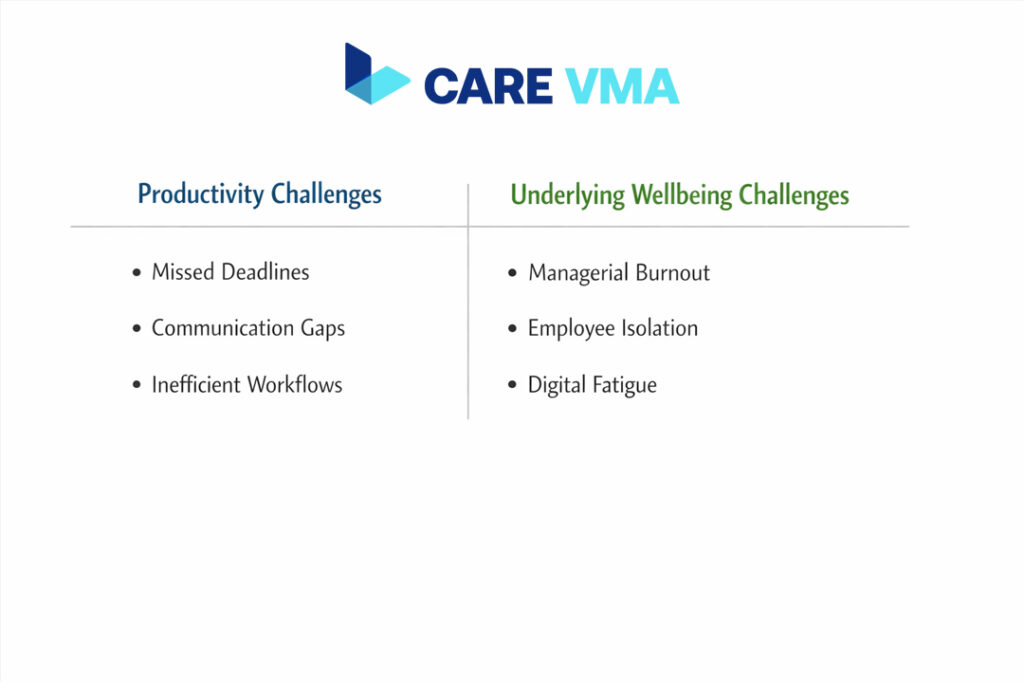
From our health-tech perspective, declining productivity and low retention are not business problems—they are symptoms of an underlying organizational health crisis. Applying a diagnostic lens allows us to identify and treat the root causes.
Symptom 1: Proximity Bias as a Pemicu Stres and Inequity
When remote employees feel they have fewer opportunities for growth, it creates a climate of chronic stress and perceived injustice. This isn’t just a fairness issue; a Gallup study shows that teams with high perceived fairness are significantly more engaged and productive. This anxiety directly impacts employee well-being and their long-term commitment to the organization.
Symptom 2: Cultural Fragmentation and Its Impact on Mental Health
A once-cohesive culture can quickly erode into isolated silos, leaving remote employees feeling disconnected and lonely. This isolation is a significant risk factor for mental health challenges, including anxiety and depression. Building a strong virtual team is an active process that requires intentional effort to maintain social bonds and a shared sense of purpose. Effectively building a strong virtual team means creating deliberate moments for connection that are not tied to a specific work task.
Symptom 3: Physical Health Risks and Digital Fatigue from Remote Work
Unmanaged remote work can introduce physical health risks, from poor ergonomic setups causing musculoskeletal issues to the digital eye strain and burnout from back-to-back video calls. A healthy hybrid culture includes providing resources and guidelines for creating a safe and sustainable home work environment, which is a key factor in how to reduce burnout in healthcare practices and other demanding fields.
Global Case Studies: How HubSpot, Microsoft, and Cisco Built Successful Hybrid Cultures
HubSpot: The Choice Model HubSpot offers its employees three options: @office, @flex, or @home. This “Choice Model” empowers employees to select the environment where they are most productive. To ensure cultural cohesion, they created a dedicated “Manager of Hybrid Experience” role focused entirely on making the experience equitable for everyone.
Microsoft: A Strategy Prioritizing Employee Wellbeing Microsoft’s approach to flexibility is rooted in extensive research on employee well-being. They provide managers with data-driven insights into team work patterns, flagging risks of burnout and encouraging practices like blocking out “focus time.” Their strategy explicitly acknowledges that a healthy workforce is a productive one.
Cisco: Optimizing Real Estate for a New Purpose By embracing a hybrid model, Cisco has saved hundreds of millions of dollars in real estate costs. They have reinvested these savings into redesigning their offices into state-of-the-art collaboration centers and providing employees with technology and resources to optimize their home offices, demonstrating a clear financial and cultural commitment to the hybrid future.
Common Questions from Leaders on Hybrid Culture
How many days in the office is ideal per month?
Research from institutions like Stanford University suggests the “sweet spot” is between 6 to 10 days per month. This frequency appears to provide the right balance of maintaining social capital and team cohesion while preserving the flexibility and focus that remote work offers.
How do we ensure remote employees are not overlooked for promotions?
The key is a systemic shift to outcome-based performance management. This involves implementing asynchronous-first communication to document all decisions, ensuring project contributions are visible to all, and explicitly training managers to fight proximity bias by focusing on results, not physical presence.
Is a hybrid culture suitable for all industries?
It is most effective for knowledge-based work. However, its core principles—clear communication, a focus on outcomes, and employee trust—can be adapted to benefit many sectors. Even in hands-on industries, administrative roles can often adopt a hybrid model to improve efficiency and work-life balance through optimized clinic workflow optimization.
Conclusion & Your Next Step
Building a high-performance hybrid team culture is not a destination; it is an ongoing process of diagnosis, intervention, and care. The success of this model does not depend on the technology you buy, but on the human-centric principles you implement. The health of your organization is directly tied to the health and well-being of your people.
Your team is your most valuable asset. Do not let symptoms like managerial burnout, administrative overload, and employee disengagement erode your organization’s vitality. These issues often stem from overburdened staff trying to manage the complex logistics of a new work model. By offloading these tasks, you treat the root cause of the problem.
Schedule a consultation to see how a Virtual Medical Assistant can alleviate the administrative burdens fueling these symptoms, restore your team’s focus on high-value work, and help you build a truly healthy and productive hybrid culture.