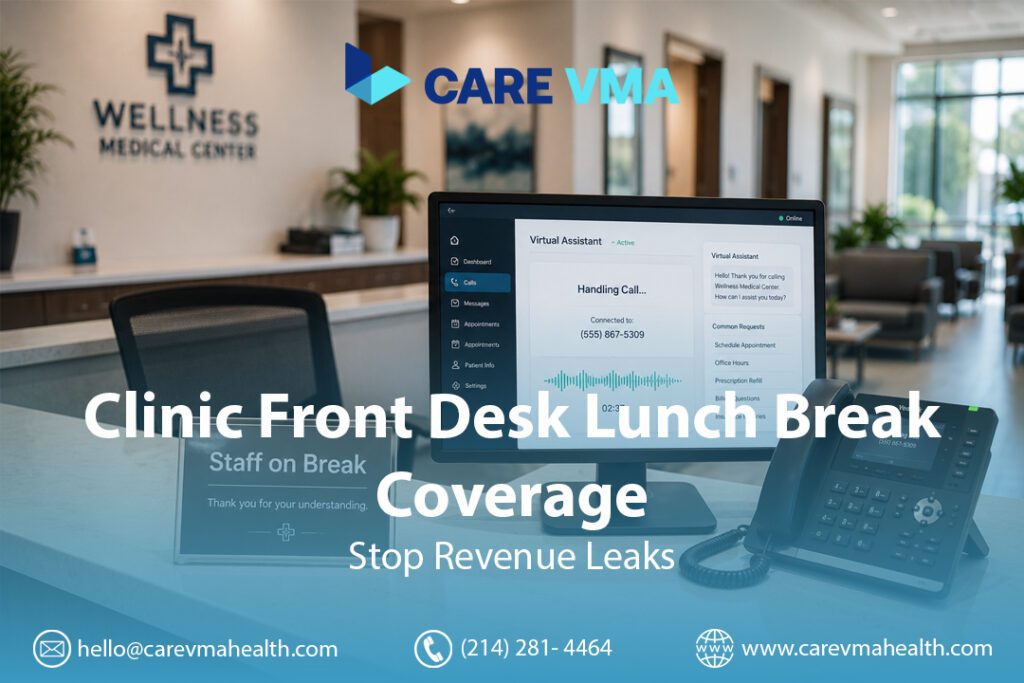
In the competitive landscape of modern healthcare, the “Closed for Lunch” sign is more than just a temporary pause in service—it is a flashing beacon for revenue leaks. For high-volume chiropractic, dental, and primary care practices, the hour between 12:00 PM and 1:00 PM is often when prospective patients have the time to make their own appointments. If your phones go to voicemail during this window, you aren’t just giving your staff a break; you are giving your leads to the competitor down the street.
The Hidden Cost of the “Closed for Lunch” Sign in Modern Medical Practices
The logic seems sound: the team needs to eat, and the office is quiet. However, data suggests otherwise. Analyzing missed patient calls reveals that an average clinic loses 5–10 potential new patient acquisitions daily during the lunch hour.
- The Revenue Leak: If a single new patient’s Lifetime Value (LTV) is $500, losing just two new bookings a week during lunch translates to a $52,000 annual loss. You can calculate your specific risks by looking at the average cost of missed calls in healthcare.
- The Patient Experience Gap: Today’s patients expect immediate gratification. “Leaving a message” is no longer an acceptable hurdle for someone seeking urgent dental care or a primary care opening.
- Front Desk Burnout: There is a psychological toll on receptionists who are forced to “work through” lunch because the phones won’t stop ringing. True disconnection is vital to preventing front desk burnout in medical clinics, yet impossible without a backup system.
Navigating the Complexity of FLSA Compliance and Patient Flow
Managing breaks isn’t just about efficiency; it’s a legal necessity. Under the Fair Labor Standards Act (FLSA) and strict state-specific regulations in New York and California, staff are entitled to “uninterrupted meal breaks.” If a receptionist answers a “quick” call while eating, that break may be legally void, leading to potential wage-and-hour claims.
Many small clinics attempt staggered shifts, but with only 2–3 administrative staffers, this often results in a “skeleton crew” that cannot handle both in-person check-ins and high-volume phone traffic. The quality of service drops, errors in EMR data entry increase, and the “live” coverage becomes a liability rather than an asset.
Care VMA as Your Shadow Front Desk: Seamless Lunch Break Coverage
This is where the Virtual Medical Receptionist model becomes the gold standard for operational continuity. Unlike traditional answering services that merely take messages, a Care VMA functions as an extension of your physical team.
- EMR-Integrated Scheduling: Our VMAs do not just “take notes.” They log directly into your systems—whether you use Athenahealth, Kareo, or eClinicalWorks—to book, reschedule, or cancel appointments in real-time.
- Insurance Verification on the Fly: We utilize the quiet lunch hour to process pending insurance verifications. This ensures that when your on-site staff returns at 1:00 PM, the afternoon session starts with zero administrative delays.
- Active Clinical Support: By utilizing a Virtual Medical Assistant, your clinic maintains a professional presence that can answer basic patient inquiries regarding clinic protocols, preventing the “I’ll call you back” cycle.
Operational Workflow: How a Virtual Assistant Takes the Baton
- The Hand-off: At 12:00 PM, your on-site staff toggles the phone system to the Care VMA dedicated line.
- Live Interaction: Every call is answered by a HIPAA-trained professional who knows your clinic’s specific scripts and protocols.
- Real-Time Sync: Appointments are booked directly into your EMR, and insurance details are updated instantly.
- The Hand-back: At 1:00 PM, your staff returns refreshed to a “clean slate.” They receive a prioritized log of all actions taken during the hour, allowing for a seamless transition into the afternoon rush.
5 Best Ways to Cover Clinic Front Desk Lunch Breaks
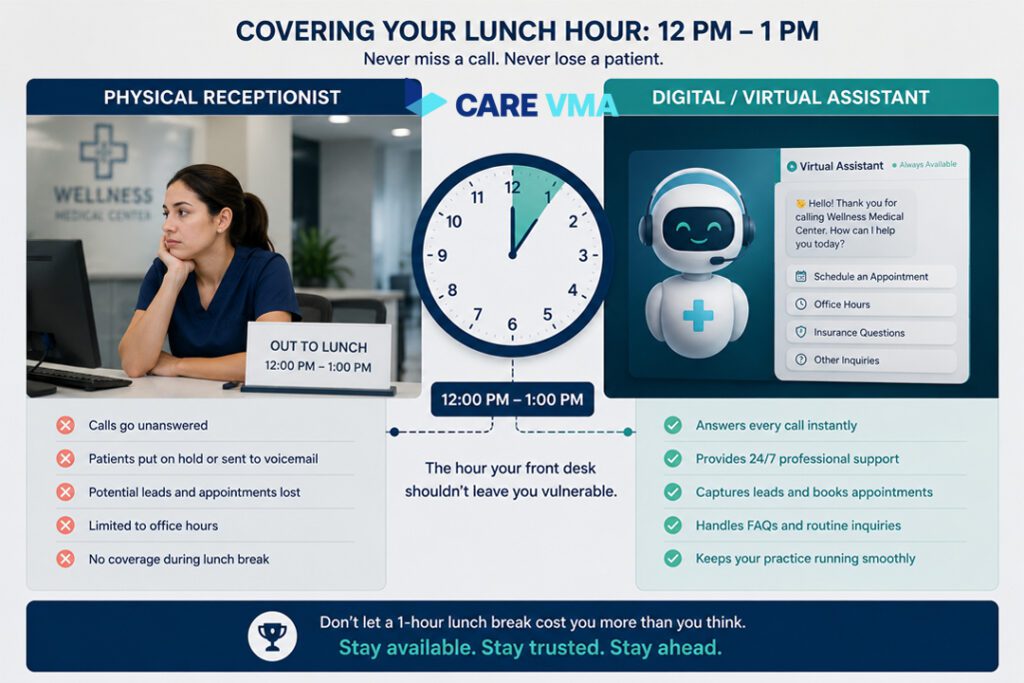
- Staggered Shift Rotation: Best for large offices (4+ admin staff), but difficult for small practices.
- Automated Attendant (IVR): Cost-effective but has high abandonment rates; patients often find it frustrating.
- Third-Party Answering Service: Good for after-hours messages, but usually lacks EMR access to schedule patients.
- Temporary Staffing Agencies: Extremely expensive and requires constant re-training on clinic-specific software.
- Virtual Medical Assistants (The Gold Standard): Provides EMR-integrated, HIPAA-compliant, and specialized healthcare coordination at a fraction of the cost of a new hire.
HIPAA-Compliant Continuity: Security and Professionalism
At Care VMA, we understand that “trust” is the primary currency of US healthcare. Our services are built on a foundation of rigorous security and professional training:
- Business Associate Agreements (BAA): We provide full legal protection, ensuring every interaction meets federal privacy standards.
- US Healthcare Terminology: Our assistants are fluent in the nuances of “Patient Flow,” “Prior Authorizations,” and “No-show mitigation.” Your patients will never feel like they are speaking to an outsourced call center; they will feel like they are speaking to your office.
Frequently Asked Questions (FAQ)
How do I manage front desk breaks in a 2-person office?
Implementing a Virtual Medical Assistant allows both staff members to take their mandated breaks simultaneously. This ensures the office remains “open” virtually while allowing your team the rest they need to remain productive.
Is it legal to leave a clinic front desk unattended during lunch?
While legal, it is operationally risky. Using a VMA ensures you comply with labor laws regarding “uninterrupted” staff breaks while maintaining patient safety and communication standards.
Can a virtual assistant check in patients remotely?
Yes. Through digital check-in tools and direct EMR access, a VMA can process intake paperwork and notify back-office clinical staff via internal chat (like Microsoft Teams or Slack) when a patient has arrived.
How much does a part-time virtual medical receptionist cost?
Care VMA offers scalable solutions that are significantly lower than the cost of a traditional part-time employee, specifically targeting high-impact hours like lunch breaks and morning call peaks.
Is your lunch hour costing you thousands in missed appointments?
Book Your 15-Minute Lunch Hour Gap Analysis – Get a free audit of your missed call potential and discover how much revenue is leaking through your front desk.