In the high-stakes environment of psychiatric and behavioral health, a missed appointment is more than just a gap in the schedule; it is a fracture in the continuum of care. For mental health practitioners, high no-show rates represent a dual crisis: a significant drain on practice revenue and a clinical setback for patients who need consistent support.
Strategic intervention requires a shift from passive scheduling to proactive engagement. By leveraging a specialized Virtual Medical Assistant, practices can implement evidence-based protocols that address the unique psychological and logistical barriers preventing patients from showing up.
The Revolving Door Problem: Why Patient No-Shows Uniquely Impact Mental Health Practices
Unlike general medicine, where a missed physical can be easily rescheduled, mental health care relies on momentum. Data suggests that the strongest predictor of patient attendance is the length of time between the initial call and the first appointment.
When wait times exceed two weeks, motivation often wanes. Statistics show that shortening wait times from 13 days to same-day access can slash no-show rates from over 50% to under 20%. Without a dedicated team to manage these rapid-response scheduling models, practices often fall back into a “revolving door” pattern where patients drop off before their first session even begins.
Beyond the Financial Drain: How High No-Show Rates Disrupt Therapeutic Alliances and Operational Stability
The cost of a no-show is multifaceted. Beyond the lost hourly rate, there is the operational cost of administrative staff time and the disruption of the provider’s workflow. However, the most damaging impact is on the “therapeutic alliance.”
Patients are far less likely to miss appointments if they feel a personal connection with their provider. A high no-show rate indicates a weakening of this bond. To prevent this, practices must optimize their patient scheduling workflow to ensure every interaction—from the first reminder to the post-visit follow-up—feels personal and supportive rather than clinical and cold.
Why Standard Solutions Fall Short: The Clinical Barriers (Anxiety, Motivation, Stigma) in Psychiatric Care
Standard automated reminder software often fails in a psychiatric context because it cannot address “parking lot panic”—the sudden onset of anxiety that prevents a patient from entering a physical office. Clinical barriers like low motivation, social stigma, and executive dysfunction require a human touch.
Automated bots cannot perform “Motivational Interviewing” (MI). They cannot ask a patient, “On a scale of 1 to 10, how likely are you to make it to our next session?” and address the scores below 8. This is where a Virtual Medical Receptionist bridges the gap, providing the empathy needed to navigate sensitive patient barriers while maintaining administrative efficiency.
The Proactive Solution: How Virtual Medical Assistants Systematically Reduce Patient No-Shows
A Care VMA acts as a dedicated extension of your clinical team. By integrating a VMA, your practice moves from a reactive stance to a “Just-in-Time” model. This involves:
- Telehealth Transitions: Transitioning to telehealth has been associated with up to a 30% reduction in no-show risk. Your VMA can instantly flip an in-person appointment to a virtual one if a patient mentions transportation issues.
- Multi-Channel Engagement: VMAs use text, email, and phone calls at strategic intervals (3 days and 1 day before) to ensure the appointment remains top-of-mind.
- SDOH Advocacy: Screening for Social Determinants of Health (SDOH) during intake allows VMAs to identify barriers like childcare or financial stress before they result in a missed visit.
The Care VMA Workflow: A Step-by-Step Breakdown for Reducing No-Shows
Step 1: Proactive Patient Engagement and SDOH Screening During Intake
The VMA identifies potential high-risk patients immediately. By screening for transportation or work-shift conflicts, they can suggest optimal scheduling windows that align with the patient’s reality.
Step 2: Implementing Multi-Channel, Two-Way Reminders Your Patients Actually Respond To
Text reminders alone can lower no-show rates by nearly 40%. A Care VMA manages two-way communication, allowing patients to text “RESCHEDULE” without the “hassle factor” of a phone call, which many patients with social anxiety actively avoid.
Step 3: Facilitating Frictionless Rescheduling and Telehealth Transitions
If a patient expresses hesitation, the VMA is trained to offer a telehealth alternative immediately, eliminating the logistical friction of a physical commute.
Step 4: Identifying and Re-engaging High-Risk Patients Before They Miss an Appointment
VMAs track “chronic no-showers” and apply behavioral economics principles, such as positive reinforcement or personal check-in calls, to build the habit of attendance.
Use Case: Transforming a High-Volume Practice’s Attendance Rate
Before Care VMA: A 35% No-Show Rate Driven by Long Wait Times and Forgetfulness
A large psychiatric group in the US struggled with a 35% no-show rate. Their in-house staff was overwhelmed, resulting in reminders being sent inconsistently and wait times for new patients stretching to 18 days.
After Care VMA: Implementing a “Just-in-Time” Scheduling Model to Cut No-Shows by Over 50%
By bringing in two Care VMAs to manage growing private psychiatric practice operations, the clinic moved to an Open Access model. The VMAs handled all two-way SMS reminders and SDOH screening. Within three months, the no-show rate dropped to 14%, and revenue increased by 22% due to filled slots and optimized provider time.
Calculating the ROI: The Direct Cost Savings of a VMA-Driven Attendance Strategy
Consider a practice where a single psychiatrist sees 10 patients a day at $200 per session. A 20% no-show rate results in a loss of $400 daily—or $8,000 monthly.
By employing a VMA to reduce that rate to 5%, the practice recovers $6,000 in lost revenue per month. This more than covers the cost of the VMA, while simultaneously improving patient outcomes and reducing provider burnout.
Security and Empathy First: Ensuring HIPAA Compliance and a Patient-Centric Approach
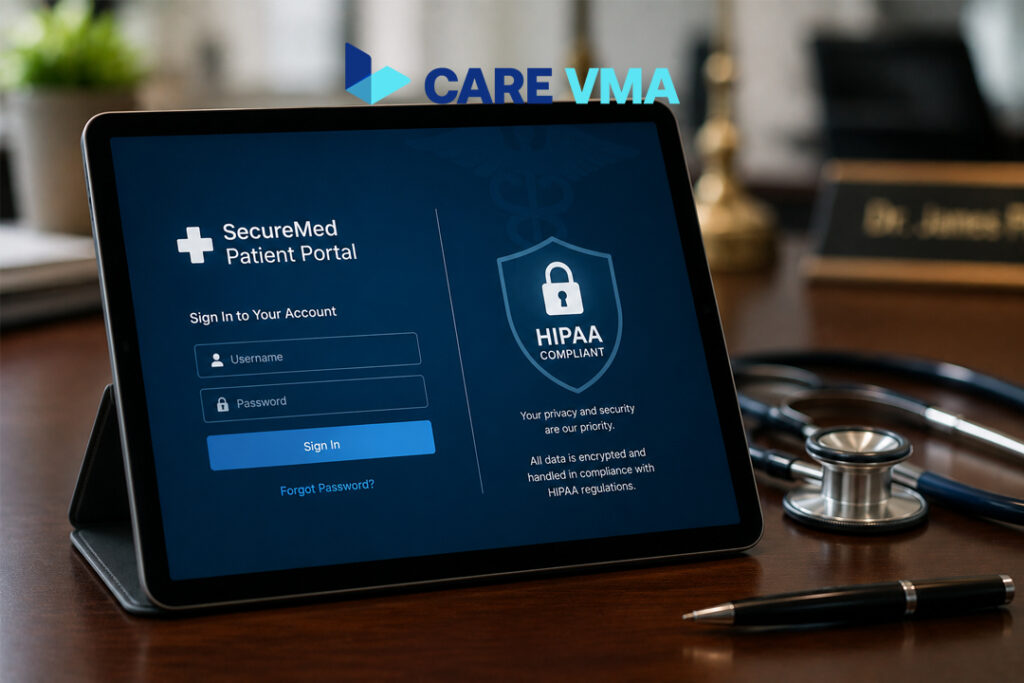
When handling sensitive mental health data, security is non-negotiable. All Care VMAs are trained in HIPAA-compliant virtual assistant protocols. We ensure that every reminder, rescheduling text, and patient intake call is encrypted and follows strict privacy standards. This allows you to scale your attendance strategy without compromising the trust of your patients.
Stop Managing Absences and Start Focusing on Care: Schedule Your Consultation
Your providers spent years training to treat patients, not to manage empty calendars. By outsourcing the administrative burden of attendance management, you allow your clinical team to focus on what matters most: therapy and healing.
Ready to stabilize your revenue and improve patient adherence? Schedule a Consultation with Care VMA Today to see how our specialized assistants can transform your practice workflow.
Frequently Asked Questions for Clinic Decision-Makers
Can a Virtual Medical Assistant handle sensitive patient information related to mental health?
Yes. Every VMA at Care VMA undergoes rigorous HIPAA training. They operate within your existing secure EMR systems, ensuring that sensitive psychiatric histories and personal identifiers remain protected at all times.
How does a VMA integrate with our current EMR and scheduling software?
Our VMAs are tech-agnostic. They are trained to work within all major EMR platforms (such as Athenahealth, DrChrono, or Elation). They function as a remote member of your team, accessing your calendar in real-time to update slots and manage patient intake.
What is the typical reduction in no-show rates our clinic can expect with a Care VMA?
While results vary by practice size and specialty, most clinics using a VMA-led “Just-in-Time” scheduling model see a reduction in no-shows by 30% to 50% within the first 90 days.
How does a VMA do more than just automated reminder software?
Unlike software, a VMA can engage in two-way problem solving. If a patient is hesitant due to anxiety or logistics, the VMA can offer a telehealth switch, perform a quick commitment check, or reschedule them immediately to a more convenient time, capturing revenue that an automated “Press 1 to confirm” system would lose.