The relentless ringing of the phone, a waiting room full of patients, and a clinical team stretched thin trying to manage both patient care and administrative tasks. If this sounds familiar, you’re not alone. The pressure on healthcare practices in 2026 is immense: deliver exceptional patient care while simultaneously controlling ballooning operational costs. It feels like an impossible balancing act.
Every call that goes to voicemail is a potential lost patient and a dip in revenue. Your highly-trained medical staff are pulled away from their primary duties to schedule appointments, leading to frustration and a significant risk of burnout. The solution isn’t to work harder; it’s to work smarter. Imagine a front desk where every call is answered promptly and professionally, appointments are scheduled seamlessly into your EHR, and your in-house team can focus entirely on patient outcomes—all while significantly cutting your overhead.
The primary benefits of a virtual medical receptionist are significant operational cost savings, improved workflow efficiency, and an elevated patient experience. By outsourcing key administrative tasks to a HIPAA-compliant partner, medical practices reduce staff workload, minimize missed calls, and ensure 24/7 patient accessibility. This guide, based on current healthcare operational analysis and 2026 HIPAA compliance standards, breaks down exactly how.
What is a Virtual Medical Receptionist? Beyond a Simple Answering Service
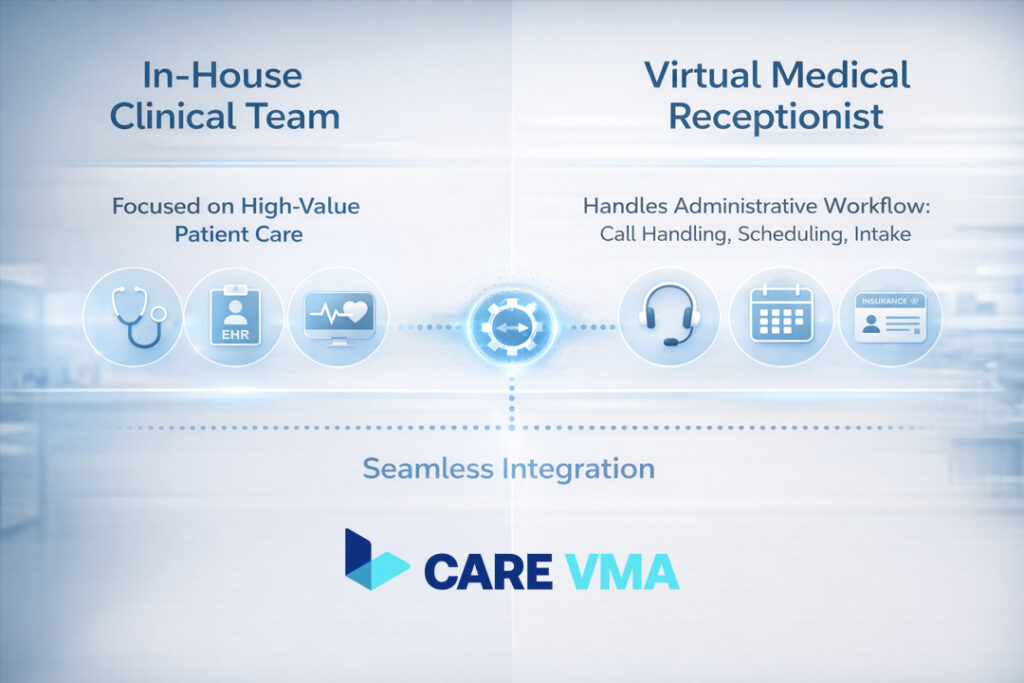
At first glance, it’s easy to lump a virtual medical receptionist (VMR) in with a traditional answering service. But in reality, they are worlds apart. An answering service simply takes messages. A VMR is a fully integrated, professional extension of your healthcare practice.
A true VMR service provides highly-trained, remote professionals who handle a wide range of administrative tasks, from patient intake and appointment scheduling to insurance verification. They operate as a seamless part of your team, often integrating directly with your existing Electronic Health Records (EHR) and Practice Management Software (PMS). This isn’t just about answering phones; it’s about managing a core part of your patient workflow with precision and care, ensuring full HIPAA compliance every step of the way.
1. Slash Operational Costs, Not Quality of Care
The financial pressure on modern practices is a constant concern. But what if you could drastically reduce your largest expenses without a single compromise to the quality of patient care? Here’s the thing: a virtual medical receptionist is one of the most powerful tools for immediate and sustained cost savings.
Eliminate In-House Staffing Expenses
Hiring a full-time, in-house receptionist involves far more than just a salary. When you factor in benefits, taxes, and insurance, the true cost can be staggering. A VMR eliminates these ancillary expenses entirely, including:
- Health, dental, and vision insurance
- Payroll taxes
- Paid time off and sick leave
- Retirement plan contributions
Reduce Overhead to Zero
An on-site employee requires physical resources. By switching to a virtual model, you remove the need to pay for:
- Dedicated office space and square footage
- A desk, ergonomic chair, and other furniture
- A computer, phone system, and other hardware
- Office supplies and utilities
Pay for Productivity, Not Presence
Perhaps the most significant financial shift is moving from a fixed salary to a usage-based model. You pay for the time your virtual receptionist is actively working for your practice—not for the quiet moments or downtime in between calls. This means your budget is allocated with maximum efficiency, directly supporting productivity. Practices that make the switch can save up to 70% on front-desk operational costs compared to hiring a traditional, full-time employee.
2. Combat Staff Burnout & Refocus Your Clinical Team
Let’s talk about the human cost of an overloaded front desk. When your nurses and medical assistants are constantly interrupted by a ringing phone, it does more than just break their concentration—it contributes directly to staff burnout. This is one of the most critical challenges facing healthcare today.
A VMR is a frontline defense against burnout. By rerouting the endless stream of administrative calls, you give your clinical team the uninterrupted time they need to perform their duties effectively and compassionately. This simple change can dramatically lower stress levels, boost morale, and improve staff retention.
What most people don’t realize is that this isn’t just about convenience; it’s about protecting your most valuable asset: your people. Free your medical professionals from the constant distraction of the phone so they can get back to the work they were trained for and love—providing excellent patient care. A focused, less-stressed clinical team leads to fewer errors and better patient outcomes.
3. Enhance Patient Experience & Reduce No-Shows
A patient’s experience begins long before they enter your examination room. It starts with that very first phone call. A clunky, frustrating, or unavailable front desk can damage your practice’s reputation and drive patients away.
24/7 Availability: Never Miss a Patient Call Again
Your patients’ needs don’t stick to a 9-to-5 schedule. A VMR service ensures that every call is answered by a live, professional person, whether it’s after hours, on a weekend, or during a busy holiday. This level of accessibility shows patients you value their time.
Eliminate Wait Times & Voicemail
In many cases, patients who are put on hold or sent to voicemail simply hang up and call another practice. A VMR team can handle multiple calls simultaneously, ensuring every patient connects with someone immediately. This efficiency is key to capturing new patients and retaining existing ones. A more streamlined experience is one of the biggest benefits of a virtual medical office.
Proactive Appointment Reminders that Work
Patient no-shows are a major source of lost revenue. Virtual receptionists can execute a proactive reminder strategy—via phone calls and SMS—that has been shown to reduce no-show rates by up to 50%. This directly protects your practice’s bottom line.
At Care VMA Health, our Virtual Medical Assistants are more than just receptionists; they are healthcare-trained specialists. They integrate directly with leading Electronic Health Records (EHR) and Practice Management Software, ensuring your schedule is always accurate without the risk of double-booking or manual entry errors.
- Use Case: A busy dermatology clinic in Austin was struggling with massive call volume on Monday mornings, leading to long hold times and frustrated patients. By partnering with Care VMA Health for overflow support, their in-house staff could focus on checking in patients for appointments. The result? A 90% reduction in phone wait times and a measurable increase in patient satisfaction scores within the first month.
Feeling overwhelmed with your daily operations? It might be time to discover how a virtual assistant receptionist can cut wait times and boost trust.
4. Achieve Unmatched Scalability & Flexibility
Growth shouldn’t be a logistical nightmare. A virtual receptionist service provides the agility your practice needs to adapt to changing demands without the friction of traditional hiring.
- Scale Up or Down Instantly: Opening a new location or bringing on a new provider? Instantly increase your reception support without a lengthy recruitment process.
- Overflow Support for Peak Times: Use a VMR as a powerful backup for your in-house team during your busiest hours, ensuring no call is ever missed.
- Bilingual Support on Demand: Serve a more diverse patient community by providing professional, bilingual support without the need to hire specialized full-time staff.
This flexibility allows your practice to be more responsive and financially nimble, ready to seize growth opportunities as they arise.

Key Responsibilities a Virtual Medical Receptionist Handles
So, what exactly can you delegate to a VMR? The scope is broad and designed to free up your team for higher-value work.
- Appointment Management: Scheduling new appointments, handling rescheduling requests, and processing cancellations directly within your PMS/EHR.
- Patient Intake: Collecting new patient demographic data and basic insurance information accurately and efficiently.
- Insurance Verification: Performing preliminary verification of patient insurance eligibility and coverage before their visit to prevent billing issues.
- Prescription Refills: Coordinating routine prescription refill requests between the patient and the appropriate clinical team member.
- Call Triage and Routing: Identifying the nature of a call and routing it to the right person, whether it’s a billing question for the office manager or an urgent clinical matter for a medical professional on call.
Critical Considerations: Choosing the Right HIPAA-Compliant Partner
Handing off front-desk responsibilities is a significant decision, and choosing the right partner is paramount. Your patients’ trust and data security are on the line.
Absolute HIPAA Compliance is Non-Negotiable
Your VMR partner must operate with ironclad security. According to the U.S. Department of Health & Human Services, any third-party vendor handling Protected Health Information (PHI) is considered a “Business Associate.” Therefore, your chosen service must sign a Business Associate Agreement (BAA). This is a legal requirement, not an option. Care VMA Health signs a BAA with every client, guaranteeing our commitment to data protection through encrypted communications and secure protocols.
Understanding the Limitations
Transparency is a hallmark of a trustworthy partner. A VMR is a powerful administrative tool, but they cannot handle physical, in-person tasks like greeting walk-in patients or accepting deliveries. A reputable provider will be upfront about these limitations. Understanding the differences between a virtual vs. in-person receptionist is crucial for setting proper expectations.
Technical Requirements
To enable a seamless partnership, your practice will need a stable internet connection and a cloud-based or remotely accessible EHR/PMS. This allows your virtual receptionist to integrate directly into your workflow as a true member of the team.
FAQ (Frequently Asked Questions)
You have questions, and we have data-driven answers based on our work with hundreds of practices.
How much does a virtual medical receptionist cost?
Costs vary based on call volume and the scope of services, but most practices can expect to pay between $800 and $2,500 per month. This is significantly more cost-effective than a full-time in-house receptionist once salary, benefits, and overhead are factored in.
Are virtual receptionists HIPAA compliant?
Yes, absolutely. Leading providers like Care VMA Health are fully HIPAA compliant. We utilize end-to-end encrypted communication channels and sign a mandatory Business Associate Agreement (BAA) to ensure all patient data is protected according to federal law.
Can a virtual receptionist integrate with my EHR system?
Yes. Modern VMR services are designed for integration. They can work seamlessly with popular EHR and Practice Management Software systems, allowing for real-time appointment scheduling, access to patient information, and a more efficient workflow.
Your Path to a More Efficient, Patient-Focused Practice
Stop letting administrative overload dictate the rhythm of your practice and the well-being of your team. A Virtual Medical Receptionist isn’t just a cost-cutting measure; it’s a strategic investment in efficiency, patient satisfaction, and a healthier work environment for your clinical staff. It’s time to reclaim your team’s focus for what truly matters: delivering outstanding patient care.
Feeling the strain of daily operations? A smarter, more streamlined solution is within reach.
Ready to see how much your practice could save while improving patient flow and reducing staff stress?