Disclaimer: This article is for informational career guidance purposes only and does not constitute medical advice.
Choosing a career in healthcare is a significant step, but the path can often seem confusing with similar-sounding job titles. You might be looking at roles like Medical Assistant and Clinical Medical Assistant, wondering what the real difference is (Problem). Making the wrong choice could lead to a career that doesn’t align with your skills or passions, causing dissatisfaction down the line (Agitation). This guide provides a clear, comprehensive breakdown to help you navigate these options, ensuring you select the path that best fits your personality, goals, and future success in the healthcare field (Solution). The primary difference between a Clinical Medical Assistant (CMA) and a Medical Assistant (MA) lies in their focus; CMAs concentrate heavily on hands-on, clinical patient care, whereas MAs perform a broader mix of both clinical and administrative duties.
What is a Medical Assistant (MA)?
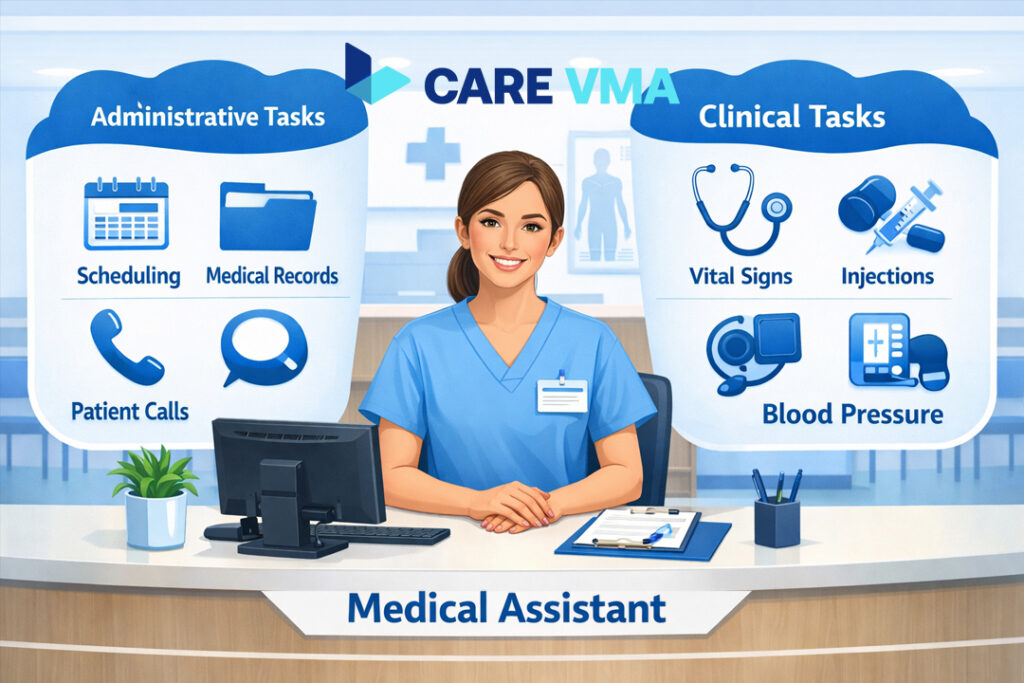
A Medical Assistant is the versatile backbone of a medical office, clinic, or hospital. They are trained professionals who handle a dynamic blend of tasks that ensure the entire facility runs smoothly. Their role is crucial for bridging the gap between patient services and administrative efficiency.
Core Administrative Duties of an MA
- Welcoming patients and answering telephones
- Scheduling appointments and managing the office calendar
- Updating and filing patient electronic health records (EHR)
- Handling correspondence, billing, and insurance claims
- Arranging for hospital admissions and laboratory services
General Clinical Duties of an MA
- Taking and recording patient medical histories and vital signs
- Preparing patients for examinations
- Assisting physicians during procedures
- Collecting specimens like blood or urine for lab testing
- Administering medications or injections as permitted by state law
What is a Clinical Medical Assistant (CMA)?
A Clinical Medical Assistant is a specialized type of medical assistant who focuses almost exclusively on the patient-facing, hands-on aspects of healthcare. They work directly alongside doctors and nurses, playing a key role in patient examinations and treatment. This role is ideal for those who are passionate about direct patient interaction and performing clinical procedures.
A Focus on Clinical Tasks and Direct Patient Care
Unlike the broader role of an MA, the CMA’s daily responsibilities are centered in the examination room. They are experts in preparing patients, explaining procedures, and ensuring all clinical equipment is ready and sterile. Their work is critical for maintaining a safe and effective clinical environment and requires a high degree of precision and empathy. Many professionals in this role find that enhancing patient care with medical virtual assistants can further streamline their clinical support duties.
Common Clinical Procedures Performed by a CMA
- Performing phlebotomy (drawing blood)
- Administering electrocardiograms (EKGs)
- Removing sutures or changing wound dressings
- Instructing patients on medication or special diets
- Sterilizing medical instruments and managing clinical supplies
Head-to-Head Comparison: Clinical Medical Assistant vs Medical Assistant
While both roles are essential, their day-to-day functions, required skills, and work environments differ significantly. Understanding these distinctions is key to choosing the right career. This is a foundational concept even for those managing practices, as it helps in clinic workflow optimization to cut errors and assign the right tasks to the right personnel, whether in-house or virtual.
Comparison Table: Roles, Skills, and Work Environments
Aspect: Clinical Medical Assistant – Medical Assistant
- Primary Focus: Direct, hands-on patient care and clinical procedures. – A balance of administrative office tasks and general clinical duties.
- Patient Interaction: High-frequency, direct interaction during exams and treatments. – Moderate, often beginning at the front desk and continuing in the exam room.
- Administrative Tasks: Minimal; limited to updating patient charts during clinical encounters. – Significant; includes scheduling, billing, and managing patient records.
- Technical Skills: Specialized in procedures like phlebotomy, EKG, and wound care. – Broad skills including vital signs, injections, and proficiency in office software.
- Typical Work Environment: Specialty clinics (e.g., cardiology, dermatology), urgent care centers, hospitals. – General practitioner offices, family clinics, outpatient facilities.
Overlapping Skills vs Specialized Skills
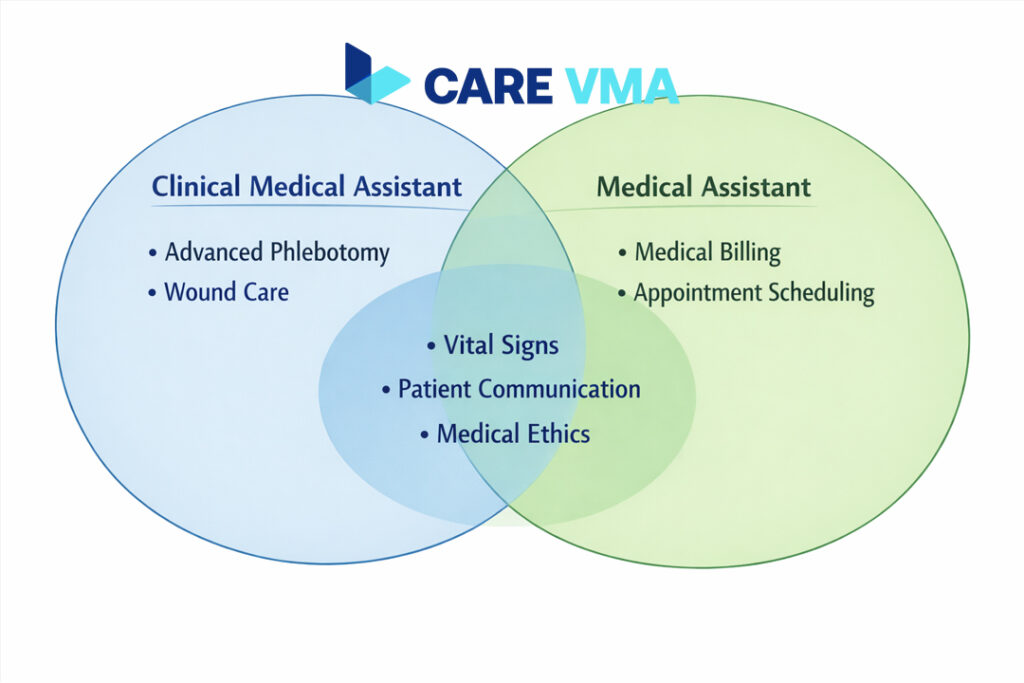
Both CMAs and MAs must possess core competencies such as knowledge of medical terminology, adherence to HIPAA, and strong communication skills. They both often take vital signs and document patient information.
However, the specialization is clear. A CMA hones deep skills in clinical procedures, becoming an expert in tasks like phlebotomy. An MA develops a hybrid skillset, becoming equally comfortable managing an appointment schedule and preparing a patient for an exam. This versatility is a key trait, and practices can leverage it further by understanding how virtual assistants are different from employees to handle specific task categories.
Career Path Mapping: Finding Your Best Fit
Beyond a simple list of duties, the right choice depends on your personality and long-term career aspirations. This decision is about finding a role where you can thrive.
Which Role Fits Your Personality?
- You are a good fit for a CMA if: You feel a strong calling to provide direct care and comfort to patients. You are detail-oriented, remain calm under pressure, and find satisfaction in mastering hands-on medical procedures. You prefer a fast-paced clinical setting over office work.
- You are a good fit for an MA if: You are an excellent multitasker who enjoys variety in your workday. You are highly organized, efficient, and equally comfortable interacting with people and managing systems. You see the big picture of how a clinic operates, from the front desk to the exam room.
Career Outlook and Your Next Steps
The demand for both roles is strong. According to the U.S. Bureau of Labor Statistics, employment for medical assistants is projected to grow 16 percent from 2022 to 2032, much faster than the average for all occupations.
- Career Pathways for CMAs: With their strong clinical foundation, CMAs can specialize in high-demand fields like cardiology, pediatrics, or oncology. They may also pursue further education to become registered nurses (RNs) or other licensed healthcare providers.
- Career Pathways for MAs: MAs with strong administrative skills can advance into roles like office manager, practice administrator, or medical billing and coding specialist. Their broad understanding of clinic operations makes them ideal candidates for leadership positions.
Frequently Asked Questions
Do I need certification for these roles?
While not always legally required, certification is highly recommended. It demonstrates a standard of competency to employers and can lead to better job prospects and higher pay. The most recognized certification for a CMA is the Certified Clinical Medical Assistant (CCMA) from the National Healthcareer Association (NHA). MAs may seek the Certified Medical Assistant (CMA) credential.
What is the average salary potential for a CMA vs an MA?
Salaries can vary by location, experience, and specialty. According to the BLS, the median annual wage for medical assistants was $38,590 in May 2022. CMAs in specialized fields or high-demand areas may earn a higher salary due to their specific skill set.
Can an MA become a CMA, or vice versa?
Yes, transitioning between roles is possible. An MA might seek additional training and certification in clinical procedures like phlebotomy to move into a CMA role. Conversely, a CMA could take courses in medical billing and office administration to qualify for a broader MA position.
Conclusion and Your Next Step
Neither the Clinical Medical Assistant nor the Medical Assistant role is inherently better—the best path is the one that is the right fit for you. By understanding the core differences in focus, daily tasks, and career trajectories, you are now equipped to make an informed decision that will launch a rewarding and successful career in healthcare.
As healthcare practices evolve, understanding these roles is crucial for building efficient teams. Many clinics are now discovering the power of specialized support to handle these responsibilities remotely. If you are a practice manager looking to optimize your workflow, consider how a dedicated virtual assistant can manage these essential functions. Explore Care VMA’s Virtual Medical Assistant services to see how you can free up your in-house team to focus on what matters most: patient care.