Medical Disclaimer: This article is intended as a guide for medical practice management and revenue cycle optimization. It does not constitute legal or medical advice.
Every denied claim represents a leak in your practice’s financial health and a drain on your administrative resources. In the modern healthcare landscape, waiting until after a service is provided to check coverage is a recipe for disaster. Staff members spend countless hours on hold with insurance payers while patients experience rising anxiety over scheduling delays. This friction is not just an administrative nuisance; it is a systemic failure that compromises both profitability and patient care.
Insurance verification is the process of confirming a patient’s insurance coverage and eligibility before services are rendered, while prior authorization is the formal approval required from an insurer for specific medical treatments. Both are critical pillars of How Revenue Cycle Management Impacts Practices designed to prevent claim denials and ensure financial predictability. By integrating these front-end processes into a proactive digital workflow, practices can transform their administrative burden into a strategic advantage.
Why Traditional Verification & Prior Authorization Processes Fail in 2026
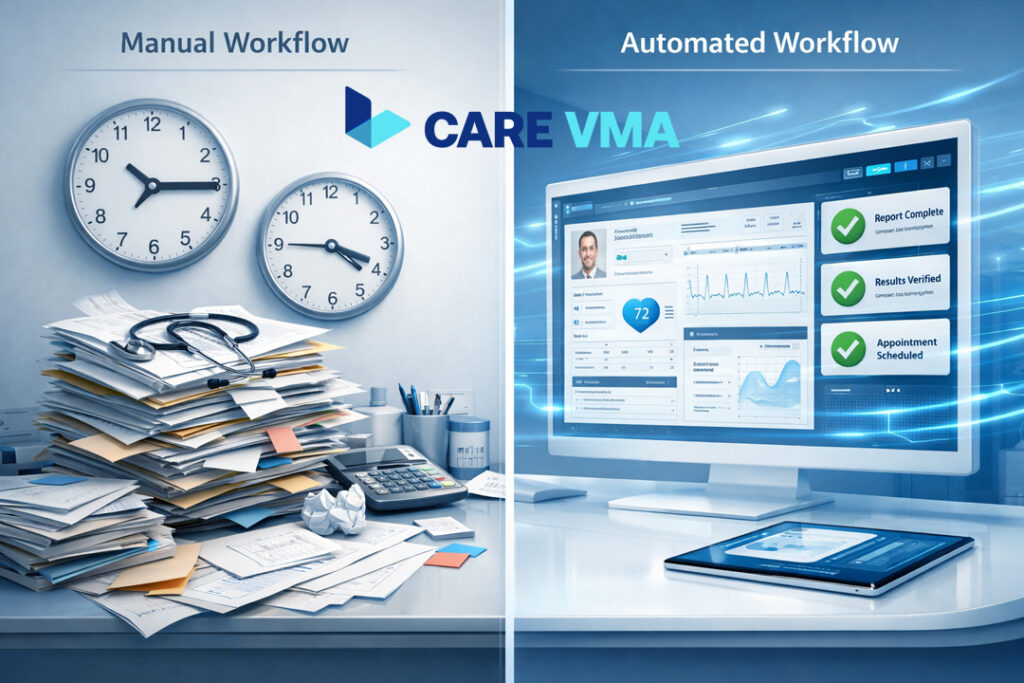
Heavy Administrative Burden and Error-Prone Manual Processes
Traditional methods relying on phone calls and faxes are no longer sustainable. With the complexity of insurance plans increasing, manual entry of insurance IDs and group numbers often leads to typos that trigger automatic denials. When your staff is forced to manually check portals for hundreds of patients, the sheer volume inevitably leads to oversight.
Inaccurate Patient Information Leading to Instant Denials
Claim rejections often stem from simple data mismatches. If the insurance status is not verified within 24-48 hours of the appointment, the risk of treating an ineligible patient skyrockets. A Medical Billing Virtual Assistant can mitigate this by running automated checks that catch plan changes or expired policies before the patient ever walks through the door.
Lack of a Centralized Tracking System for Authorization Status
Many practices still track prior authorizations (PA) on spreadsheets or paper logs. This lack of transparency leads to expired authorizations and missed deadlines. In 2026, a centralized digital dashboard is required to monitor the lifecycle of every PA, ensuring that medical necessity documentation is submitted and approved without manual follow-up loops.
Patient Care Delays Due to Long Approval Times
According to data from the American Medical Association, prior authorization continues to be a major cause of treatment delays. When the workflow is reactive, patients are often forced to reschedule surgery or specialized imaging because the approval did not arrive in time, leading to significant dissatisfaction and potential health risks.
The Pillars of a Healthy RCM: A Complete Guide to Insurance Verification
Confirming Active Status and Policy Effective Dates
Verifying that a policy is active is the bare minimum. In 2026, practices must also confirm the effective dates to ensure coverage does not lapse mid-treatment. This is especially critical for chronic care management where long-term plans are essential.
Benefit Details: Co-pay, Deductible, and Out-of-Pocket Maximum
Transparency is the ultimate patient engagement tool. By providing patients with an accurate estimate of their co-pay and remaining deductible upfront, you reduce the likelihood of “bad debt” later in the cycle. This proactive communication builds trust and allows patients to plan their finances.
Network Status: Ensuring the Provider is In-Network
Out-of-network surprises are a primary driver of negative online reviews. Automated verification tools must check the specific provider’s network status for the patient’s exact plan variant to avoid costly out-of-network billing disputes.
Identifying Prior Authorization Needs Early
The verification process should trigger the PA workflow automatically. If a service like an MRI or specialty drug is flagged as requiring authorization during the verification stage, the administrative team can begin gathering clinical documentation immediately.
Mastering Prior Authorization: From Hurdle to Controlled Process
Understanding the Reason Behind PA: Medical Necessity & Cost Control
Payers utilize PA to ensure that high-cost treatments align with evidence-based medicine. Understanding the clinical criteria for medical necessity is the first step in reducing denials. A Remote Medical Biller who specializes in your specific field can ensure that the initial submission contains all necessary documentation.
Tactical Strategies for Handling Denials: A Guide to Appeals
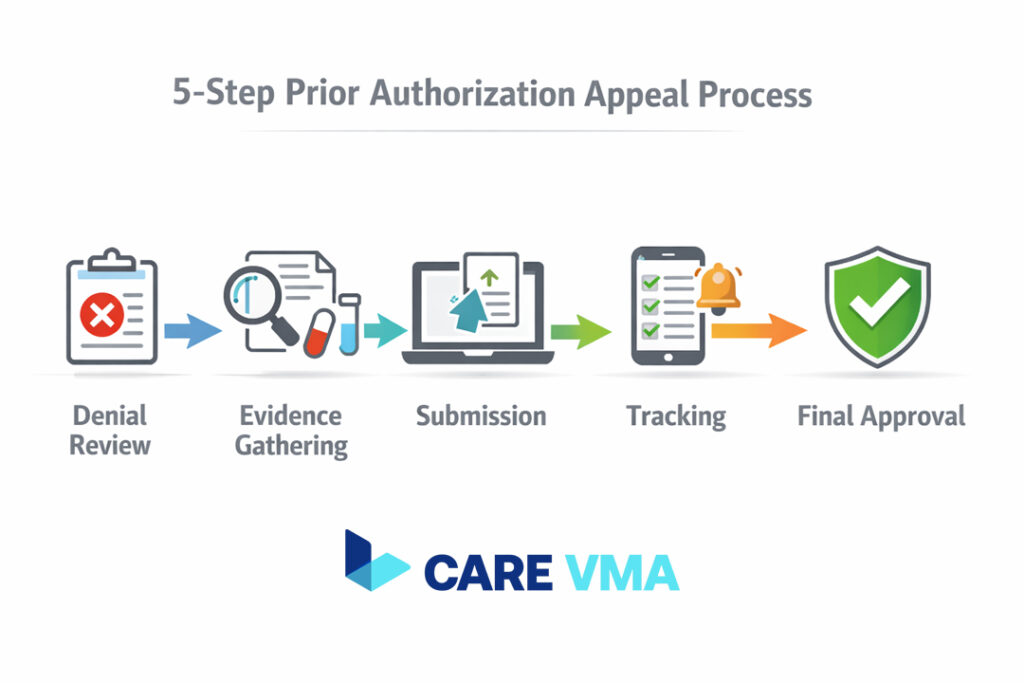
When a PA is denied, it is rarely final. Most denials occur because of missing clinical notes or incorrect coding. To win an appeal:
- Review the specific reason code for the denial immediately.
- Supplement the file with peer-reviewed literature or physician-signed letters of necessity.
- Use a standardized template to ensure all legal requirements for the appeal are met.
Key Metrics (KPIs) for Measuring Efficiency
To improve your RCM, you must measure it. Every practice should track:
- Average Days to Approval: The time from submission to decision.
- PA Clean Submission Rate: Percentage of authorizations approved on the first attempt.
- Cost per Verification: The total administrative cost divided by the number of verifications performed.
The Care VMA Solution: Transforming RCM with Automation and Expertise
Smart Automation: Real-Time Eligibility (RTE) Verification
Care VMA utilizes advanced Real-Time Eligibility (RTE) engines that integrate directly with your EHR. This allows for Clinic Workflow Optimization where eligibility is checked automatically 72 hours before every appointment, eliminating the risk of treating ineligible patients.
Standardized Processes: Digital Checklists and Protocols
We replace guesswork with precision. Our teams use standardized digital protocols to ensure that no detail—from secondary insurance coordination to specific payer requirements—is overlooked. This rigor leads to significantly higher clean claim rates.
Our Expert Team as an Extension of Your Practice
Technology is only half of the equation. Care VMA provides certified RCM specialists who handle the “heavy lifting” of phone calls and clinical documentation gathering. We act as a seamless extension of your front office, allowing your in-house staff to focus on patient care rather than insurance bureaucracy.
FAQ (Frequently Asked Questions for Practice Managers)
What is the first step if our prior authorization request is denied?
Brief Answer: Immediately review the denial reason provided by the insurer. Denials often occur due to incomplete clinical documentation or coding errors. Prepare an appeal with stronger supporting medical evidence and submit it within the payer’s specified appeal window.
How often should we re-verify insurance for existing patients?
Brief Answer: The best practice is to re-verify insurance at every visit. Policies can change at any time due to job changes, annual renewals, or plan transitions. At a minimum, perform a comprehensive re-verification at the beginning of each calendar year.
Can automation technology truly handle the complexity of insurance policies?
Brief Answer: Yes, modern automation systems powered by Care VMA connect to thousands of payer databases nationwide. These systems can intelligently map specific benefit data based on a patient’s unique policy number, reducing manual intervention by up to 80 percent.
Conclusion & Next Steps
Optimizing insurance verification and prior authorization is no longer about working harder; it is about working smarter through digital excellence. By shifting from reactive administration to proactive revenue cycle management, you protect your practice’s bottom line and ensure that your patients receive the care they need without unnecessary delays.
Don’t let claim denials dictate the financial health of your practice. Take the first step towards a streamlined, high-efficiency RCM ecosystem today.
Contact our specialists for a free, no-commitment RCM analysis to see how we can optimize your front-end workflows. Care VMA Medical Billing Services.