The constant ringing of phones, a waiting room full of patients, and a mountain of administrative tasks can quickly overwhelm any medical practice. This administrative burden not only leads to staff burnout but also increases the risk of data entry errors and compliance violations, pulling your focus away from what truly matters: patient care. A healthcare medical receptionist is a specialized administrative professional trained in clinical workflows and patient data security, acting as the crucial first point of contact to optimize practice efficiency and ensure regulatory compliance.
Integrating a dedicated professional to manage the front desk is not an expense- it is a strategic investment in operational excellence and risk mitigation. They are the first voice a patient hears and the gatekeeper of your practice’s daily workflow, making their role critical to your success.
The Expanding Role of the Modern Medical Receptionist
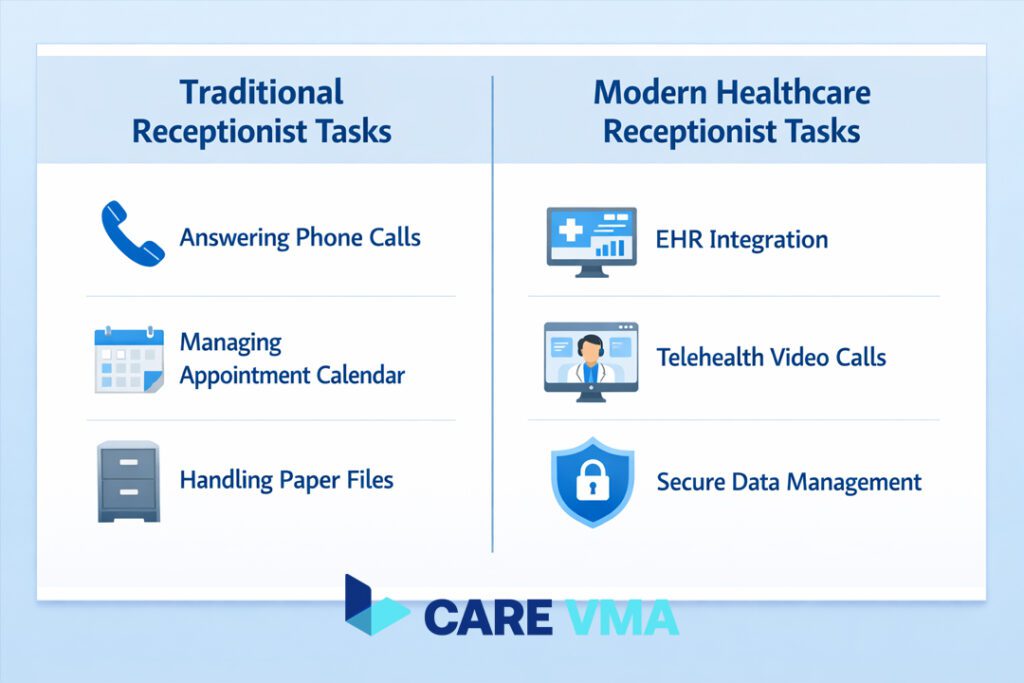
The role of a medical receptionist has evolved far beyond answering phones and scheduling appointments. Today’s healthcare receptionist acts as a Digital Liaison Officer, a crucial link between patients, clinicians, and complex digital systems. They are the frontline guardians of your practice’s digital health data, requiring a deep understanding of Protected Health Information (PHI), integrated clinical workflows, and the stringent standards of HIPAA.
This modern role demands expertise in navigating Electronic Health Records (EHR), managing telehealth coordination, and performing real-time insurance verification. They are no longer just administrative staff; they are tech-enabled specialists who enhance the efficiency and security of the entire practice. The evolution of medical receptionists highlights a shift towards a more integrated, technology-driven position.
5 Core Reasons a Healthcare Receptionist is a Clinical Necessity
Hiring a specialized healthcare receptionist delivers a significant clinical and operational return on investment. Here are five core reasons why this role is a necessity for a modern, thriving practice.
Reason 1: Fortified HIPAA Compliance and Risk Mitigation
One of the greatest operational risks for any practice is a data breach involving Protected Health Information (PHI). A specialized medical receptionist receives rigorous and ongoing training in Patient Privacy Protocols, significantly reducing the risk of accidental disclosures often made by non-specialized staff. According to the U.S. Department of Health & Human Services, strict adherence to the HIPAA Privacy Rule is mandatory, and violations can result in severe penalties. These professionals ensure every patient interaction, from phone calls to email correspondence, meets federal security standards, safeguarding your practice from costly violations and preserving patient trust.
Reason 2: Optimized Clinical Workflow and EHR Management
A healthcare receptionist does more than just manage appointments; they are an extension of your clinical team, integrated directly into your workflow. They handle the time-consuming data entry and administrative tasks within your Electronic Health Records (EHR) and Practice Management Software. This seamless EHR and EMR management frees up physicians and nurses from clerical work, allowing them to dedicate their time and expertise entirely to patient diagnosis and treatment. This optimization leads to shorter patient wait times, more accurate records, and a more efficient clinic overall.
Reason 3: Enhanced Revenue Cycle Management (RCM)
A healthy revenue cycle is the financial backbone of your practice. A skilled medical receptionist plays a pivotal role in the front end of your RCM by performing real-time insurance verification, ensuring accurate co-pay collection, and supporting initial medical coding accuracy. These proactive steps prevent common billing errors and claim denials down the line, ensuring a smoother medical billing integration process. Efficient front-desk operations directly correlate with improved financial performance, a principle supported by healthcare management data.
Reason 4: Drastic Reduction in Physician Burnout
Physician burnout is a critical issue in the healthcare industry, largely driven by overwhelming administrative workloads. By delegating tasks like scheduling, patient follow-ups, and records management to a capable receptionist, you directly combat this problem. This strategic offloading is a core component of physician burnout prevention, allowing clinicians to focus on high-value patient care. The result is improved job satisfaction, better clinical outcomes, and higher patient satisfaction scores (HCAHPS).
Reason 5: Increased Patient Retention and Reduced No-Shows
The first point of contact sets the tone for the entire patient experience. A professional and empathetic receptionist builds positive relationships from the start. They proactively manage appointment confirmations and follow-ups with a human touch, which significantly reduces no-show rates. This consistent, caring communication enhances patient satisfaction and loyalty, directly boosting your patient retention rate. Data from organizations like the Medical Group Management Association (MGMA) consistently shows a strong link between front-desk efficiency and overall practice revenue.
The Care VMA Difference: Beyond Administration to Patient Triage
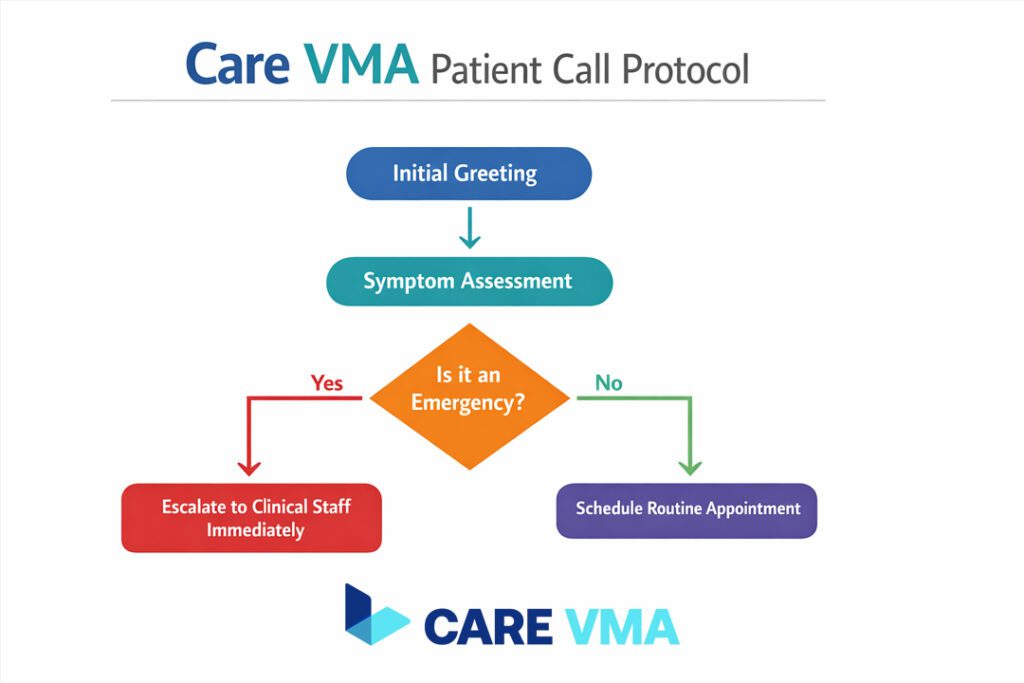
What truly distinguishes a Care VMA healthcare receptionist is the training to go beyond administration and perform initial patient triage. Competitors often overlook this critical function, but our professionals are trained to recognize keywords and signs of urgency during patient calls. They follow clear, pre-approved escalation protocols to ensure that any patient expressing critical symptoms is immediately directed to the appropriate clinical staff.
This capability fills a significant gap in patient safety, ensuring no urgent medical need is missed in a busy administrative queue. Our system for telephone triage support is designed to provide both efficiency and peace of mind, acting as a crucial first line of defense in patient care.
FAQ (Practice Manager’s Common Questions)
Is a virtual receptionist secure for sensitive patient data (PHI)?
Yes. Care VMA uses encrypted connections, secure platforms, and every VMA undergoes rigorous HIPAA-Compliance training and signs a non-disclosure agreement to protect all Protected Health Information. Our commitment to HIPAA compliance and data security is uncompromising.
How does a VMA handle emergency situations or initial triage?
Our VMAs are trained with clear escalation protocols. They can identify signs of an emergency from the conversation and will immediately transfer the call to the designated on-site clinical staff or follow the emergency SOP you have established.
How long does it take to integrate a VMA into our clinic’s system?
Our integration process is designed to be seamless and fast. Typically, a VMA can be fully integrated with your EHR and Practice Management Software within a few business days, with minimal or no downtime for your practice.
Conclusion and Next Steps
Investing in a healthcare medical receptionist from Care VMA is not merely an administrative solution- it is a strategic step toward strengthening your practice’s clinical efficiency, ensuring regulatory compliance, and, most importantly, returning your primary focus to patient care. By optimizing your front-desk operations, you build a more resilient, profitable, and patient-centric practice.
Don’t let operations get in the way of patient care. Schedule a Care VMA consultation demo today for a healthier practice transformation.