Is your front desk staff drowning? The constant ringing of phones, a mountain of administrative tasks, and the pressure to give every patient in your clinic undivided attention can lead to burnout and costly mistakes. Each missed call is a potential lost patient, and a frazzled greeting can tarnish your practice’s reputation before a patient even steps through the door. Imagine, however, if you could have a dedicated team member seamlessly handling every call and administrative detail remotely, freeing your on-site staff to focus entirely on patient care.
A virtual medical receptionist is a remote administrative professional trained in HIPAA compliance who handles a healthcare practice’s front-desk duties. This includes managing patient calls, scheduling appointments directly in your calendar, performing insurance verifications, and handling data entry into your Electronic Health Records (EHR), allowing your in-clinic team to concentrate on providing exceptional patient care. This guide, built on workflow analysis from hundreds of medical practices, breaks down exactly what they do and why it’s a strategic upgrade for modern healthcare.
What is a Virtual Medical Receptionist, Really?
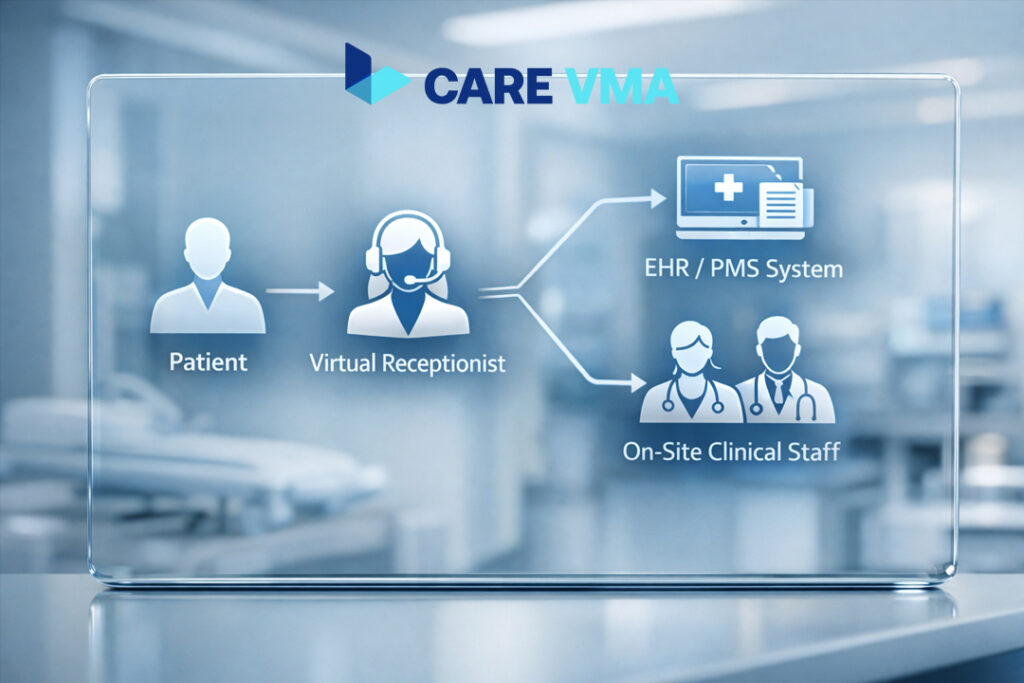
It’s easy to think of a virtual receptionist as just someone answering phones from a different location, but that barely scratches the surface. A true virtual medical receptionist is a fully integrated extension of your team. They aren’t just a voice; they are a skilled professional who understands the unique demands of a healthcare environment and operates within your existing systems.
Here’s the thing: they use secure technology to function as if they were sitting at your front desk. This involves working directly within your clinic’s Practice Management Software (PMS) and Electronic Health Record (EHR). Communication is handled through secure VoIP (Voice over IP) phone systems and encrypted messaging platforms to ensure every piece of patient information is protected under strict HIPAA compliance guidelines. They become a seamless part of your daily operations, not an outsourced, disconnected service.
The Core Duties: Solving Your Biggest Front-Desk Headaches
A virtual receptionist’s tasks are specifically designed to solve the most persistent and frustrating problems that plague a busy clinic’s front desk. Instead of just listing duties, let’s look at them as solutions.
1. Comprehensive Patient Call Management
The phone is often the biggest source of stress. A virtual receptionist transforms it from a disruption into an asset. Instead of frustrating patients with a busy signal or voicemail, a virtual team member provides a professional and helpful voice every time. They handle:
- Answering general patient inquiries about hours, location, and services.
- Triaging calls to determine urgency and routing them to the correct person, whether it’s a nurse for a clinical question or the billing department.
- Providing after-hours and overflow support, ensuring you never miss a call from a new or existing patient.
This directly translates to no more calls going to voicemail during lunch breaks and a calmer, more focused in-clinic environment.
2. Real-Time Appointment & Calendar Coordination
An empty slot in a provider’s schedule is lost revenue. What most people don’t realize is that efficient scheduling is more than just booking appointments. A virtual receptionist optimizes your calendar by:
- Booking, canceling, and rescheduling appointments directly in your EHR or PMS.
- Sending automated and manual appointment reminders to drastically reduce your no-show rate.
- Proactively managing a waitlist to fill last-minute cancellations, maximizing your providers’ time.
This ensures your schedule stays full and your practice runs at maximum efficiency, directly impacting your bottom line.
3. Proactive Patient Intake & Onboarding
The patient experience begins long before they walk in. A virtual receptionist handles the crucial pre-visit administrative work that often creates bottlenecks in the waiting room. This includes:
- Sending digital intake forms for patients to complete at their convenience.
- Performing detailed insurance verification and eligibility checks to prevent surprise billing issues.
- Obtaining pre-authorizations for procedures, ensuring a smooth and financially clear process for both the patient and the practice.
This work means patients spend less time with a clipboard in your waiting room and more time with your clinical team.
4. Essential Administrative & Clinical Support
Many administrative tasks fall on the shoulders of clinical staff, pulling them away from patient care. A virtual receptionist can take on these “back-office” duties, such as:
- Coordinating referrals with specialist offices, including sending and receiving necessary records.
- Managing prescription refill requests from patients and pharmacies, forwarding them to the clinical team for final approval.
- Assisting with basic billing questions and processing co-payments over the phone.
By offloading these responsibilities, you free up your nurses and medical assistants to work at the top of their licenses.
When Does Your Practice Need a Virtual Receptionist?
Feeling overwhelmed is a clear sign, but specific operational metrics can tell you it’s time for a change. If your practice is experiencing these symptoms, a virtual receptionist is no longer a luxury—it’s a necessity.
- Your staff frequently says the phones “never stop ringing.”
- Patients are regularly put on hold for more than 60 seconds.
- Your appointment no-show rate is consistently above the industry average of 10%.
- Team members are staying late just to catch up on administrative tasks and paperwork.
- You’re losing potential new patients to competitors because your lines are always busy. As research from Harvard Business Review has shown, prompt customer service is critical for retention.
- You want to offer extended phone service hours without the high cost of keeping the physical office open.
Beyond a Standard Service: The Care VMA Health Advantage 🔥
Not all virtual receptionist services are created equal. Many are little more than generic answering services that just take messages. The key difference lies in deep integration and a partnership approach. This is where Care VMA Health stands out.
Dedicated Onboarding & Workflow Mastery
We address the biggest concern practice managers have: “How will they know how my clinic works?” Our process begins with a deep dive into your specific protocols. We learn your staff’s names, your preferred scheduling methods, and the nuances of your EHR. Your Care VMA receptionist becomes a true specialist for your practice, not a generic agent.
Scalable Support for Peak Seasons
Healthcare demand isn’t static. During flu season or a community health event, call volume can skyrocket. Care VMA offers the flexibility to scale your coverage up or down as needed. You get more support when you need it most and aren’t paying for idle time during slower periods.
Seamless EHR & PMS Integration
Our team has hands-on experience with the industry’s leading platforms. Whether you use Athenahealth, Epic, DrChrono, or eClinicalWorks, we integrate directly into your system. This isn’t about relaying messages; it’s about taking action—booking appointments, updating records, and verifying insurance in real-time within the software you already use.
Real-World Example: A private dermatology practice with two specialists was struggling with front-desk burnout and high patient hold times. After partnering with Care VMA for call management and patient intake, they reduced phone wait times by 90% and cut their no-show rate by 25% through consistent, proactive reminders. Their on-site staff reported a significant increase in job satisfaction, as they could finally focus on the patients in front of them.
Feeling the pressure of endless administrative tasks? See how our dedicated Virtual Medical Receptionist Services can restore balance to your practice.
The Tangible Outcomes: Why This Matters for Your Bottom Line
Implementing a virtual receptionist isn’t just about making life easier; it’s a strategic business decision with measurable returns.
- Financial Impact: You save significantly on the costs associated with an in-house employee (salary, benefits, office space, hardware). More importantly, by capturing every call and reducing no-shows, you actively increase revenue. Accurate, upfront insurance verification also leads to fewer denied claims.
- Operational Efficiency: Your entire clinic workflow becomes smoother. With administrative tasks handled proactively, there are fewer bottlenecks. Clinical staff are freed from paperwork, leading to better documentation and more time for patient care.
- Enhanced Patient & Staff Experience: A positive first impression on the phone sets the tone for the entire patient journey. For your team, reducing the administrative burden is a direct antidote to the burnout that plagues the healthcare industry, a factor widely documented by institutions like the National Institutes of Health (NIH).
Virtual Receptionist vs Answering Service vs. In-House Staff
Understanding the differences is key to making the right choice. Here’s a simple breakdown:
| Feature | In-House Staff | Answering Service | Care VMA Virtual Receptionist |
|---|---|---|---|
| Task Scope | Full range, but divided attention | Takes basic messages only | Comprehensive admin and clinical support |
| EHR Integration | Yes | No | Yes, direct real-time action |
| Cost | Highest (salary + overhead) | Low | Cost-effective, scalable |
| HIPAA Compliance | Yes | Varies, often basic | Yes, rigorously trained |
| Availability | Office hours only | Typically 24/7 | Customizable, including after-hours |
An answering service is a passive message taker. A Care VMA Virtual Receptionist is an active, integrated partner who manages your workflow as a true extension of your team.
Explore Further with Care VMA Health
Diving deeper into workflow optimization can unlock even more potential for your practice.
- Discover how a holistic approach can transform your operations in our guide to Maximizing Practice Potential with a Healthcare Virtual Assistant.
- Curious about the comparison? See a detailed breakdown of Virtual vs. In-Person Receptionists for a Medical Office.
- Understand the full scope of duties we can take off your plate by exploring 10 Administrative and Clinical Tasks Your Medical VAs Can Handle.
Frequently Asked Questions
How does a virtual receptionist stay HIPAA compliant?
They operate using secure, encrypted communication platforms (like VoIP and secure messaging) and access your EHR through protected connections. Reputable providers like Care VMA Health undergo rigorous HIPAA training and sign a Business Associate Agreement (BAA), legally guaranteeing the protection of patient data.
Can they integrate with my specific EHR software?
Yes. Professional services are built for integration. During the onboarding process, the virtual receptionist is trained specifically on your practice’s EHR and PMS, whether it’s a major system like Epic or a specialty-specific platform.
What’s the difference between a virtual receptionist and a basic answering service?
A basic answering service only takes messages. A virtual medical receptionist is an integrated team member. They don’t just relay information—they take action. They schedule appointments in your calendar, verify insurance, and handle administrative tasks as if they were in the office with you.
Your Path to a Calmer, More Profitable Practice
Ultimately, managing a modern medical practice isn’t about hiring more people—it’s about working smarter. A virtual medical receptionist is not just a replacement for in-house staff; it’s a strategic upgrade that empowers your clinical team to focus on what they do best: caring for patients.
Are you ready to imagine a workday where the phone is an opportunity, not a disruption?
Stop letting administrative chaos dictate the rhythm of your practice. Schedule a Free Workflow Assessment with a Care VMA Health specialist today. We’ll provide a personalized plan to free up your staff, delight your patients, and build a more resilient practice.