![Virtual Patient Triage & Intake | Cut Wait Times & Costs [HIPAA]](https://carevmahealth.com/wp-content/uploads/2026/03/Virtual-Patient-Triage-Intake-1024x683.jpg)
Disclaimer: This content is for informational purposes for healthcare institutions and administrators. It is not intended as medical advice for individual patients.
Overcrowded emergency departments, declining patient satisfaction scores, and clinician burnout are no longer just daily frustrations; they are expensive operational crises. Every patient who walks out due to long waits represents a loss of revenue and a significant risk to your facility’s reputation. Now, imagine a system where 90% of the administrative intake is completed before the patient even arrives, allowing your team to focus entirely on providing care. Virtual patient triage and intake is that solution-a digital platform that automates patient reception and prioritization using AI, designed to reduce wait times, cut operational costs, and increase patient throughput.
The Hidden Costs of Long Queues: Why Manual Intake is No Longer Sustainable?
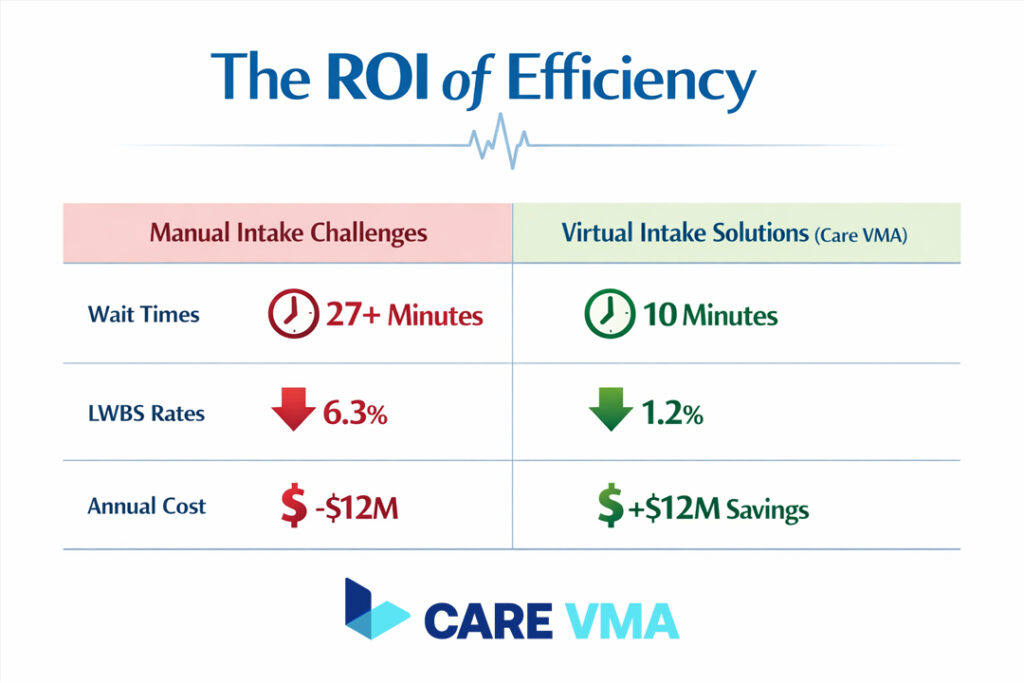
For hospital administrators and clinic managers, the traditional clipboard and waiting room model is a source of profound inefficiency. This outdated process creates bottlenecks that have quantifiable negative impacts on your facility’s financial health and operational stability.
The Damaging Impact of High LWBS (Left Without Being Seen) Rates
When wait times exceed patient tolerance, they leave. Each LWBS event is a direct financial loss, not just from the immediate unbilled services but also from the potential lifetime value of that patient. Studies have shown that facilities with inefficient intake can see LWBS rates as high as 6.3%, translating into millions in lost revenue annually. This metric is a direct indicator of system-wide inefficiency and patient dissatisfaction.
The Administrative Burden on Clinical Time
Manual data entry, insurance verification, and paperwork consume a significant portion of your staff’s time. This administrative burden takes valuable time away from patient-facing duties, a core challenge that virtual medical admin assistants are designed to solve. When skilled nurses and front-desk staff are bogged down with clerical tasks, patient care slows, and staff morale plummets, contributing to higher turnover rates.
Decreased Patient Satisfaction and Hospital Reputation
In today’s healthcare landscape, patient experience is paramount. A frustrating, lengthy intake process is often the first interaction a patient has with your facility, setting a negative tone for their entire care journey. This poor first impression directly impacts HCAHPS scores and online reviews, which are critical for attracting new patients and maintaining a positive community reputation.
The Care VMA Solution: From Manual Workflows to Automated Intake Systems
Our platform is engineered to dismantle these bottlenecks and replace them with a seamless, digital-first patient journey. We transform the front door of your hospital from a point of friction into an engine of efficiency.
AI Symptom Checker for Intelligent Patient Prioritization
Before a patient arrives, our AI-powered tool guides them through a series of clinically validated questions. It assesses symptom severity and acuity, automatically flagging high-risk patients for immediate attention upon arrival. This pre-triage ensures that the most critical cases are prioritized, improving clinical outcomes and resource allocation.
Digital Intake & Insurance Verification from Anywhere
Patients can complete all necessary registration forms, upload their ID and insurance cards, and sign consent forms from the comfort of their home using any device. This process, often managed by a virtual medical receptionist, ensures data is captured accurately and completely before arrival, reducing front-desk processing time to mere seconds.
Clinical Decision Support (CDS) for ED Staff
The information gathered during the virtual intake is synthesized and presented to your triage nurses and clinicians in a concise, actionable format. This provides them with a clear picture of the patient’s condition and history, enabling faster, more informed clinical decisions right from the start.
Virtual Waiting Rooms to Reduce Physical Crowding
For non-critical cases, our system allows patients to check in and then wait in their car or at home. They receive real-time updates and an SMS notification when it is their turn to be seen, drastically reducing the number of people in your physical waiting area and creating a safer, more pleasant environment for everyone.
Security and Compliance as a Top Priority
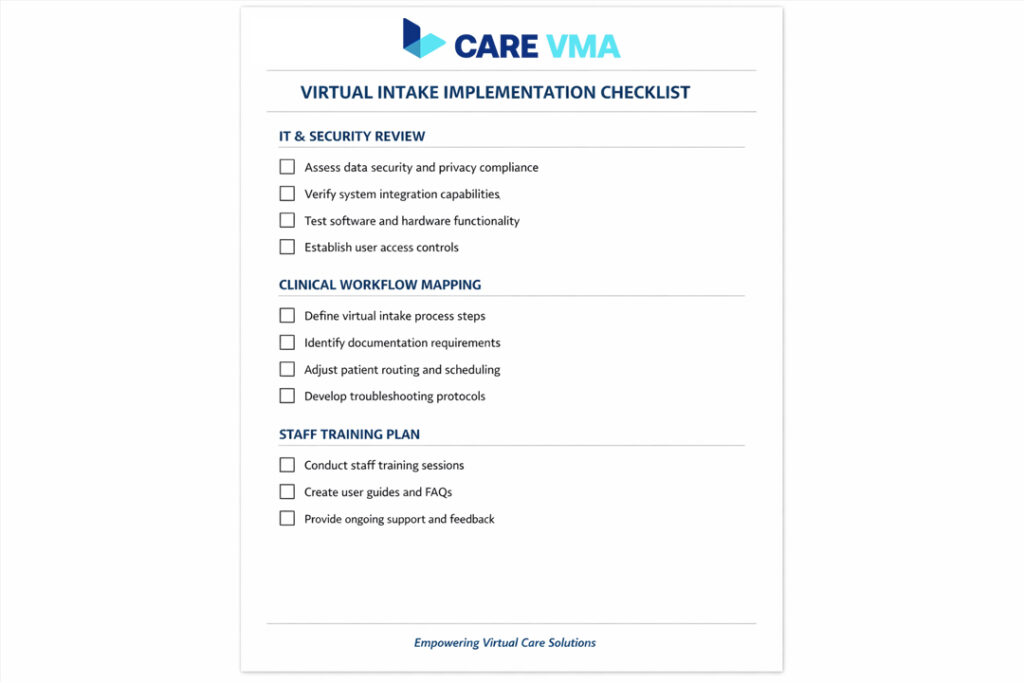
Adopting new technology in a clinical setting brings valid concerns about data security and patient safety. Our platform is built on a foundation of trust and transparency, directly addressing the biggest worries of healthcare IT and clinical leadership.
A Secure, Encrypted Platform That Meets HIPAA Standards
Every piece of data transmitted through our system is protected with end-to-end encryption. Our platform architecture is designed to be fully compliant with the Health Insurance Portability and Accountability Act (HIPAA), and we provide a signed Business Associate Agreement (BAA) to all our partners. We ensure that your patient data and your organization are protected.
Mitigating Undertriage Risk with Deterministic Guardrails
We understand the clinical concern that an AI might miss a critical symptom. To prevent this, our system includes “deterministic guardrails.” These are hard-coded rules that automatically escalate a patient to the highest priority level if they report red-flag symptoms like chest pain, shortness of breath, or signs of a stroke. This safety layer is a non-negotiable part of our design, often regulated under standards for Software as a Medical Device (SaMD).
Seamless and Secure Integration with Your EHR (Epic, Cerner, etc.)
Our platform is not a standalone silo. We specialize in secure, bidirectional integrations with major Electronic Health Record systems, including Epic and Cerner. We work with your IT team to ensure data flows seamlessly into your system, a key aspect of modern EHR/EMR management. This eliminates the need for manual data re-entry, reduces the risk of error, and ensures a single source of truth for patient information.
Frequently Asked Questions from Operations Managers
How long does implementation and staff training take?
Our phased implementation process is designed for minimal disruption and typically takes 4-6 weeks. This includes dedicated sessions for both administrative and clinical staff. Our implementation includes comprehensive training and education for healthcare professionals to ensure a smooth transition and rapid adoption.
How does the platform ensure patient data is accurate if it’s self-entered?
Our system uses intelligent data validation fields to prevent common errors. More importantly, it integrates directly with your EHR and other databases to cross-reference and verify demographic and insurance information in real-time, significantly reducing the manual input errors common with traditional processes.
Can the system be customized for our specific department’s workflow?
Absolutely. The platform is highly flexible. We understand that an emergency department’s needs are different from a specialist clinic or an outpatient center. Our team works with you to configure the intake and triage logic to match your unique operational workflows and clinical protocols.
Conclusion and Your Next Step
In the post-pandemic healthcare environment, adopting virtual triage and intake is no longer just an innovative choice-it is a strategic necessity. To remain competitive, improve financial health, and combat staff burnout, you must eliminate the operational friction that slows down care. By automating the front-end of the patient journey, you empower your clinical teams to do what they do best: provide excellent patient care.
Ready to cut your wait times and operational costs? Let us show you how a streamlined, digital front door can transform your facility.
Schedule a 15-minute demo to see how the Care VMA platform can integrate with your system. Explore our Telephone Triage Remote services today.