Disclaimer: This document is intended as a general template. We strongly advise consulting with your legal counsel or HR department to tailor this job description to your specific practice needs and ensure full compliance with local and federal regulations.
Is the ever-growing mountain of administrative tasks pulling your team’s focus away from what matters most – patient care? Overlapping schedules, time-consuming insurance verifications, and outdated electronic health records are more than just daily frustrations. They contribute to staff burnout, risk lowering the quality of your service, and can directly impact your practice’s revenue. The solution is hiring the right Virtual Medical Assistant (VMA). A Virtual Medical Assistant (VMA) is a remote healthcare professional who provides comprehensive administrative and clinical-adjacent support to medical practices. This job description template outlines the key duties, qualifications, and modern skills required to ensure a VMA can integrate effectively and securely into your clinic’s workflow, helping you regain control and efficiency.
This template is modeled on the same high standards we use at Care VMA to source and vet elite talent for top US healthcare practices. Use it to attract professionals who can truly transform your operational efficiency.
Job Title: Virtual Medical Assistant (Remote)
Job Summary
We are seeking a highly organized, tech-savvy, and detail-oriented Virtual Medical Assistant to become a core member of our remote operations team. The VMA will be responsible for a wide range of administrative and patient support duties. The ideal candidate will act as a seamless extension of our in-office team, reducing the administrative load on our clinicians and allowing them to dedicate their time to delivering exceptional patient care. This role is critical for enhancing our practice’s efficiency and improving the overall patient experience.
Key Responsibilities
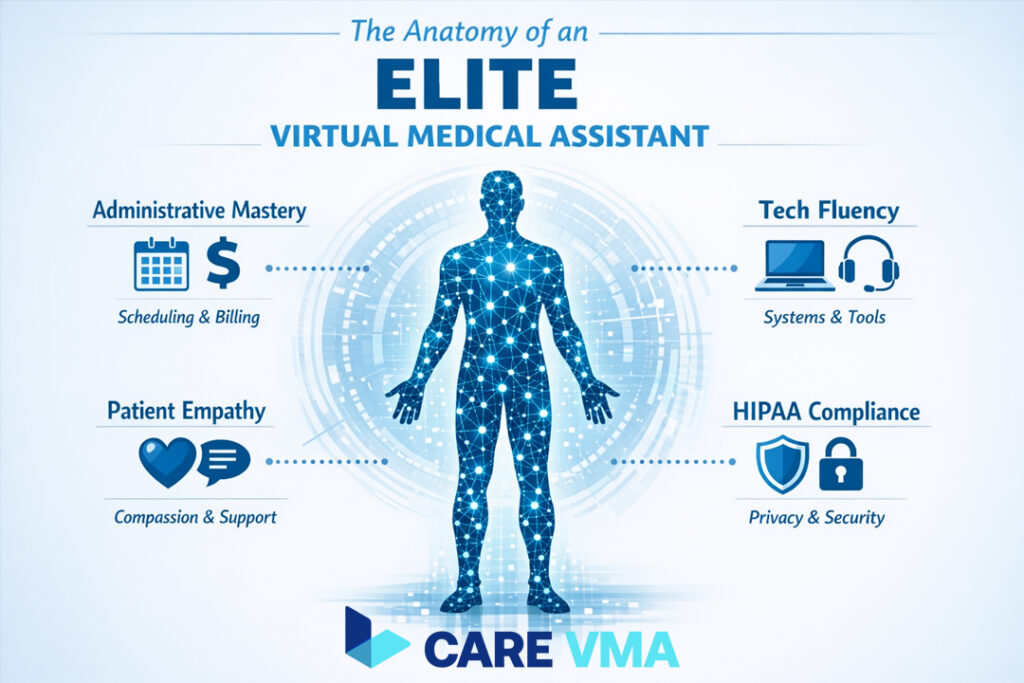
We have grouped the primary responsibilities into three core functional areas to ensure clarity and focus for the role.
1. Administrative and Scheduling
- Appointment Management: Efficiently schedule, reschedule, and cancel patient appointments across multiple provider calendars.
- Patient Intake: Coordinate and manage the distribution and collection of digital patient intake forms, medical histories, and consent documents prior to appointments.
- Insurance Verification: Conduct thorough insurance eligibility and benefits verification, including obtaining necessary pre-authorizations for procedures and treatments. This is a crucial step for streamlining your practice’s revenue cycle.
- Billing Support: Provide assistance with basic medical coding, submitting claims to payers, and processing patient payments.
2. Patient Communication
- Virtual Reception: Serve as the first point of contact, professionally answering inbound calls and emails, addressing non-clinical inquiries, and routing urgent messages appropriately.
- Reminders and Follow-ups: Manage automated and manual appointment reminders, and conduct post-visit follow-up communications to ensure patients understand their care plans.
- Telehealth Support: Provide basic technical guidance and support to patients logging in for telehealth appointments, ensuring a smooth and timely start to virtual consultations.
3. Clinical and Documentation Support
- EHR Management: Maintain and update patient charts in the Electronic Health Records (EHR) system with accuracy, including posting lab results, specialist reports, and other medical documents.
- Medical Scribing and Transcription: If applicable, perform real-time medical scribing during telehealth encounters or transcribe physician notes from audio recordings.
- Prescription Coordination: Process prescription refill requests as directed by the prescribing provider and coordinate with pharmacies.
- Referral Management: Manage the end-to-end referral process, from coordinating with specialists’ offices to ensuring the timely transfer of required medical documentation.
Required Skills and Qualifications
These qualifications represent the foundational expertise necessary for a VMA to succeed and add immediate value to a modern medical practice.
- Education: High school diploma or equivalent is required. An Associate’s or Bachelor’s degree in Healthcare Administration or a related field is highly preferred.
- Certification: Professional certification such as Certified Medical Assistant (CMA) or Registered Medical Assistant (RMA) is a significant advantage.
- Experience: A minimum of 2 years of experience working in a medical office setting or as a VMA is required.
- HIPAA Knowledge: Demonstrable and thorough understanding of HIPAA regulations is mandatory. Ensuring strict HIPAA compliance and data security is non-negotiable for this remote role.
- Communication: Exceptional written and verbal communication skills with a professional and empathetic tone.
- Tech-Savviness: High proficiency with EHR/EMR platforms (e.g., Epic, Athenahealth, DrChrono) and modern collaboration tools like Slack and Microsoft Teams.
Technical Requirements for Remote Work
Adherence to these technical standards is essential for maintaining operational security, efficiency, and HIPAA compliance in a remote work environment.
- Secure Workspace: A dedicated, private, and quiet workspace that is free from distractions and ensures patient information confidentiality.
- Hardware: A modern and reliable computer with a webcam and headset, supported by a stable, high-speed internet connection (minimum 25 Mbps download speed).
- Software Proficiency: Familiarity with video conferencing platforms (Zoom, Teams), scheduling software (Calendly), and the mandatory use of a VPN and secure password manager.
Personal Attributes
Beyond technical skills, these personal attributes are what separate a good VMA from a great one. They are essential for autonomous work and high-quality patient interaction.
- Self-Starter: Proactive and able to work independently with minimal supervision, demonstrating strong time management and organizational skills.
- Attention to Detail: Meticulous accuracy in data entry, scheduling, and medical documentation is paramount.
- Adaptability: A positive attitude towards learning new software and adapting to evolving practice workflows and technologies.
- Empathy: The ability to remain calm, patient, and compassionate when interacting with patients who may be anxious or unwell.
Why Hiring on Your Own is Time-Consuming and Risky?
The recruitment process for a qualified VMA is demanding. It involves sifting through dozens of resumes, conducting multiple interviews, rigorously testing for HIPAA knowledge and technical skills, and then navigating a complex onboarding process. Getting it wrong means wasted time, lost productivity, and potential security risks. This entire process can be a significant drain on resources, pulling you away from patient care and practice management. It’s a key factor leading to physician burnout, a problem that a VMA is meant to solve, not create.
The Smart Solution from Care VMA
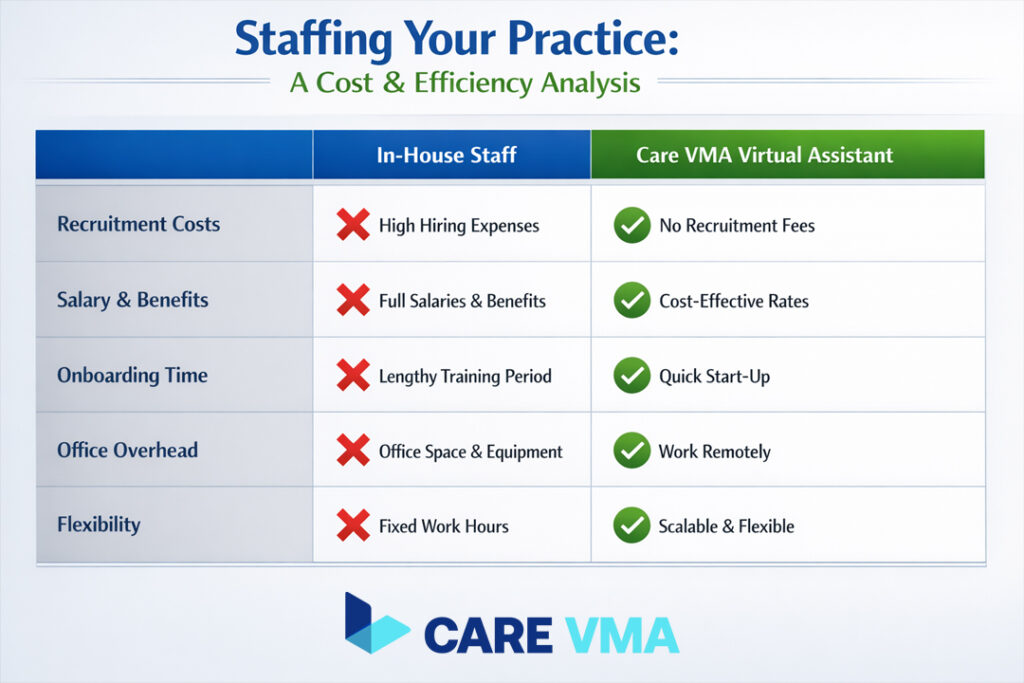
This job description isn’t just a template; it’s the exact framework we use to recruit, vet, and train our network of professional VMAs. We handle the entire recruitment burden for you.
- Save Time and Money: We eliminate your recruitment costs and time investment. Skip the entire hiring process and get straight to interviewing top, pre-vetted candidates.
- Access Verified Talent: Our VMAs are already trained in the intricacies of the US healthcare system and have verified expertise in EHR platforms, billing, and HIPAA compliance.
- Seamless Onboarding and Support: We provide ongoing support through a dedicated Account Manager to ensure your VMA integrates smoothly and continues to meet your practice’s high standards.
FAQ (Frequently Asked Questions When Hiring a VMA)
What is the main difference between a VMA and a general virtual assistant?
The primary difference is specialization. A VMA possesses specific training in medical terminology, clinical workflows, EHR software, and, most importantly, HIPAA compliance. A general VA typically lacks this critical healthcare-specific knowledge, making them unsuitable for handling protected health information.
How can we ensure a VMA remains HIPAA-compliant while working remotely?
Compliance is ensured through a multi-layered approach. This includes rigorous initial and ongoing HIPAA training, the mandatory use of secure, encrypted software and VPNs, and strict requirements for a private, secure home office environment. At Care VMA, we verify these conditions are met and maintained.
Can a Virtual Medical Assistant handle hands-on clinical tasks?
No. A VMA’s role is to handle ‘clinical-adjacent’ tasks. They manage documentation, scheduling, patient communication, and administrative coordination that supports clinical staff. They do not perform any tasks that require a medical license, such as diagnosing conditions, providing medical advice, or administering treatment. Their work frees up time for physicians and nurses to focus exclusively on these core clinical duties.
Conclusion and Next Steps
Implementing a detailed and modern job description is the foundational first step toward building a more resilient and efficient practice. An elite Virtual Medical Assistant is not merely an administrative add-on; they are a strategic investment in reducing staff burnout, optimizing your revenue cycle, and, most importantly, allowing you to reclaim your focus on providing outstanding patient care. These professionals handle a wide range of administrative and clinical tasks that are essential for a smooth-running practice.
Ready to transform your practice’s efficiency? You can download this template to begin your search, or you can bypass the entire complex recruitment process. Schedule a complimentary 15-minute consultation with a Care VMA Staffing Specialist today to meet qualified VMA candidates we’ve already vetted for you.