Is your team spending more time managing telehealth admin than treating patients? As virtual care becomes a standard of modern healthcare, many practice managers and administrators are discovering that the backend operations are far more complex than anticipated. The daily struggle with billing errors, compliance risks, and inefficient workflows is not just frustrating-it leads to significant revenue leakage and staff burnout, directly hindering your ability to provide excellent patient care.
Telehealth administration is the system of operations management, technology, and regulatory compliance that forms the backbone of all virtual healthcare services. Without an efficient and proactive administrative strategy, your telehealth program cannot reach its full potential. This guide provides a clear blueprint for transforming your operational challenges into a competitive advantage, ensuring your practice is not just surviving but thriving in the digital healthcare landscape.
The Crumbling Foundation: 5 Core Challenges Derailing Telehealth Operations
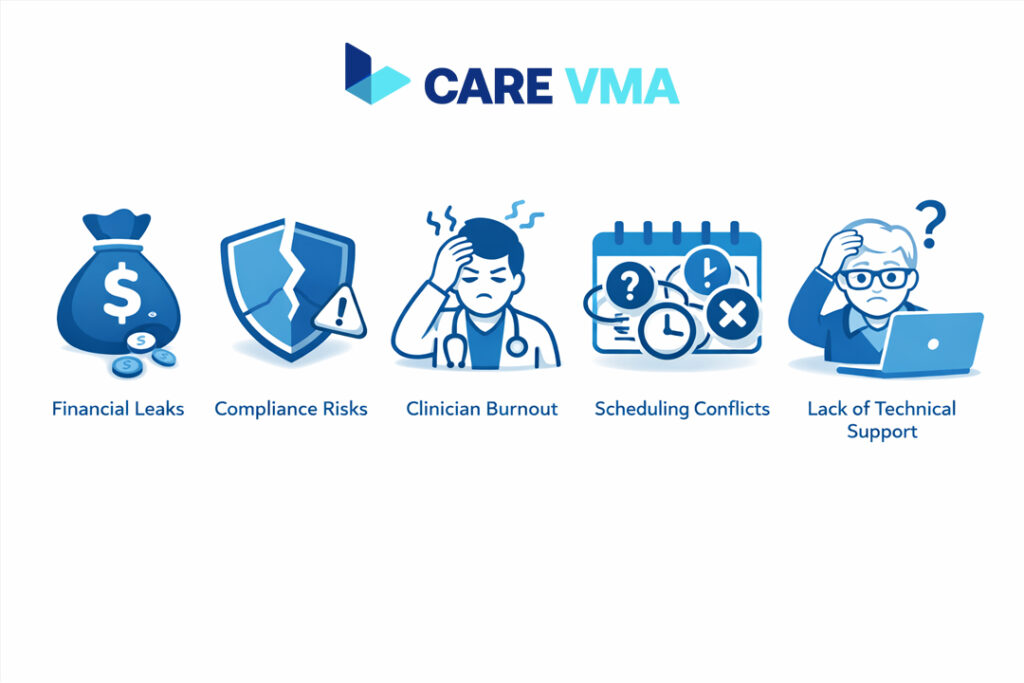
Before building a robust system, it is crucial to identify the weak points. For many practices, the transition to virtual care has exposed foundational cracks in their administrative processes. These are not minor inconveniences; they are significant business risks that demand immediate attention.
Financial Leaks from Billing Errors and Reimbursement Complexities
Telehealth billing is a minefield of evolving CPT codes, varying payer policies, and specific documentation requirements. A single coding error can lead to a denied claim, and the administrative cost of appealing that denial often outweighs the reimbursement itself. According to industry reports, claim denial rates can be as high as 10% or more, representing a substantial loss of revenue for practices that lack specialized billing oversight.
Compliance Risks from HIPAA Violations in Digital Communication
Every email, text reminder, and portal message that contains protected health information (PHI) falls under HIPAA regulations. An unsecured communication channel or an improperly trained staff member can lead to a data breach, resulting in severe financial penalties and irreparable damage to your practice’s reputation. The HIPAA Security Rule specifically mandates administrative, physical, and technical safeguards for electronic PHI, a standard many growing practices struggle to consistently maintain.
Clinician Burnout from Inefficient EHR Data Entry
Clinicians are already facing unprecedented levels of burnout. When they are also required to perform tedious data entry and administrative tasks before, during, and after each virtual visit, it takes them away from their primary focus: the patient. Inefficient EHR and EMR management leads to longer hours, decreased job satisfaction, and a higher risk of clinical errors.
Scheduling Conflicts and High Patient No-Show Rates
Coordinating virtual appointments across multiple provider schedules while managing reschedules and cancellations is a logistical nightmare without a streamlined system. Furthermore, patient no-shows, often due to technical difficulties or forgotten appointments, lead to wasted provider time and lost revenue. An inefficient scheduling process creates friction for both staff and patients, undermining the convenience that telehealth is meant to offer.
Lack of Technical Support for Patients (Especially the Elderly)
For many patients, particularly older adults or those with limited digital literacy, navigating telehealth platforms can be intimidating. A lack of clear instructions, pre-appointment tech checks, and accessible support can lead to missed appointments and a poor patient experience. A successful telehealth program must account for the user’s technical comfort level.
From Reactive to Proactive: Building a Resilient Telehealth Administrative Ecosystem
Simply managing day-to-day tasks is not enough. The key to long-term success is building a proactive administrative system that prevents problems before they occur. This is where dedicated virtual administrative support transforms your operations from a source of stress into a streamlined, revenue-protecting asset.
- Precision in the Revenue Cycle: From Patient Intake to Payment Reconciliation A proactive approach to revenue cycle management starts long before a claim is submitted. By outsourcing to a team of specialists, you ensure every step is optimized for success. Our medical billing virtual assistants meticulously handle pre-authorization and insurance eligibility verification to confirm coverage upfront. They ensure accurate coding and documentation for every encounter, drastically reducing the likelihood of initial claim denials and protecting your practice’s financial health.
- HIPAA Compliance as a Standard: Securing Every Patient Interaction For Care VMA, compliance is not an afterthought; it is built into our core operations. Our teams operate on secure, encrypted platforms and undergo continuous, rigorous training on the latest standards for HIPAA compliance and data security. Every patient interaction, from scheduling to follow-up, is handled within a controlled environment designed to protect sensitive data and give you peace of mind.
- Easing Clinician Burden: Scribe Support and EHR Data Management Imagine your clinicians being able to focus 100% on the patient during a virtual visit, without the distraction of typing notes. A virtual medical scribe joins the consultation remotely and handles all real-time documentation directly within your EHR. This simple yet powerful service frees up hours of your clinicians’ time, reduces burnout, and improves the quality of patient interaction and medical records.
- Optimizing Schedules and Communication to Reduce No-Shows An optimized schedule is managed, not just maintained. A dedicated virtual medical receptionist takes full ownership of your calendar, implementing a multi-step communication strategy that includes automated reminders, personalized confirmation calls, and clear pre-appointment instructions with tech support guidance. This proactive approach significantly reduces no-show rates and ensures a smooth start to every virtual visit.
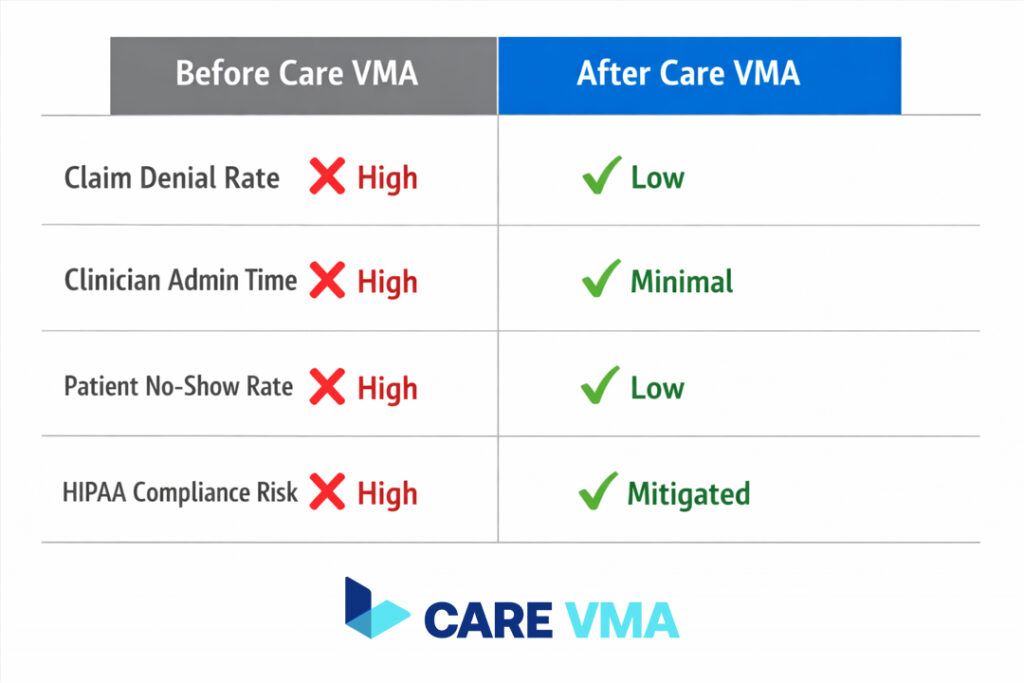
The Tangible Benefits of Optimized Telehealth Administration
Investing in a specialized administrative team yields concrete returns that go straight to your bottom line and enhance your practice’s reputation.
Increased Revenue Through Accurate and Timely Claims
By minimizing claim denials and ensuring every billable service is correctly coded and submitted, you capture revenue that was previously being lost to administrative errors. This creates a more stable and predictable cash flow for your practice.
Mitigated Legal and Financial Risks from HIPAA Penalties
Proactive compliance management shields your practice from the devastating financial and reputational costs of a HIPAA violation. A dedicated, trained team ensures your administrative processes meet and exceed regulatory standards.
Expanded Service Capacity Without Overburdening Core Staff
With administrative tasks expertly handled, your clinical staff is free to see more patients. You can scale your telehealth services and grow your practice without the need to hire and train additional in-house administrative employees.
Enhanced Practice Reputation Through a Seamless Patient Experience
From the first scheduling call to the final payment, a smooth, professional, and supportive administrative process leaves a lasting positive impression on patients. This enhances patient satisfaction, encourages loyalty, and generates positive reviews.
FAQ: Common Questions from Healthcare Managers
How does the integration process work for Care VMA’s virtual admin team with our EHR system?
Our onboarding is a structured, collaborative process. We begin with a thorough workflow audit to understand your current systems. We then establish secure, role-based access to your EHR with the minimum necessary privileges. Finally, our team undergoes specific training on your platform to ensure seamless integration from day one.
What are the key administrative roles that provide the most efficiency impact when outsourced?
The three roles that deliver the most immediate and significant impact are the Medical Billing & Coding Specialist, the Patient Coordinator (for scheduling and intake), and the EHR Data Assistant or Medical Scribe. These roles directly address the biggest pain points of revenue, scheduling, and clinician burden.
How does Care VMA ensure patient data (ePHI) security when the team works remotely?
We operate on three pillars of security. First, our technological infrastructure utilizes encrypted VPNs and secure, monitored workstations. Second, our staff undergoes continuous HIPAA compliance and data security training. Third, we implement regular activity monitoring and auditing to ensure all protocols are strictly followed.
Conclusion: Your Next Step Towards Operational Excellence
Optimizing telehealth administration is no longer an option-it is a requirement for any modern healthcare practice aiming for sustainable growth and clinical excellence. Allowing operational complexity to create financial leaks, compliance risks, and staff burnout is a choice. By building a proactive and resilient administrative ecosystem, you empower your clinical team to do what they do best: provide outstanding patient care.
Do not let administrative burdens define the limits of your practice’s potential. Ready to turn administrative challenges into a competitive advantage?
Schedule a free consultation with our healthcare operations specialists to analyze your telehealth workflow and discover the hidden efficiency potential within your practice. Let us show you how our dedicated Telehealth Virtual Assistant services can provide the backbone your practice needs to scale securely and efficiently.
Disclaimer: The information provided in this article is for operational and informational purposes only and does not constitute medical advice. Please consult with a qualified healthcare professional for any medical concerns.