Disclaimer: The information in this article is for business educational purposes and is not a substitute for professional management or financial consultation.
Are the phones ringing off the hook while your team tries to manage overlapping appointments? Are your most skilled veterinarians staying late, buried in paperwork instead of being with their families? This is the reality for countless veterinary clinics today. The constant administrative pressure leads to your best staff showing signs of burnout, client satisfaction dipping due to long wait times, and you, the leader, losing sight of the very reason you opened your practice: to provide exceptional care for animals. Now, imagine a system where these administrative burdens are handled efficiently and professionally behind the scenes. A veterinary virtual medical assistant (VMA) is a trained professional who works remotely to handle these non-hands-on tasks, allowing your clinic to operate with unmatched efficiency and empowering your team to focus on what they love.
The Root Problem in Modern Vet Clinics: Why the Old Model Is Failing
The operational strain on veterinary practices is not a result of poor management but a symptom of a rapidly changing industry. Several external factors have converged, pushing the traditional clinic model to its breaking point. Understanding these systemic issues is the first step toward building a more resilient practice for 2026 and beyond.
The Workforce Crisis and Alarming Burnout Rates
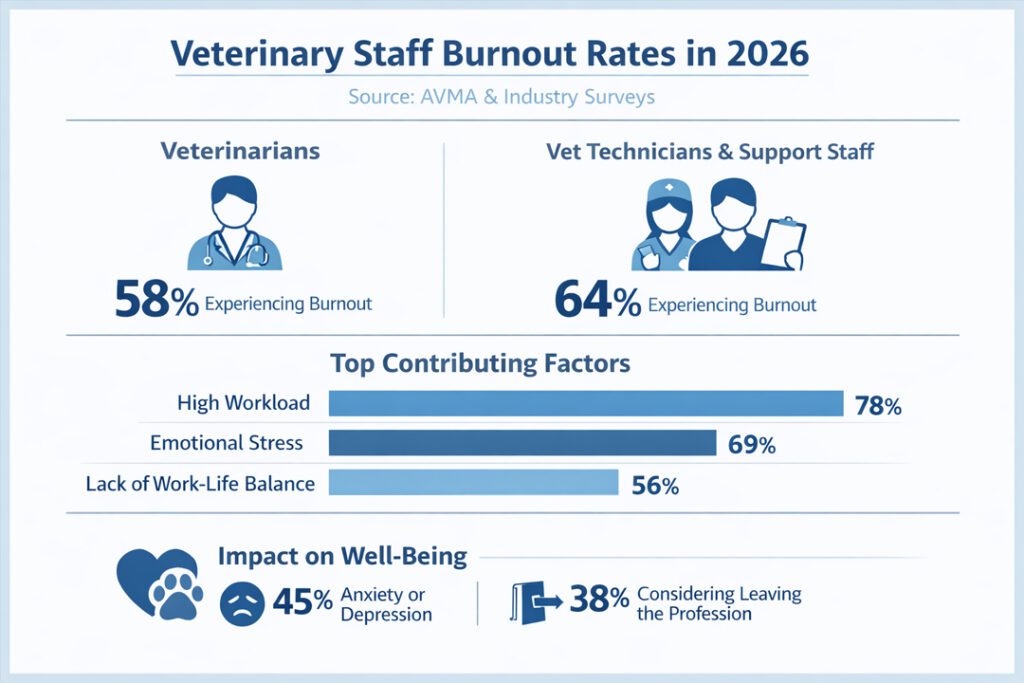
The veterinary industry is facing a significant workforce challenge. A high-pressure environment, combined with the emotional toll of the job, has led to staggering rates of burnout. According to recent industry reports, a substantial percentage of veterinarians and technicians are considering leaving the profession. This isn’t just a statistic; it represents the loss of experienced, compassionate caregivers from your community, making it harder to recruit and retain the talent needed to provide quality care. This shortage places an immense burden on the remaining staff, creating a cycle of overwork and exhaustion.
The Post-Pandemic Surge in Service Demand
The global pandemic saw a significant increase in pet ownership, which has translated into an unprecedented demand for veterinary services. While this passion for animal companionship is positive, it has stretched clinic resources thin. Practices are now handling a higher volume of patients than ever before, from routine check-ups to complex medical cases. This surge has amplified existing inefficiencies, turning minor administrative delays into major operational bottlenecks.
The Administrative Overload Stealing Clinical Time
A veterinarian’s most valuable asset is their clinical expertise, yet a disproportionate amount of their time is consumed by administrative tasks. Updating medical records, coordinating with insurance providers, managing prescriptions, and handling client communications are all critical, but they pull focus from direct patient care. When highly trained professionals spend hours on tasks that could be delegated, the entire practice suffers. This administrative drag not only reduces a clinic’s revenue potential but also directly contributes to the professional fatigue that drives the burnout crisis.
The Revolutionary Solution: The Role of Virtual Assistants (VMAs) and AI in the Clinic Ecosystem
To combat these challenges, forward-thinking clinics are adopting a hybrid operational model powered by virtual assistants and artificial intelligence. This technological integration isn’t about replacing human staff; it’s about augmenting their capabilities and automating the tasks that cause the most friction. This is how a modern, efficient veterinary ecosystem functions.
Freeing the Front Desk: Appointment Management and Client Communication
Your front desk is the central hub of your clinic, but it’s often the epicenter of chaos. A VMA can revolutionize this area by managing:
- Appointment Logistics: Scheduling new appointments, sending confirmations and reminders, and efficiently handling rescheduling requests to reduce no-shows.
- Client Communication: Answering non-clinical phone calls, responding to general inquiries via email or client portals, and ensuring every pet owner feels heard without interrupting in-clinic staff.
Efficiency in the Exam Room: Documentation and Medical Record Support
Documentation is non-negotiable, but it shouldn’t come at the expense of patient interaction. Virtual Medical Scribe Services and other VMA support roles streamline this process through:
- AI-Powered Scribing: Using advanced software to transcribe veterinarian-client conversations directly into structured medical notes, ensuring accuracy while keeping the doctor’s focus on the patient.
- EMR Management: Updating electronic medical records (EMR) with new lab results, client information, and treatment notes, which is a core component of effective EHR & EMR Management.
Optimizing the Back-Office: Billing and Insurance Coordination
Revenue cycle management is complex and time-consuming. A specialized Medical Billing Virtual Assistant can provide critical support by:
- Insurance Verification: Proactively verifying pet insurance coverage and benefits before appointments to prevent payment issues.
- Claims Management: Tracking submitted claims, following up on delayed payments, and reducing the administrative workload on your practice manager.
AI-Enhanced Diagnostics: Faster, More Accurate Insights
Artificial intelligence is making powerful contributions to clinical outcomes. Leading diagnostic platforms now use AI for tasks such as:
- Advanced Imaging Analysis: AI algorithms can analyze radiographs and ultrasounds, helping veterinarians detect subtle abnormalities that might be missed by the human eye, as noted in developments by companies like Idexx.
- Digital Cytology: AI-powered platforms can deliver nearly instant analysis of cytology samples, reducing the wait time for critical diagnostic information and allowing for faster treatment decisions.
The Care VMA Advantage: Building a Resilient and Profitable Hybrid Clinic
Simply hiring a remote worker is not a strategy. The Care VMA approach is about intelligent integration to build a true hybrid clinic where technology empowers your on-site team. We focus on creating a smarter, more humane operational model that directly addresses the gaps left by other services.
Seamless Integration with Your Systems
One of the biggest hurdles to adopting new technology is the fear of disruption. We eliminate this by ensuring our VMAs become a natural extension of your team. We provide extensive training on popular Practice Management Systems (PMS) like ezyVet and Vetstoria. Our onboarding specialists work with you to develop clear Standard Operating Procedures (SOPs), ensuring your VMA understands your clinic’s unique protocols from day one. This focus on deep integration means a smoother transition and faster results. For more information on securing your systems, read our HIPAA Compliance & Data Security guide.
Data Security as a Top Priority
Protecting client and patient data is paramount. While many services claim compliance, we implement specific, robust protocols designed for the veterinary environment. This includes secure, role-based access to your systems, encrypted communication channels, and rigorous, ongoing training for our VMAs on data privacy best practices. We understand the trust you place in us, and we are committed to safeguarding that information with enterprise-grade security measures.
Measuring Success: Calculating Your Return on Investment (ROI)
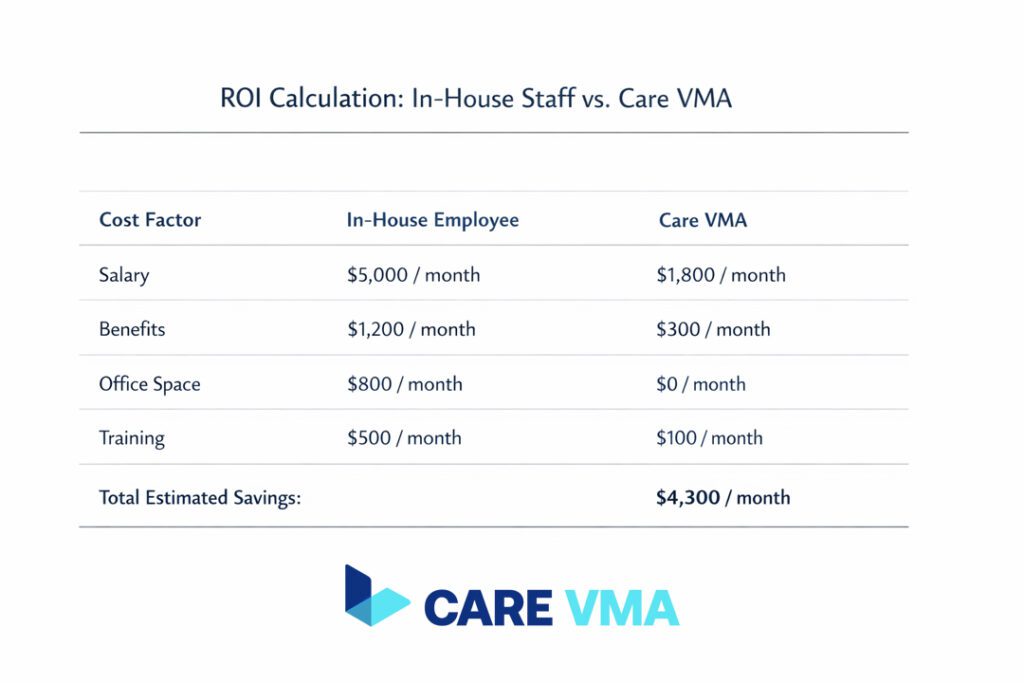
We believe in delivering measurable results. Adopting a VMA is not an expense; it is an investment in your clinic’s efficiency and profitability. A simple way to frame the ROI is to compare costs and identify new revenue opportunities. Consider the fully-loaded cost of an in-house administrative employee (salary, benefits, training, overhead) versus the streamlined cost of a VMA service. Furthermore, calculate the value of reclaimed clinical time. Our clients report an average of 20 saved administrative hours per veterinarian weekly, allowing them to add 1-2 appointment slots per day. This translates directly to increased revenue and a healthier bottom line.
FAQ (Common Questions from Clinic Owners)
How long does it take to integrate a VMA into our workflow?
Our structured onboarding process typically takes 1-2 weeks. During this time, we work closely with your team to customize the VMA’s training to your specific systems and protocols, ensuring a seamless and efficient transition.
How does a VMA handle urgent or emergency situations remotely?
VMAs are trained to identify keywords indicating an emergency. Our strict protocol is to never provide medical advice. Instead, they will immediately transfer the call to your designated on-site clinical staff or, following your SOP, direct the client to the nearest emergency veterinary hospital.
Can a VMA handle difficult or emotional clients?
Yes. Our VMAs receive specialized training in empathetic communication and de-escalation techniques. They are taught to listen patiently, validate a client’s concerns, and follow approved scripts for handling complaints, ensuring every client feels heard and respected before escalating the issue to a practice manager if necessary.
Conclusion and Next Steps
Adopting a virtual medical assistant is not about replacing your valued team; it is about empowering them to perform at their highest level. By offloading the administrative weight that bogs down your practice, you free your veterinarians and technicians to focus on their true passion: providing the best possible care for every patient that comes through your doors. This is a strategic investment in the future of your clinic, ensuring long-term sustainability, profitability, and a renewed sense of purpose.
Ready to reduce administrative burden and get back to focusing on patients? Schedule a free 15-minute consultation with our veterinary workflow specialists to analyze your clinic’s unique needs today. Explore our Virtual Medical Assistant Services and discover how we can help you build a stronger, more efficient practice.