![Referral Management: End Manual & Complex Processes [2026 Solution]](https://carevmahealth.com/wp-content/uploads/2026/03/Referral-Management-1024x683.jpg)
The endless shuffle of paper referrals, the constant back-and-forth phone calls, and the nagging fear of a patient’s information falling through the cracks—this is the daily reality for many healthcare administrators. The administrative burden is overwhelming, leading to staff burnout and, more critically, delays in patient care. This operational friction is more than an inconvenience; it represents a significant risk to revenue and patient outcomes.
Referral management is the structured process of coordinating, tracking, and optimizing patient referrals from primary care providers to specialists to ensure fast and accurate continuity of care. In today’s digital landscape, clinging to outdated manual methods is no longer a viable option. It’s time to move beyond the limitations of fax machines and embrace a streamlined, automated solution that provides clarity, control, and peace of mind.
This content is for informational purposes regarding healthcare operations and does not constitute professional medical advice.
Definition and Scope of Referral Management in the Digital Era
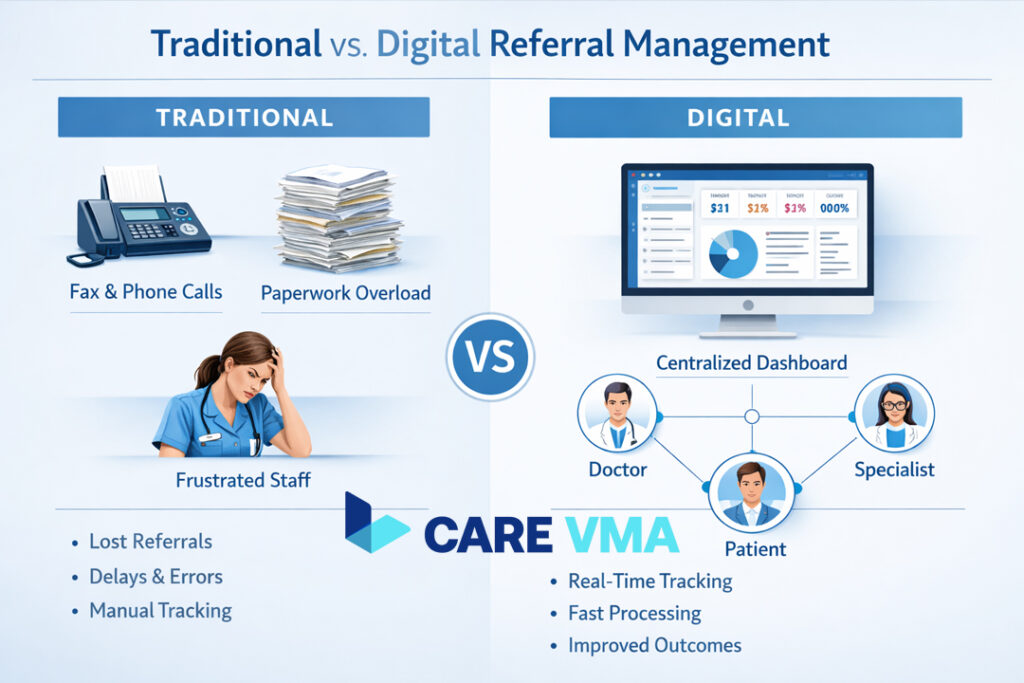
Historically, referral management was a manual task characterized by paper forms, faxes, and phone calls. This process was siloed, with little to no communication between the referring physician, the specialist, and the patient once the initial referral was made. This lack of transparency created significant gaps where critical information could be lost or delayed.
The digital era has completely transformed this paradigm. Modern referral management is a technology-driven ecosystem, not just a process. It involves a centralized software platform that syncs data between all stakeholders: primary care providers, specialists, administrative staff, patients, and even payers like insurance companies. This digital approach ensures that every step is tracked, every communication is logged, and the entire patient journey is visible in real-time. The focus shifts from simply sending a referral to managing the entire care transition seamlessly.
The Core Challenge: Why Manual Systems Hinder Healthcare Facility Growth?
Manual referral systems are a primary source of operational inefficiency and a direct threat to a facility’s growth. The problems are systemic and create a domino effect that impacts everyone from the front desk to the patient’s bedside. These challenges go far beyond simple frustration.
The core issues with manual execution include:
- Incomplete or Lost Information: Faxes can be illegible, and paper forms can be misplaced. A significant number of referrals initiated through traditional methods never result in a scheduled appointment, a phenomenon known as referral leakage. This not only means lost revenue but also represents a failure in the continuity of care.
- Lack of Communication: When a primary care physician sends a referral, they often have no visibility into what happens next. They do not know if the patient scheduled the appointment, if the specialist received the records, or what the outcome of the consultation was. This communication black hole prevents the creation of a closed-loop communication system essential for quality care. To improve operational efficiency, many are looking into Clinic Workflow Optimization: Cut Errors & Admin Load [2026].
- Administrative Bottlenecks: Staff spend countless hours on the phone trying to schedule appointments, verify insurance, and track down missing patient data. This manual labor is not only expensive but also pulls skilled staff away from more valuable patient-facing activities.
These inefficiencies directly impact a facility’s bottom line. Each lost referral is a loss of potential revenue, and the administrative overhead required to manage a broken system puts a constant strain on resources.
The Care VMA Solution: Workflow Automation & EHR Integration
The definitive solution to these challenges is a powerful platform that centralizes control and automates the entire referral workflow. The Care VMA platform acts as a centralized hub, transforming a chaotic, multi-step process into a streamlined and transparent operation. We turn complexity into clarity.
Our system is built around two core principles: automation and integration. We eliminate the manual tasks that consume your staff’s time and ensure all your systems speak the same language. This is achieved through key features designed for modern healthcare facilities.
One of the most critical components is robust integration with your existing systems. For a deeper understanding of this, explore our EHR & EMR Management: A Best Practice Guide [2026 Update]. Our platform offers automated submission features that digitize intake, real-time status tracking that provides instant updates, and automated insurance verification to reduce claim denials.
This technological leap delivers measurable results. Based on 2026 industry benchmarks, facilities that adopt digital referral management can see up to a 45 percent reduction in staff time for submissions and an 11 percent increase in overall staff productivity. This is not just an incremental improvement; it is a fundamental transformation of your administrative operations.
Strategic Benefits for Patients and Hospital Management
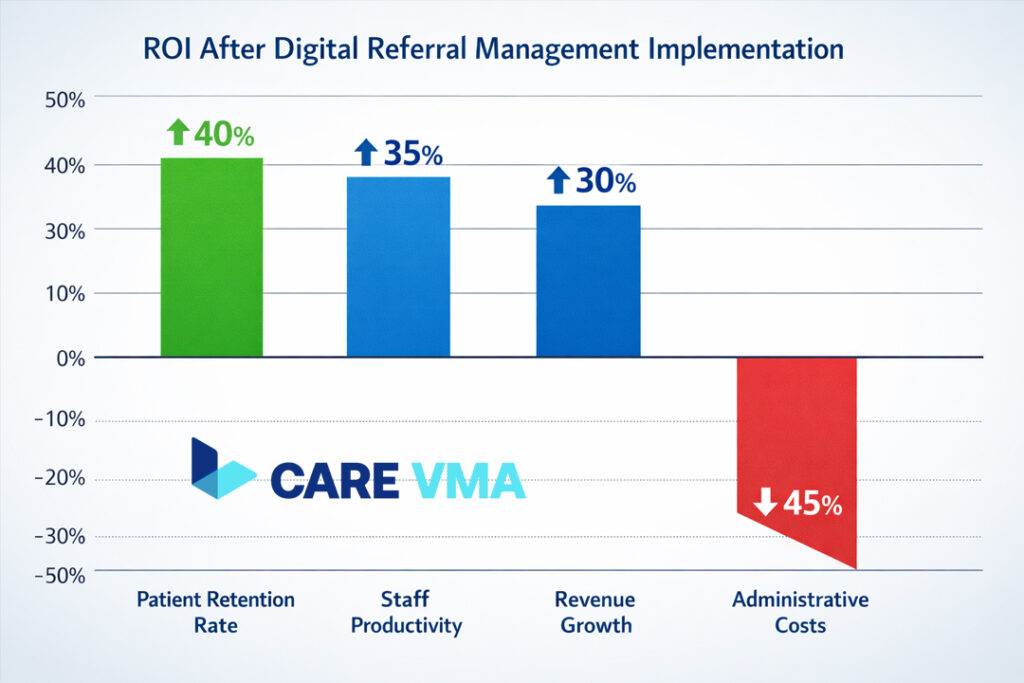
Implementing an automated referral management system provides powerful strategic advantages that benefit both patients and the facility’s management team. It creates a virtuous cycle where operational efficiency directly translates to better patient care and a stronger financial position.
For patients, the primary benefit is speed and clarity. They are no longer left in the dark about the status of their referral. Automated notifications, online scheduling options, and clear communication reduce anxiety and empower them to take an active role in their care. This leads to faster access to specialists, which is directly linked to better health outcomes and higher patient satisfaction. Effective Enhancing Patient Care with Medical Virtual Assistants is a key part of this modern approach.
For hospital and clinic management, the benefits are equally compelling:
- Reduced Revenue Leakage: By tracking every referral from initiation to completion, you ensure that patients stay within your network, capturing revenue that was previously lost.
- Enhanced Operational Efficiency: Automating manual tasks frees up administrative staff to focus on higher-value activities, improving overall productivity and reducing operational costs.
- Improved Provider Relationships: Creating a seamless referral process makes your facility an attractive partner for referring physicians, strengthening your network and driving growth.
FAQ (Frequently Asked Questions for Practitioners)
Can this system integrate with our existing EHR?
Answer: Yes, modern platforms are designed with robust integrations to automatically sync data with various EHR/PM systems for a seamless data flow. This bi-directional communication ensures that patient data is consistent across all platforms without requiring manual data entry.
How does this system ensure patient data security?
Answer: Through high-level encryption and strict adherence to health data privacy regulations like HIPAA, ensuring the entire care navigation process remains secure. All data is encrypted both in transit and at rest, and access controls ensure that only authorized personnel can view patient information.
Will patients receive automated notifications?
Answer: Absolutely. Patient engagement features include automated appointment reminders via text or email and direct links for online scheduling assistance. This proactive communication is proven to improve attendance rates and patient compliance with their care plan.
Conclusion & Next Steps
In 2026, efficient referral management is no longer just an administrative goal; it is a critical component of modern healthcare infrastructure. Moving away from outdated manual processes is essential for any facility that wants to improve patient safety, reduce staff burnout, and secure its financial future. Automation and integration are the keys to unlocking a new level of operational excellence.
By embracing a centralized digital platform, you eliminate the risks of lost referrals, close critical communication gaps, and provide a superior experience for both your patients and your staff. It is a strategic investment in the long-term health of your organization.
Stop wasting time with faxes and paper forms. It is time to empower your team with the tools they need to succeed. Schedule a demo of Care VMA’s Virtual Medical Assistant Services today for an instant digital transformation and see how our referral management solutions can work for you. Contact our team of experts today.