Medical Disclaimer: The information in this article is for practice management and educational purposes only. It does not constitute medical advice.
Are you tired of the EHR screen being the last thing you see at night? For countless healthcare providers, the workday doesn’t end when the last patient leaves. It extends into personal time, a phenomenon known as “pajama time charting” that has become a leading cause of physician burnout. This isn’t just about inefficiency; it’s about reclaiming your life. Provider productivity hacks are a collection of strategies, systems, and technologies designed to drastically cut administrative work, allowing you to refocus on patient care and restore a healthy work-life balance. This guide moves beyond simply “working faster” and introduces intelligent systems to build a more sustainable and efficient practice for 2026 and beyond.
Key 1: Conquer the EHR with Smart Documentation Hacks
The Electronic Health Record (EHR) system, while essential, is often the single greatest drain on a provider’s time. The solution isn’t to abandon it, but to master it with automation and efficiency. True productivity comes from making the system work for you, not the other way around.
Build Your “SmartPhrase” or Macro Library Stop typing the same information repeatedly. Every major EHR system allows for the creation of shortcuts-often called SmartPhrases or macros-that can insert blocks of text with a few keystrokes. Build a comprehensive library for common diagnoses, negative physical exams, standard discharge instructions, and patient education points.
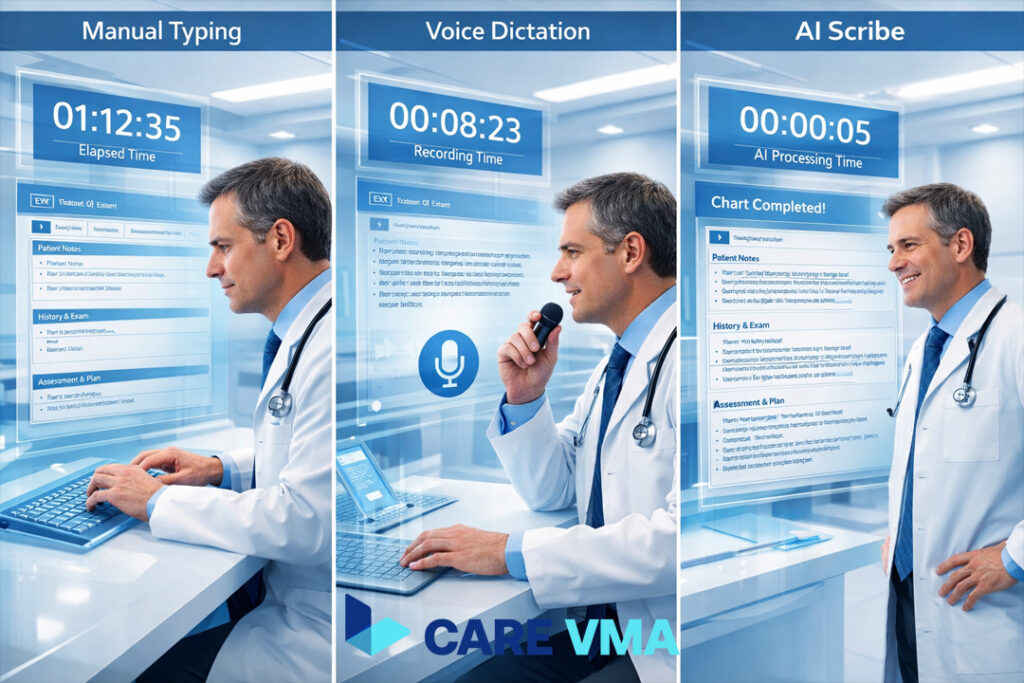
Leverage the Power of Ambient AI Scribes This is a game-changer. Ambient AI scribes are tools that listen securely to a patient encounter and automatically generate a clinical note draft. According to a study in JAMA Internal Medicine, scribes can significantly reduce documentation time. This technology can save providers hours each day, directly translating to less after-hours work.
Use Dictation Instead of Typing Even without a full AI scribe, modern speech-to-text dictation tools are far faster than manual typing. Using a medical-grade dictation tool allows you to speak your notes naturally, capturing more detail in less time. Combine this with macros for maximum effect, for example, by using a voice command to insert a specific template.
Finish 80 Percent of the Note in the Patient Room Make a habit of completing the majority of the clinical note while you are still with the patient. This requires an ergonomic setup, but it leverages the “Touch It Once” principle. By documenting in the moment, you avoid the cognitive load of recalling details later, which is both inefficient and prone to error.
Key 2: Optimize Clinical Workflow and Delegate Like an Expert
A core principle of modern practice management is that providers should only perform tasks that require their specific medical license. Everything else is a candidate for delegation or automation. Building a reliable system of delegation is the foundation of a high-functioning clinic.
Start the Day with a 5-Minute “Morning Huddle” Gather your team for a quick, focused huddle to review the day’s schedule. Identify potentially complex patients, confirm that necessary pre-visit work is complete, and anticipate needs. This small time investment prevents significant delays and surprises later in the day.
Implement “Pre-visit Scrubbing” by Your Team Delegate the task of “scrubbing” charts 24-48 hours before the appointment. A medical virtual assistant can ensure all recent lab results, specialist reports, and imaging are in the chart and flagged for your review. This eliminates the time-wasting hunt for information while the patient is waiting.
Empower Your Team with a Refill Protocol Create a clear, written protocol that allows your staff to handle routine medication refill requests for stable patients without your direct involvement for every single request. This protocol should define the criteria for automatic approval, empowering your team and batching the final sign-offs for you once a day.
Group Administrative Tasks (Batching) Resist the urge to check your EHR inbox every few minutes. Constant interruptions destroy focus. Instead, schedule two or three dedicated blocks of time per day to process all administrative tasks-like messages, lab results, and forms-in one focused session.
Key 3: Make Every Patient Encounter More Efficient
Controlling the flow of the patient visit is crucial for staying on schedule and preventing administrative creep. These strategies focus on managing the conversation and expectations to create a more productive encounter for both you and the patient.
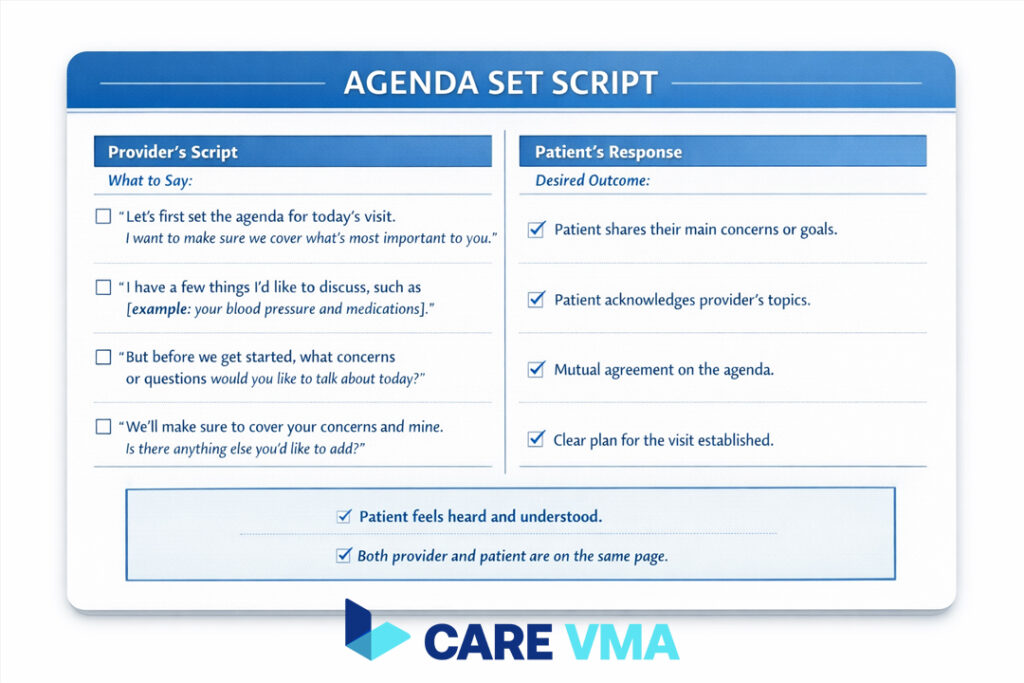
Implement the “Agenda Set” in the First Minute Begin each visit by setting a clear agenda. Say, “I see you’re here for your follow-up on your blood pressure and to discuss the new knee pain. Was there anything else you hoped to cover today?” This acknowledges their concerns and allows you to prioritize, respectfully suggesting a follow-up visit for less urgent issues if time is limited.
Shift from “Any Questions?” to “What Questions Do You Have?” Asking “Do you have any questions?” often elicits a simple “No.” By rephrasing it to “What questions do you have for me?” you invite a more thoughtful response. This ensures patients understand the plan of care, which significantly reduces follow-up calls and messages.
Prepare Printed Education Materials for Common Topics If you explain the same low-sodium diet or plantar fasciitis stretches multiple times a day, have a pre-printed, high-quality handout ready. It saves time, ensures consistent messaging, and provides patients with a tangible reference they can take home.
Key 4: Proven Time Management Frameworks for a Busy Practice
Classic time management principles can be powerfully adapted to the unique environment of a clinical practice. Integrating these frameworks helps you make better decisions about how to use your most limited resource: time.
The 2-Minute Rule for Micro-Tasks If a task-like signing a form or answering a quick staff question-will take less than two minutes, do it immediately. Letting these small items pile up creates significant mental clutter and a backlog that feels overwhelming.
The Eisenhower Matrix for Patient Gaps Not all tasks are created equal. When you have an unexpected 10-minute gap, use the Eisenhower Matrix to decide what to do:
- Urgent and Important: Address a critical lab result.
- Important but Not Urgent: Review the chart of your next complex patient.
- Urgent but Not Important: Respond to a routine administrative request.
- Not Urgent, Not Important: Save for later or delegate.
The “Touch It Once” Principle for Messages and Labs When you open a patient message or a lab result, make a decision on it right then and there. If you read it and “save it for later,” you are committing to re-reading and re-contextualizing it, effectively doubling the work. Action, delegate, or close it out on the first touch to improve your work-life balance.
Key 5: Create a Supportive Physical & Mental Environment
Your environment and your mindset are critical tools for productivity. Optimizing your physical workspace and setting firm professional boundaries are essential for long-term efficiency and well-being.
The Magic of a “Dual Monitor” Setup A simple dual-monitor setup can save thousands of clicks per week. Use one screen for the active patient chart and the second for reviewing their history, labs, or external reference materials. This small investment pays huge dividends in reduced time and frustration.
The Art of the Strategic “No” Provider burnout is a real and significant issue, as documented by authorities like the World Health Organization. Every “yes” to a non-essential committee, meeting, or administrative project is a “no” to something else-often your own time. Learn to politely but firmly decline requests that do not align with your primary mission of patient care.
Frequently Asked Questions from Healthcare Providers
Are AI Scribes really secure and accurate?
Yes, when using a reputable, HIPAA-compliant platform. Modern systems, like those leveraged by Care VMA, offer high accuracy and are designed to create drafts for your final review and approval. The provider always retains ultimate control, combining AI’s speed with your clinical expertise.
How long does it take to implement an effective delegation system?
Initial implementation, including training and creating protocols, can take a few weeks. However, this upfront time investment pays off exponentially, saving hundreds of hours annually. Services like Care VMA can accelerate this by providing you with pre-trained virtual medical assistants who are already familiar with clinical workflows.
How can I convince management to invest in this technology?
Focus the conversation on Return on Investment (ROI). Present data on time saved per provider, which can be reallocated to see more patients or reduce burnout. Highlight that the cost of replacing a burned-out provider is far greater than the investment in efficiency tools.
Conclusion: Systematize Your Practice, Reclaim Your Time
Ending “pajama time charting” is not about finding a single magic bullet. It is about a strategic, deliberate shift from working harder to working smarter. By building intelligent systems for documentation, delegation, and time management, you create a sustainable practice that serves both your patients and your own well-being. Start by implementing just one or two of these hacks this week and build from there.
Ready to stop pajama time charting for good? Schedule a free consultation with our team to discover how our Virtual Medical Scribe and Virtual Medical Assistant solutions can be integrated into your practice to give you back your most valuable asset-your time.