The information provided in this article is for informational purposes only and does not constitute medical advice. It is intended for healthcare leaders and physicians. Please consult with organizational experts for guidance specific to your institution.
Physician burnout is a syndrome of emotional exhaustion, depersonalization, and a reduced sense of personal accomplishment caused by chronic workplace stress. Modern solutions to address it focus on systemic, organizational-level improvements, not just individual resilience. If you are a physician or a healthcare leader, you know the problem is real. The cycle of long hours, administrative overload, and emotional fatigue is relentless. While burnout rates have improved from their pandemic peak, a 2024 Stanford Medicine-led study still found that 43.2% of U.S. physicians report at least one symptom of burnout.
You have likely sat through wellness seminars and been told to practice more yoga or mindfulness. But these individual fixes fail to address the systemic pressures crushing the modern physician: overwhelming EHR documentation, the erosion of professional autonomy, and the constant pressure to do more with less. This is not a personal failing; it is a system failure. This playbook moves beyond superficial advice to offer a framework for leaders, focusing on high-impact, evidence-based solutions like AI technology and professional coaching that address the root causes of burnout.
Why Old Solutions Fail: Dissecting the Root Causes of Physician Burnout
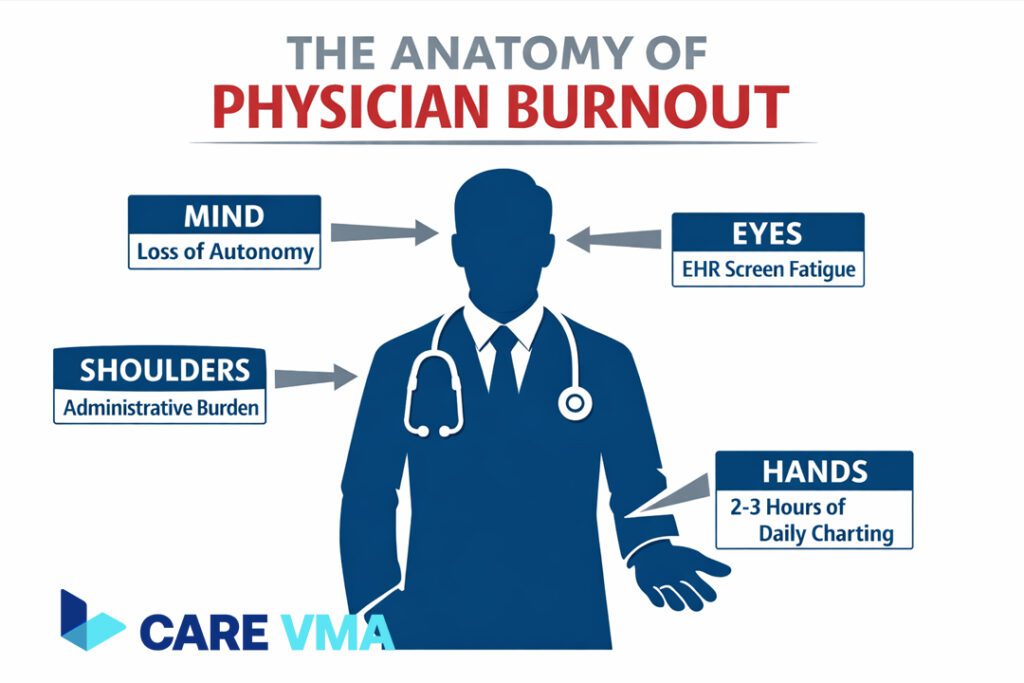
The persistence of burnout, despite years of discussion, confirms that it is a systemic issue, not a personal one. The improvement from 62.8% in 2021 to 43.2% in 2024 is progress, but the core drivers of this crisis remain embedded in the healthcare environment.
Administrative Burden and ‘Pajama Time’ The single largest contributor to physician distress is the clerical burden of modern medicine. Physicians now spend hours each day on documentation, order entry, and managing an overflowing EHR inbox. This work, often performed at home after a full day of patient care, is known as ‘pajama time’ and directly erodes personal time, contributing to exhaustion and resentment.
Loss of Autonomy and Control Increasingly, physicians feel like cogs in a machine, with their clinical judgment constrained by rigid protocols, insurance company mandates, and administrative oversight. This loss of professional autonomy—the ability to make decisions in the best interest of the patient—strikes at the heart of a physician’s professional identity and is a major source of depersonalization.
A Culture of Perfectionism and Mental Health Stigma The culture of medicine often demands perfection and discourages vulnerability. This creates a significant barrier to seeking help for mental health challenges, as physicians fear professional repercussions or judgment from peers. As Dr. Tait Shanafelt of Stanford Medicine has stated, physicians cannot “keep working this way.” The system itself must be redesigned for sustainability.
Level 1: Organizational & Workflow Solutions (The Greatest Impact)
According to meta-analyses published in journals like The Lancet, interventions directed by the organization are proven to be more effective than individual-focused strategies. For healthcare leaders, the highest return on investment comes from fixing the work, not just the worker.
AI-Powered Documentation to Eliminate ‘Pajama Time’ The most powerful tool to combat ‘pajama time’ is technology. AI ambient scribes, such as those from PatientNotes or Heidi Health, listen to the natural conversation between a physician and patient and automatically generate a structured clinical note. This technology can reduce daily charting time by 2-3 hours, effectively giving physicians their evenings back. Integrating these tools allows physicians to focus fully on the patient during the visit, improving both patient satisfaction and professional fulfillment. This is a clear evolution from the duties traditionally handled by a what is a medical scribe.
Expanding Medical Team Roles (Team-Based Care) Efficient practices empower every team member to work at the top of their license. This means expanding the role of Medical Assistants to handle in-basket management, pend orders, and prepare patient rooms. A well-structured, team-based care model offloads clerical tasks from the physician, freeing them up for complex decision-making.
The “Listen-Act-Develop” Leadership Model with a Chief Wellness Officer (CWO) Forward-thinking organizations now appoint a Chief Wellness Officer, a senior leadership role dedicated to clinician well-being. This model, championed by the Mayo Clinic, involves leaders actively listening to frontline pain points, acting swiftly on feedback, and developing leadership skills throughout the organization.
Workflow Optimization with the “25×5 Initiative” Framework The American Medical Association’s “25×5 Initiative” aims to reduce documentation burden. This involves practical steps like “EHR spring cleaning”—eliminating redundant alerts, unnecessary clicks, and outdated order sets to streamline the digital workspace.
Flexible Scheduling and Telehealth Options Providing physicians with greater control over their schedules is a proven way to reduce burnout. Options like four-day workweeks, flexible shift-swapping, and integrated telehealth duties grant the autonomy needed to balance professional and personal responsibilities.
Level 2: Individual & Peer Support Solutions (Managing Acute Stress)
While systemic change is the foundation, individual support tools are crucial for managing the immediate symptoms of stress and preventing moral injury. These solutions should be offered as a complement to, not a replacement for, organizational reform.
Professional Coaching: More Effective Than Mindfulness for Physicians Recent research from 2025 highlights that professional coaching is often more effective than general mindfulness for physicians. Coaching is an active, goal-oriented process that helps physicians set professional boundaries, navigate career transitions, and reconnect with their sense of purpose. It provides a confidential, structured space to address the specific challenges of a medical career.
Structured Peer Support (Schwartz Center Rounds) Programs like Schwartz Center Rounds provide a structured forum for clinicians to come together and discuss the emotional and social aspects of patient care. These sessions are not about clinical problem-solving but about processing the human experience of being a caregiver, which reduces isolation and normalizes emotional stress.
Boundary Management Training (Boundary Scripts) A key skill for long-term sustainability is learning to set and maintain healthy boundaries. This can involve training on “boundary scripts”—practicing clear, professional language to decline non-essential tasks or additional shifts without guilt, protecting personal time and preventing overload.
Level 3: Policy & National Initiatives (Addressing Regulatory Root Causes)
A comprehensive strategy for physician well-being must acknowledge the national and regulatory pressures that contribute to burnout.
The Impact of the Dr. Lorna Breen Law (Extended to 2026) This landmark federal legislation provides funding for mental health programs for healthcare workers. Crucially, it encourages hospitals and state licensing boards to remove intrusive mental health questions from applications, reducing the stigma and fear that prevent physicians from seeking care.
Advocating for Prior Authorization Reform The administrative burden of prior authorizations is a top driver of physician frustration. National advocacy efforts led by organizations like the AMA seek to reform and streamline this process, pushing for automation and transparency from insurers to reduce delays in patient care. This type of reform is central to any serious healthcare cost management outsourcing strategy.
Eliminating Stigma Through “Wellness Champions” Health systems are actively working to dismantle the culture of perfectionism by appointing “Wellness Champions.” These are respected physician leaders who normalize conversations about mental health and advocate for a culture where seeking support is seen as a sign of strength, not weakness.
Physician Burnout Solutions by Medical Specialty
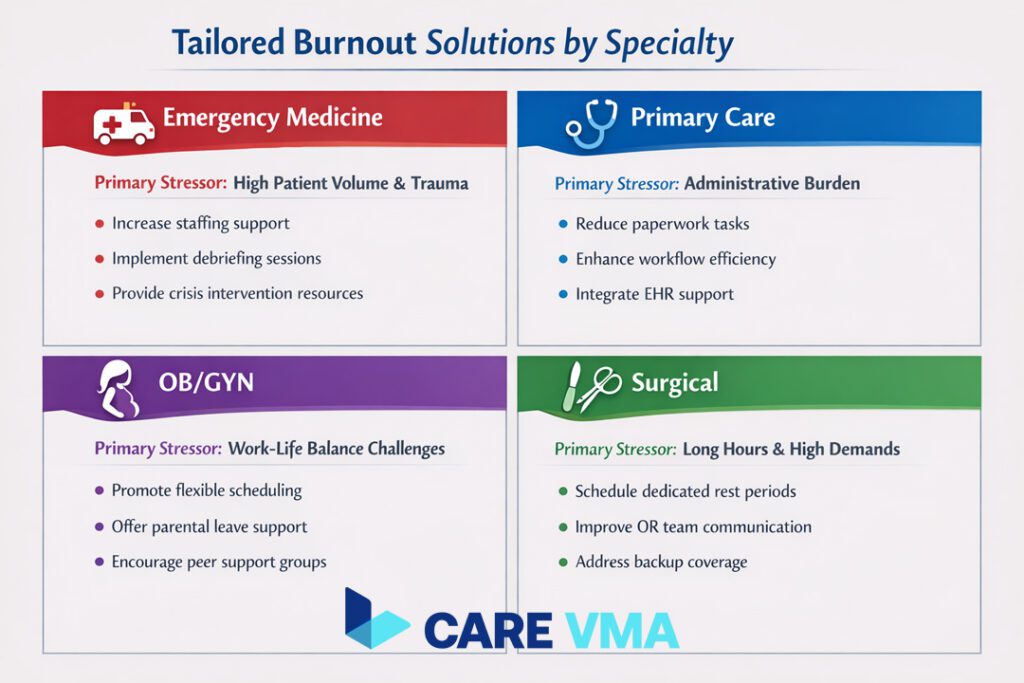
Burnout is not a one-size-fits-all problem. The primary drivers of stress vary significantly by specialty. Effective solutions must be tailored to the unique workflow and pressures of each field.
- Specialty: Emergency Medicine
- Primary Driver: High acuity, chaotic environment, and decision fatigue.
- Recommended Solution: Robust scribe support (AI or human), strict shift-length caps, and post-shift debriefing programs.
- Specialty: Primary Care
- Primary Driver: Overwhelming documentation volume and “in-basket” management.
- Recommended Solution: AI ambient scribes, expanded MA-led team care, and dedicated administrative time.
- Specialty: OB/GYN
- Primary Driver: Unpredictable hours, high-stakes outcomes, and emotional intensity.
- Recommended Solution: Flexible call schedules, team-based “hospitalist” models, and structured peer support for adverse events.
- Specialty: Surgical Specialties
- Primary Driver: Loss of autonomy in the OR, productivity pressures, and physical demands.
- Recommended Solution: Physician leadership roles in surgical workflow design and investment in ergonomic equipment.
FAQ (Common Questions from Healthcare Leaders & Physicians)
What is the first investment I should make to address burnout in my team with the highest ROI?
Based on 2025-2026 trends, the dual investment in ambient AI technology to reduce documentation and providing access to professional coaching delivers the most significant and rapid impact. These solutions directly target the two primary drivers of burnout: time poverty and the loss of professional identity.
How do I convince the C-suite to invest in a wellness program like AI scribes?
Frame the argument in terms of business metrics and ROI. Calculate the high cost of physician turnover (recruitment, onboarding, lost revenue), which can exceed $1 million per physician. Compare this to the implementation cost of an AI scribe solution. Emphasize the quantifiable benefits, such as increased physician productivity, reduced risk of medical errors, and improved patient satisfaction scores.
Are coaching programs confidential and will they affect my medical license?
Yes, credible professional coaching programs operate under strict confidentiality. They are separate from your employer and medical records. Furthermore, national initiatives like the Dr. Lorna Breen Law are actively working to remove punitive mental health questions from state licensing applications, making it safer than ever for physicians to seek support without fear of professional penalty.
Conclusion & The Next Step with Care VMA
Addressing physician burnout requires a dedicated shift from individual fixes to systemic solutions. Technology like AI and structured support like professional coaching are no longer luxuries; they are essential components of a sustainable, modern medical practice. As we’ve outlined, the most effective strategies target the root causes of burnout—the administrative burdens and systemic inefficiencies that steal time and purpose from the practice of medicine. Many organizations are now exploring how medical virtual assistants reduce burnout in US healthcare practices.
You do not have to lead this transformation alone. If you are a leader ready to slash ‘pajama time’ and restore professional purpose for your team, it is time to implement proven, technology-driven support. Schedule a strategic consultation with Care VMA’s clinical architects to map out how a Virtual Medical Scribe can be integrated into your organization, freeing your physicians to focus on what they do best: caring for patients.