Mismatched patient records, duplicate entries, and inefficient enrollment aren’t just administrative headaches—they’re silent revenue killers that directly lead to thousands in denied claims and pose very real patient safety risks. This creates a stressful cycle of reactive problem-solving: your staff wastes valuable hours tracking down correct information, revenue leaks out with every error, and the risk of a serious compliance breach or patient care incident looms large. But what if you could transform this chaotic process into a predictable, secure, and highly efficient workflow? A streamlined, technology-driven approach can do just that, safeguarding both your revenue and your patients.
Patient identification is the critical process of accurately matching a patient to their unique medical records, while patient enrollment is the formal procedure of registering them into a healthcare system or clinical study. Together, they form the secure gateway for all subsequent patient care and billing. This guide breaks down the modern process, leveraging standards from organizations like AHIMA and compliance frameworks like HIPAA to provide actionable solutions.
The Core Difference: Identification vs Enrollment
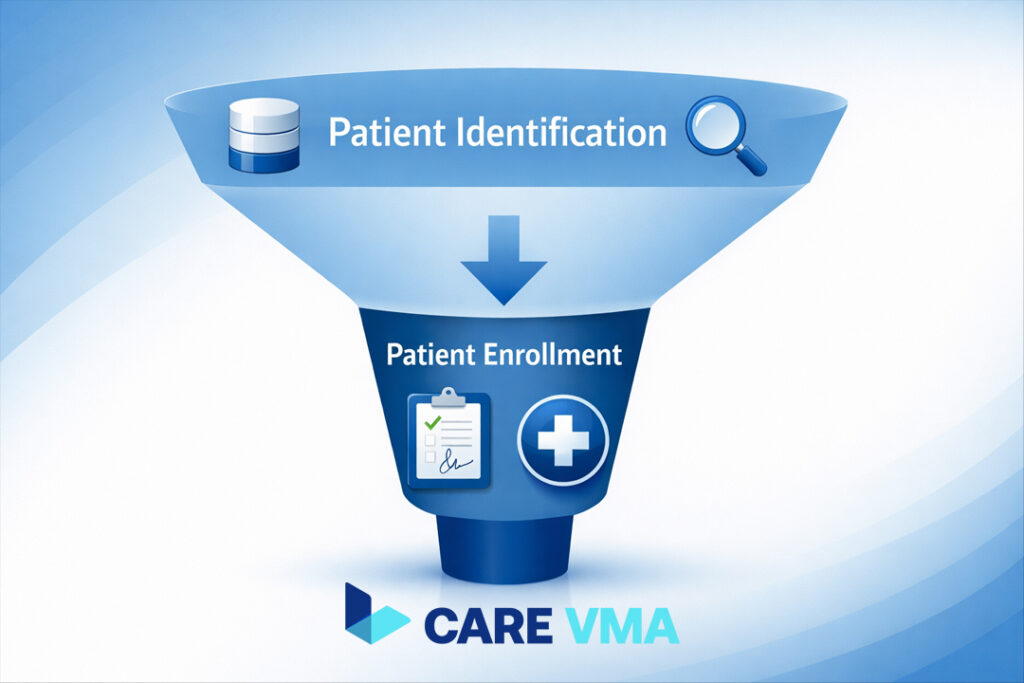
At first glance, these two terms might seem interchangeable. But in reality, they represent two distinct stages of a single, crucial funnel that every patient journey begins with. Think of it this way: Identification is about confirming you have the right person (the “who”), while Enrollment is the formal process of getting them into the right system (the “how”).
Patient Identification is the foundational step. Its sole purpose is to ensure that Jane Doe is matched with her specific Electronic Health Records (EHR) and no one else’s. This process relies on cross-referencing multiple unique identifiers to prevent errors. A robust identification process is the best defense against creating duplicate medical records and is vital for maintaining the integrity of your Master Patient Index (MPI).
Patient Enrollment, on the other hand, is the administrative action that follows a successful identification. This is the official “onboarding” where a patient’s Protected Health Information (PHI) is formally entered into a system, whether it’s for a hospital admission, a new health plan, or a clinical trial. This stage is triggered by a specific action, like signing an Informed Consent Form (ICF) or verifying insurance eligibility.
Why It Breaks: Common Challenges in Your Daily Workflow
What most people don’t realize is that a broken patient intake system doesn’t manifest as one giant failure; it shows up as a series of small, daily frustrations that snowball into major operational problems. Here are the symptoms you’re likely all too familiar with.
“The Data Maze”: The Challenge of Data Fragmentation
Chasing down records from three different clinics and a hospital for a single patient isn’t just inefficient, it’s a recipe for error. When patient data is scattered across multiple, non-communicating systems, your team is left to manually piece together a complete medical history. This Data Fragmentation not only wastes time but dramatically increases the risk of overlooking a critical allergy or contraindication.
“Seeing Double”: The Financial & Safety Risk of Duplicate Records
A simple typo—”Jon Smith” versus “John Smith”—can create a Duplicate Medical Record. While it seems minor, this single error can lead to a denied claim, a repeat lab test, or worse, a serious medication error. This isn’t a rare occurrence; for many health systems, these duplicates represent a significant source of both Denied Claims and patient safety risks.
“Paperwork Fatigue”: Low Patient Literacy & Administrative Burden
Manual intake is a burden for everyone. Patients often struggle with complex forms, leading to incomplete or inaccurate information. Your staff then has to decipher handwriting and manually type that data into the EHR, a process ripe for transcription errors. This “paperwork fatigue” creates a poor patient experience and places an immense administrative burden on healthcare staff.
“The Bottleneck”: Restrictive Criteria in Clinical Trials
For research coordinators, the enrollment challenge is even more acute. The highly specific inclusion/exclusion criteria for a Clinical Trial can make finding eligible candidates feel like searching for a needle in a haystack. Without a system to proactively identify potential participants from the general patient population, many recruiting opportunities are missed entirely.
The Standard 4-Step Process: A Workflow Breakdown
To fix the process, you first have to understand its components. The industry-standard workflow for patient identification and enrollment can be broken down into four core stages. This is where errors most often occur, but it’s also where the biggest opportunities for improvement lie.
Step 1: Sourcing & Identification
This is the initial stage of finding potential patients or matching an existing one. It involves database screening (searching EHRs for specific criteria), leveraging physician referrals, or even using predictive modeling to find candidates for specific programs.
Step 2: Pre-Screening & Eligibility Verification
Once a patient is identified, their eligibility must be confirmed. In a clinical setting, this means running a real-time Eligibility Screening to verify insurance coverage. For a clinical trial, it involves a rigorous check against inclusion/exclusion criteria. Here’s the thing: inaccuracies at this stage are a primary driver of problems down the line. According to the American Health Information Management Association (AHIMA), errors in patient identification are a factor in a significant portion of denied claims.
Step 3: Informed Consent & Authorization
This is the official trigger for enrollment. For treatment, the patient provides authorization and signs HIPAA acknowledgments. For research, they must review and sign a detailed Informed Consent Form (ICF). This is a critical compliance step that must be meticulously documented.
Step 4: Final Verification & System Entry
Before finalizing, the patient’s identity is confirmed one last time, typically using at least two forms of identification (e.g., full name and date of birth). The verified data is then entered into the appropriate system, officially completing the enrollment.
The Modern Solution: Optimizing Each Step with Technology
Knowing the standard process is one thing; optimizing it is another. The manual, fragmented approach is no longer sustainable. Modern technology offers a way to automate, secure, and streamline every step, directly solving the daily challenges that cause revenue loss and compliance headaches.
This is where an integrated approach changes the game. Instead of separate, clunky systems, a unified platform can bring intelligence and efficiency to your entire workflow.
- To Address Data Fragmentation: Modern platforms can integrate with your existing EHR and
Master Patient Index (MPI)to create a unified “Single Best Record” for every patient. This eliminates the dangerous guesswork of manual record merging and gives clinicians a complete, trustworthy view of a patient’s history. - To Prevent Duplicate Records: At check-in, the use of
Biometric Identification(like a quick, secure fingerprint or facial scan) makes it virtually impossible to create a duplicate record. This secures patient identity with a level of certainty that manual checks can never achieve, directly impacting your rate ofDenied Claims. - To Reduce Administrative Burden: A fully digital
eConsentplatform transforms the patient experience. Patients can review and sign necessary documents from their own phone or a clinic tablet, cutting staff administrative time significantly and eliminating data entry errors from handwritten forms.
Here’s a real-world use case: a busy clinical trial coordinator receives a real-time alert that a patient who meets 95% of a complex trial’s criteria is currently in the waiting room for a routine check-up. This is a perfect recruiting opportunity that, in a manual system, would have been completely missed. That’s the power of an automated, intelligent workflow.
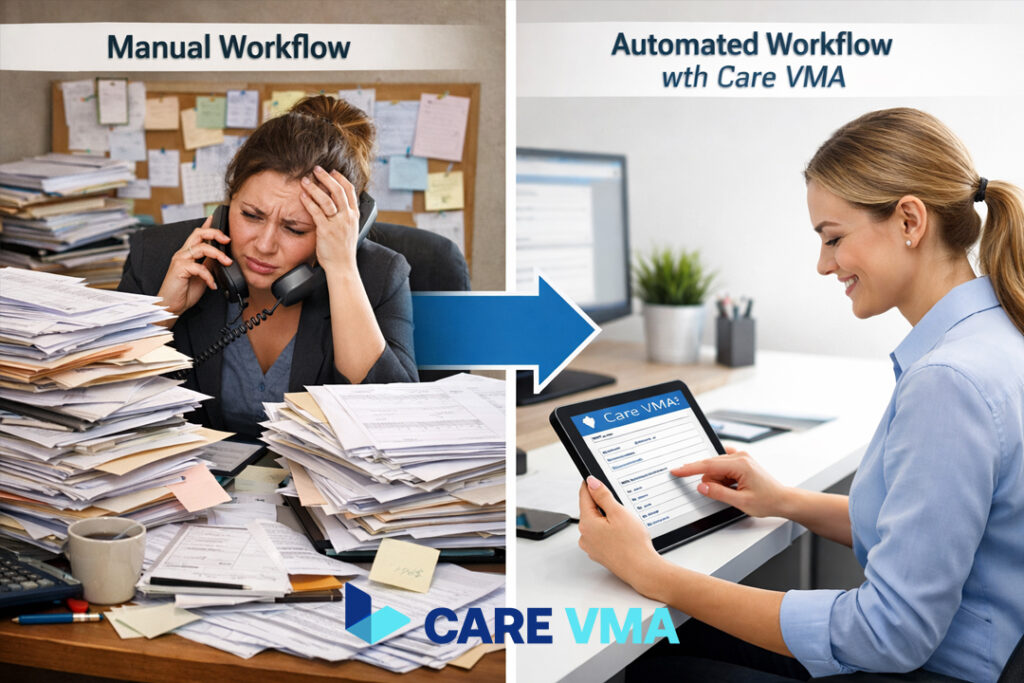
Stop letting outdated processes dictate your practice’s financial health and efficiency. Optimizing your patient intake is the first and most critical step in building a more resilient and profitable operation. An effective workflow doesn’t just reduce errors; it frees up your skilled team to focus on what truly matters: patient care. Learn more about how to streamline these processes with expert provider credentialing and enrollment support.
The Tangible Outcomes: Beyond Workflow Improvement
Adopting a modern approach to patient identification and enrollment delivers results that go far beyond a cleaner workflow. The impact is felt directly on your bottom line, in your compliance standing, and in the overall quality of care you provide.
Reduced Revenue Leakage
Every accurately identified patient and correctly verified insurance plan is a claim that gets paid on the first submission. By automating these checks and eliminating manual errors, you directly lower your rate of denied claims and accelerate your Revenue Cycle Management. This isn’t just about efficiency; it’s about capturing revenue that was previously lost to correctable administrative mistakes. A well-managed RCM system is essential, and you can explore more about how revenue cycle management impacts financial health.
Enhanced Patient Safety
Accurate patient matching is fundamental to patient safety. As recognized by health authorities like the World Health Organization, correct patient identification is a cornerstone of preventing medication errors. When you can guarantee that a patient is matched with their correct record, you prevent medication errors, wrong-site procedures, and other critical incidents that stem from administrative mix-ups.
Improved Staff Productivity & Morale
By automating the repetitive, low-value tasks of manual data entry and record chasing, you empower your staff. They can shift their focus from frustrating paperwork to high-value activities like patient communication, care coordination, and managing complex cases. This not only boosts productivity but also improves job satisfaction and reduces the burnout that is so prevalent in healthcare. For a deeper look into compliance, our 2026 HIPAA Compliance Guide offers valuable insights.
Comparison: The Traditional Method vs The Modern Way
Seeing the difference side-by-side makes the advantage of technology clear.
| Process Step | Traditional Method (Manual) | The Modern Way (Automated) |
|---|---|---|
| Identity Verification | Visual check of ID card, asking name | Biometric Identification scan + automated insurance eligibility check |
| Data Collection | Patient fills out paper clipboard forms | Digital intake forms on a tablet or patient’s own phone |
| Consent Management | Staff prints, explains, and scans paper forms | eConsent platform sends documents directly to patient for digital signature |
| System Entry | Staff manually types data from paper into EHR | Data auto-populates directly from digital forms into the EHR, error-free |
Frequently Asked Questions
What are the two main types of patient identifiers required in healthcare?
Most healthcare facilities require at least two unique identifiers to confirm a patient’s identity. The most common are the patient’s full name, date of birth (DOB), and Medical Record Number (MRN). According to official patient safety guidelines from organizations like the National Institutes of Health (NIH), room numbers are explicitly not considered acceptable identifiers due to their temporary nature.
What is the biggest risk of improper patient identification?
The biggest risks are severe patient safety incidents—such as administering the wrong medication or performing a procedure on the wrong person—and significant financial loss from denied insurance claims. Furthermore, improper identification that leads to a data breach poses a major HIPAA compliance risk.
How does technology help in patient enrollment?
Technology automates patient enrollment through digital intake forms, eConsent platforms, and real-time insurance eligibility checks. This drastically reduces manual data entry errors, accelerates the entire process, and lessens the administrative workload on your staff, allowing them to focus on patient-facing tasks.
Conclusion
Clinging to manual, fragmented patient identification and enrollment processes is no longer a financially or clinically viable option in 2026. The administrative friction, lost revenue from denied claims, and ever-present safety risks are too high a price to pay for sticking with the old way of doing things. A modern, integrated system is the definitive key to achieving financial stability, ensuring unwavering compliance, and delivering the superior patient care that your practice is known for.
Stop letting administrative errors dictate your revenue and patient safety. It’s time to explore a workflow that works for you, not against you.
Ready to see how an automated, intelligent workflow can eliminate errors and capture lost revenue? Schedule your personalized demo of the Care VMA platform and let us show you exactly how we can solve your patient identification and enrollment challenges today.