Medical Disclaimer: The information in this article is for general educational purposes only and is not a substitute for professional medical advice, diagnosis, or treatment. Always seek the advice of your physician or other qualified health provider with any questions you may have regarding a medical condition.
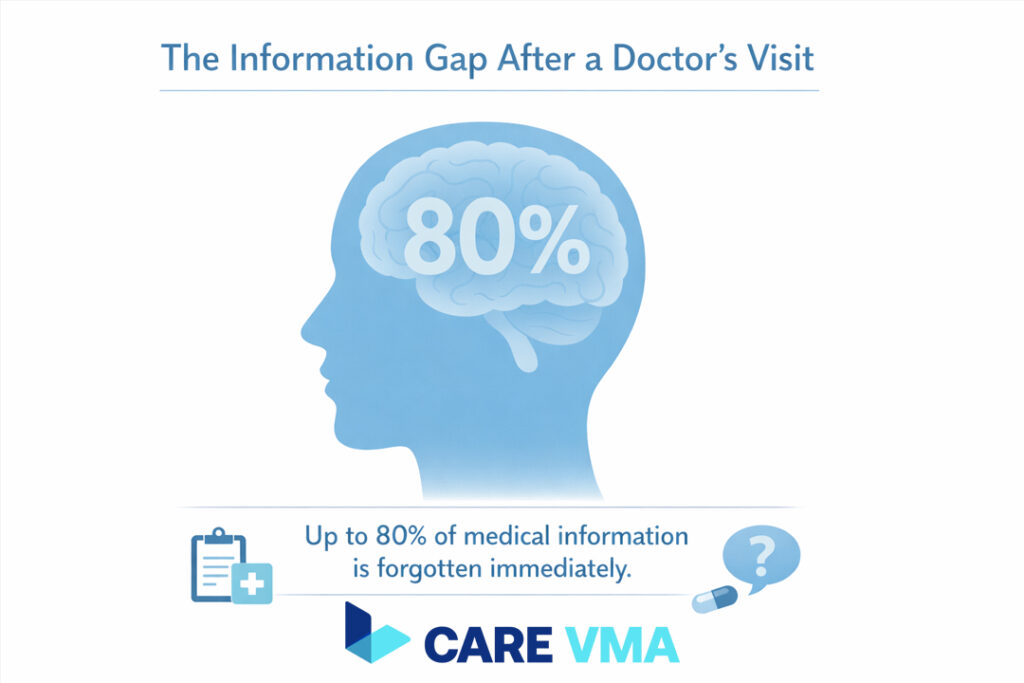
You just left the doctor’s office. There’s a sense of relief, but it’s mixed with a cloud of confusion. A new diagnosis, unfamiliar medication names, and a complex care schedule are swirling in your head. If you feel overwhelmed, you are not alone. Research shows that patients can forget up to 80% of the medical information a doctor provides almost immediately after an appointment. This anxiety is real, but it doesn’t have to be your reality. There are systematic ways to ensure your care at home is safe, effective, and free from uncertainty.
Patient education and post-visit care is the crucial process where healthcare providers give clear information and instructions to patients and their families after a consultation or hospital stay. The goal is to ensure complete understanding, proper medication adherence, and the best possible recovery outcomes at home.
Why Remembering Doctor’s Instructions Is So Hard?
It is not a personal failing to feel lost after a medical appointment. The environment and circumstances are often working against our ability to retain information. Understanding why it happens is the first step toward overcoming it.
Information Overload in a Stressful Situation
A doctor’s visit is inherently stressful. You are worried about your health, which makes it difficult to process new information. When a physician explains a diagnosis, treatment plan, and lifestyle changes all at once, your brain experiences information overload and simply cannot store everything effectively.
Confusing Medical Jargon
Doctors are experts in their field, but they can sometimes use complex medical terms without realizing it. Words like “hypertension,” “titration,” or “nephropathy” can be confusing, and if you don’t understand the language, you can’t be expected to remember the instructions tied to it.
The Shocking Statistics: 40-80% of Information is Instantly Forgotten
The numbers are staggering. Studies consistently show that a large portion of medical advice is forgotten the moment a patient leaves the clinic. Of the information that is remembered, nearly half is recalled incorrectly. This gap between what is said and what is heard is a major risk to patient safety.
Effective Communication Methods During the Consultation
You can take an active role in your care by using simple communication strategies during your appointment. This empowers you to leave the office with clarity and confidence, especially when it comes to supporting a loved one.
The ‘Teach-Back’ Method: Asking Your Doctor to Confirm Your Understanding
The Teach-Back method is a proven technique to ensure clear communication. Instead of your doctor asking, “Do you have any questions?” you take the lead. It is not a test of your memory but a way to check how well the doctor explained the information.
You can say something like: “To make sure I have this right, I’m going to repeat back what I need to do. I should take this one pill every morning, and watch out for…” This invites the doctor to correct any misunderstandings. The Agency for Healthcare Research and Quality (AHRQ) promotes Teach-Back as a key strategy for patient safety.
Don’t Be Afraid to Ask Questions: Prepare a List in Advance
Walking into an appointment with a pre-written list of questions can be a game-changer. It ensures you don’t forget your most pressing concerns. Write down everything, from “What are the side effects of this medication?” to “When can I expect to feel better?”. No question is too small when it comes to your health.
Involve a Family Member or Caregiver
Managing a health condition is often a team effort. Bringing a family member or trusted friend to your appointment provides a second set of ears. This caregiver can take notes, ask clarifying questions you might not think of, and help you recall the instructions later at home. This support system is invaluable for a smooth recovery. A dedicated virtual patient care coordinator can also act as a central point of contact, ensuring everyone on the care team is aligned.
Your Home Care Guide: The Post-Visit Checklist
Once you are home, having reliable documents and clear plans is essential. These tools serve as your guide and safety net, removing guesswork from the recovery process.
Always Ask for Your ‘After-Visit Summary’ (AVS)
An After-Visit Summary is your official, written record of the appointment. It is your single source of truth. The AVS should include your diagnosis, a list of medications with dosages and schedules, follow-up appointment dates, and contact information for the clinic. Always review it before you leave and make sure it matches what you discussed.
Managing Your Medication Schedule Without Mistakes
Create a simple system for managing medications. Use a weekly pill organizer, set daily alarms on your phone, or use a medication reminder app. Cross-reference your pills with the AVS to ensure you are taking the correct dosage at the right time.
Recognizing ‘Red Flags’: When to Call the Doctor Immediately
Your AVS should list specific symptoms or “red flags” that require immediate medical attention. These could be things like a fever over a certain temperature, shortness of breath, or unusual pain. Knowing these signs ahead of time allows you to act quickly and prevent complications.
Care VMA’s Modern Solutions: Technology for Easier, Safer Care
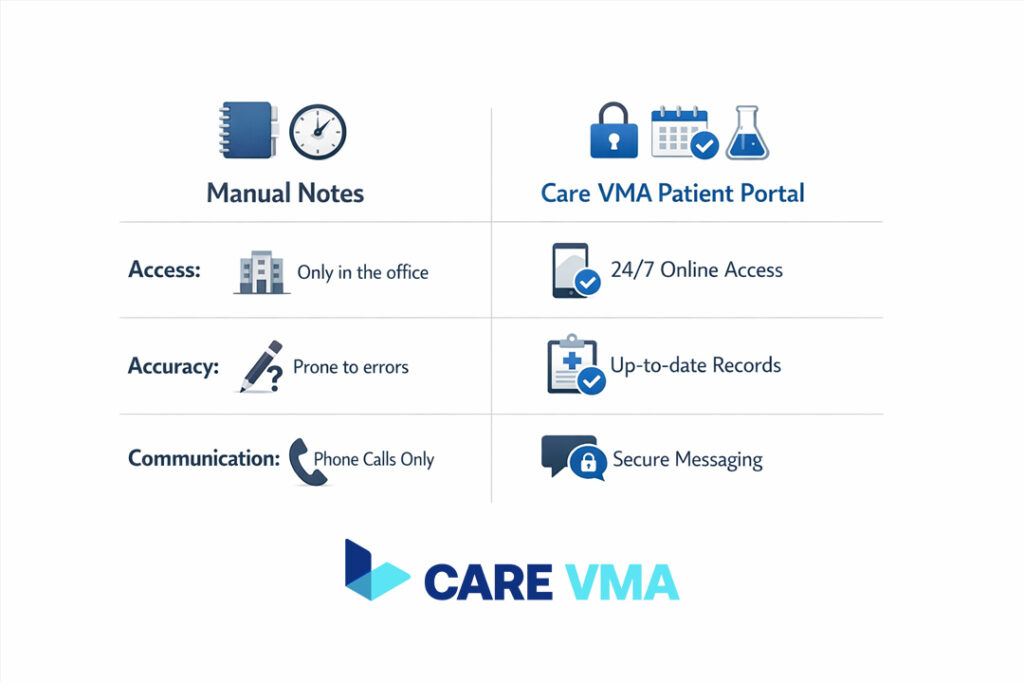
Technology is revolutionizing post-visit care, bridging the gap between the clinic and your home. At Care VMA, we integrate these tools to provide peace of mind and better health outcomes for patients and their families.
Patient Portals: Your Digital Home for Health Records
A patient portal is a secure online website that gives you 24-hour access to your personal health information. Features like reviewing lab results, reading your doctor’s notes, and sending direct messages to your care team reduce the risk of lost information and empower you to manage your health proactively. This constant access is a key factor in improving patient engagement and interactions.
Automated Check-ins: We Remind You, So You Can Focus on Recovery
Our systems can send automated reminders via text or email for medication times and upcoming appointments. These gentle nudges help you stay on track with your treatment plan without adding more stress, allowing you to focus completely on getting better.
Remote Patient Monitoring (RPM): Watching Over Chronic Conditions from Home
For patients with chronic conditions like diabetes or high blood pressure, Remote Patient Monitoring (RPM) provides an incredible layer of security. The benefits of remote patient monitoring include transmitting vital health data from your home directly to your medical team. This allows them to monitor your condition in real-time and intervene before a problem becomes serious, offering tranquility to both you and your loved ones. It is a modern approach to improving patient outcomes with effective chronic care management.
FAQ (Patient’s Common Questions)
What should I do if the instructions on my AVS are different from what I remember?
Always follow the written instructions on the After-Visit Summary (AVS). The AVS is the official medical record of your visit. If you are still uncertain or concerned, contact your doctor’s office or use your patient portal to send a secure message for clarification.
What if I live alone? Who can help me manage my care?
Living alone doesn’t mean you are without support. Leverage technology like medication reminder apps and calendar alerts on your phone. Inform your care team about your situation; they may connect you with community resources or home health services. Services like a Remote Patient Monitoring team can also provide an extra layer of oversight.
Is it safe to use third-party health apps to track my medical data?
Always prioritize using the official patient portal provided by your healthcare facility, like Care VMA, as it offers the highest level of security and is HIPAA compliant. If you choose to use other apps, carefully read their privacy policies to understand how your data is being stored and used.
Conclusion & Next Steps
Feeling confused after a doctor’s visit is a normal human response, but it is not something you have to navigate alone. By using proactive communication tools like the Teach-Back method, involving caregivers, and leveraging modern technology, you and your family can confidently manage your health journey. You have the power to turn medical uncertainty into empowered action.
Don’t let important information slip through the cracks. Experience the peace of mind that comes with integrated post-visit care. A Virtual Patient Care Coordinator from Care VMA can help organize appointments, clarify instructions, and ensure your entire care team is on the same page. Learn more about how we can support your recovery today.