Outbound Referral Management is the complete process a healthcare provider uses to direct a patient to an external specialist or facility. It encompasses every step from referral initiation and prior authorization to ensuring the final consultation note is received, a critical workflow for maintaining network integrity and preventing revenue loss. This process, when managed poorly, can lead to significant financial strain and fractured patient care, but a streamlined approach can transform it into a pillar of operational strength.
Every time a patient is referred out, your practice risks losing thousands in downstream revenue. Manual processes, endless phone tags for prior authorizations, and a lack of follow-up create significant “referral leakage.” This isn’t just an operational headache; it’s a $150 billion annual problem for U.S. health systems, according to industry reports. Your staff is burned out on administrative tasks, and patient care continuity is suffering because up to 50% of referrals never “close the loop.”
What if you could plug this leak not with more complicated software, but with a dedicated, expert-driven service that manages the entire process for you? A solution that ensures revenue is recaptured and your team is freed up to focus entirely on patients. This guide explores how to achieve that, based on extensive data and proven workflow strategies.
The High Stakes of Outbound Referrals: Why a Broken Workflow Is Costing You Millions

It’s easy to view a single lost referral as a minor issue, but the cumulative effect is a massive financial drain. When a patient leaves your network for specialty care, you’re not just losing the consultation fee; you’re losing all the high-value downstream revenue associated with their care journey.
Here’s the thing: referral leakage is the silent profit killer in modern healthcare.
- Financial Impact: The numbers are staggering. On average, a single physician can lose between $800,000 and $971,000 per year in potential revenue when patients go out-of-network for procedures, imaging, and follow-up care. Nationally, this leakage siphons an estimated $150 billion from U.S. hospital systems annually. This isn’t theoretical money; it’s the tangible cost of surgeries, lab work, and physical therapy that your health system fails to capture.
- Clinical Impact: Beyond the balance sheet, a broken referral workflow has serious consequences for patient health. When a primary care physician (PCP) doesn’t receive a consultation note, a critical information gap is created. This can lead to delayed diagnoses, redundant testing, and poorer clinical outcomes. Research published by the National Institutes of Health (NIH) highlights that these communication failures are a major threat to care continuity.
- Operational Impact: Your administrative team feels the strain most acutely. The archaic system of faxes, voicemails, and manual data entry is incredibly inefficient. It burns out valuable staff, pulling them away from patient-facing activities and bogging them down in low-value, repetitive tasks that erode morale and productivity.
Anatomy of a Flawless Outbound Referral: The 6 Critical Steps
At first glance, sending a patient to a specialist might seem simple. But in reality, a successful referral is a multi-stage journey where a single misstep can break the entire chain. Understanding these steps is the first move toward fixing the process.
- Referral Initiation (The Order): This begins in the Electronic Health Record (EHR) when the provider creates an order, specifying the reason for the referral, the required specialty, and the urgency. The problem here is often incomplete or inaccurate initial information.
- Specialist Matching (The Right Fit): This is more than just finding a doctor. It involves verifying the specialist is in-network with the patient’s insurance, checking their location and availability, and considering current wait times. A poor match leads to patient frustration and out-of-network leakage.
- Prior Authorization (The Great Bottleneck): Here’s where most processes grind to a halt. This step involves getting approval from the patient’s insurance payer, a task notorious for long hold times, complex paperwork, and high denial rates. This is the single greatest administrative burden in the referral workflow. Our guide on insurance verification and prior authorization dives deeper into this challenge.
- Packet Transmission (The Handoff): The referring practice must send a complete “referral packet” containing patient demographics, clinical history, and relevant test results. Incomplete packets are a primary reason for delays and rejected appointments by the specialist’s office.
- Patient Engagement (The Follow-Up): Sending the referral isn’t enough. Someone must ensure the patient actually schedules the appointment. Without proactive follow-up, many patients fall through the cracks, either forgetting to call or feeling overwhelmed by the process.
- Closing the Loop (The Confirmation): The process is only complete when the specialist’s consultation note is received and uploaded back into the patient’s chart. This confirms the appointment happened and provides the referring physician with the crucial information needed for ongoing care management.
Can Technology Alone Solve The Problem? The Promise and Limits of Software
Many health systems turn to referral management software, hoping for a magic bullet. And to be fair, technology has made strides. Standards like the 360X Protocol, which uses Direct Secure Messaging, have improved the ability of different EHRs to “talk” to each other, creating better visibility.
But what most people don’t realize is that software is only half the solution.
- The Promise (What Software Does Well): Technology is excellent at automating data transfer. It can push a referral from one system to another and provide automated status updates like “Appointment Scheduled” or “Patient No-Show.” This is a massive improvement over the fax machine.
- The Limits (What Software Doesn’t Do): Technology hits a wall when a human touch is required. A software platform cannot:
- Pick up the phone and navigate a complex phone tree to argue a prior authorization denial with an insurance agent.
- Persistently follow up with a specialist’s office that forgot to send back the consultation note.
- Personally call a patient who is hesitant or confused to help them schedule their appointment.
- Manage and maintain an accurate directory of specialists and their current insurance participation.
Even with modern tools, studies have shown that only about 54% of faxed referrals—and many electronic ones—ever result in a scheduled appointment. The gap is clear: technology can’t handle the messy, human-centric tasks that cause most referrals to fail.
The Hybrid Solution: Combining Smart Tech with Human Expertise
If software alone isn’t the answer, and manual processing is unsustainable, what’s the solution? It’s a hybrid model that blends the best of both: the efficiency of technology and the problem-solving power of human expertise. This is precisely where Care VMA Health’s managed service excels.
Our HIPAA-trained Virtual Medical Assistants (VMAs) act as the dedicated “human-in-the-loop” that your software is missing. They don’t replace your systems; they supercharge them.
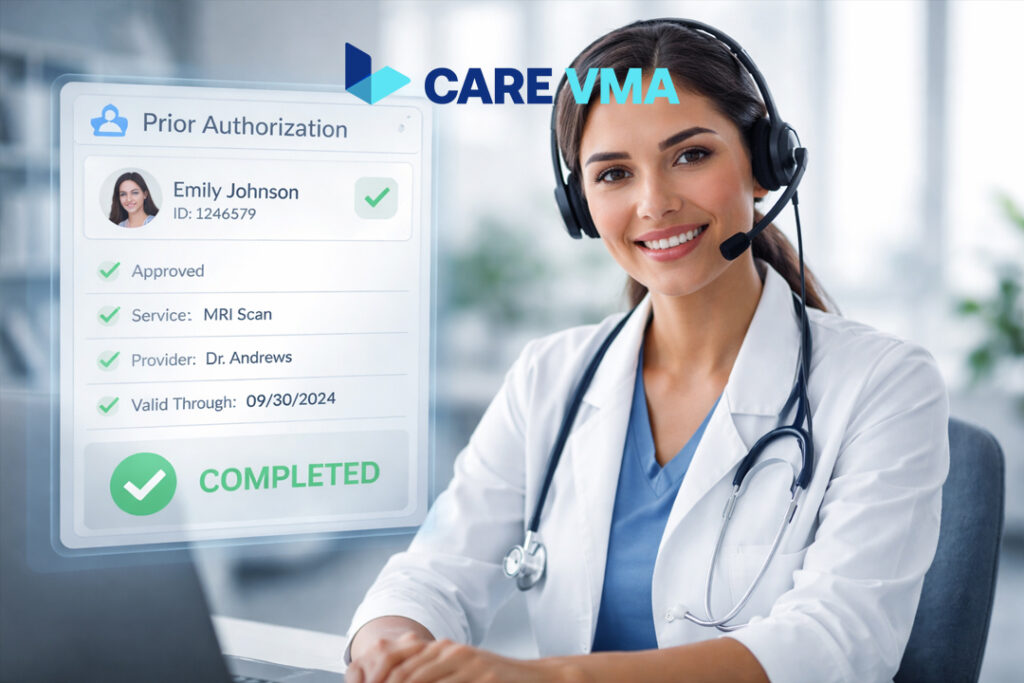
- Saving Time and Money: Our VMAs take over the 45+ minutes of administrative work per referral. That includes all the time your staff currently spends on hold with payers for prior authorization, freeing them to perform higher-value tasks and improving overall clinic workflow.
- Reducing Staff Burnout: Instead of your team chasing down paperwork, our VMAs proactively manage the entire lifecycle of a referral. They follow up with patients, coordinate with specialist offices, and ensure every loop is closed. This transforms your referral process from a source of stress into a seamless, managed operation.
- Increasing Revenue: By ensuring more referrals are completed in-network and every consultation note is received, our VMAs directly reduce referral leakage. This allows you to recapture the downstream revenue that was previously walking out your door.
Here’s a real-world use case: a referral gets an initial denial from a payer. Your referral software simply flags it with a notification. A VMA from Care VMA, however, immediately calls the payer, provides the necessary clinical documentation, and manages the appeal process until the referral is approved. That’s the difference between lost revenue and a patient getting the care they need.
Ready to See How a Managed Approach Can Transform Your Practice?
Stop letting administrative bottlenecks dictate your revenue and patient care. A dedicated Virtual Medical Assistant can handle the entire referral process, freeing up your team and securing your bottom line. Discover how Healthcare Virtual Assistants are revolutionizing clinic operations.
Calculating the ROI: How a Managed Service Pays for Itself
Investing in a managed service isn’t a cost center; it’s a direct path to a stronger bottom line. The return on investment is clear, tangible, and measurable across three key areas.
- Recaptured Revenue: This is the most significant financial win. By reducing referral leakage by just 10%, a typical practice can recapture tens or even hundreds of thousands of dollars in downstream revenue annually. We can help you analyze your data to pinpoint this exact potential.
- Administrative Efficiency: Calculate the cost of your staff’s time spent on referrals. Every hour they are on hold with an insurance company is a direct labor cost with zero return. Outsourcing this work to Care VMA provides immediate, predictable savings and allows you to reallocate your most valuable resource—your people—to patient care.
- Improved Clinical Outcomes (for Value-Based Care): For organizations in value-based care models, efficiency is directly tied to quality. A faster, more reliable referral process leads to quicker diagnoses, reduced emergency department visits, and better performance metrics. This isn’t just good for patients; it’s essential for thriving under modern reimbursement models like those discussed in effective chronic care management.
Best Practices for Implementing a Successful Outbound Referral Process
Whether you use a managed service or are looking to improve your current system, adopting these best practices will create a more robust workflow.
- Maintain an Accurate Specialist Directory: An outdated directory is a primary cause of failed referrals. Regularly verify which specialists are in-network for your primary payers and keep notes on their availability and sub-specialties.
- Standardize the “Referral Packet”: Create a checklist for every referral to ensure all necessary documents—demographics, insurance info, clinical notes, and relevant labs—are included every time.
- Adopt a Patient-Centered Communication Approach: When a referral is made, give the patient a clear, simple summary of who they are seeing, why, and what the next steps are. Empowering the patient reduces their anxiety and increases the likelihood they will follow through.
Further Reading: Optimizing Your Clinic’s Operations
Optimizing your referral workflow is the first step. Learn more about how to increase efficiency in other critical areas:
- Related Article: The Ultimate Guide to Prior Authorization [Link to be inserted]
- Related Service: See how our Referral Management Service can take 100% of this workload off your team, starting today.
Frequently Asked Questions
What is the main cause of referral leakage?
The primary cause of referral leakage is a combination of inefficient processes, administrative hurdles like prior authorization, and a lack of systematic follow-up with patients to ensure they schedule appointments. As a result, patients either never see a specialist or choose a provider that is out-of-network.
How do you “close the loop” in a patient referral?
“Closing the loop” means ensuring the referral process is fully completed. This officially happens when the referring provider receives a consultation note from the specialist, confirming the patient was seen and summarizing the findings and treatment plan.
What is the difference between inbound and outbound referral management?
Outbound referral management is the process of sending a patient out of your practice to another specialist or facility. In contrast, inbound referral management is the process of handling patients who have been referred into your practice from other healthcare providers.
Stop Letting Broken Referrals Break Your Bottom Line
It’s time to stop accepting referral leakage as a cost of doing business. The constant administrative burden and lost revenue are not inevitable—they are the result of an outdated, broken process. By combining smart technology with dedicated human expertise, you can transform referral management from a frustrating cost center into a powerful driver of revenue and quality patient care.
Ready to see how much revenue your practice could be recapturing? Don’t let another patient—or another dollar—slip through the cracks. It’s time to fix the leak for good.