You became a doctor to heal people, not to spend an additional four hours staring at a computer screen after your practice closes. The relentless demand of Electronic Health Record (EHR) documentation has become a significant source of physician burnout. A Virtual Medical Assistant (VMA) is a specialized remote professional who handles these administrative burdens, clinical documentation, and patient management, allowing doctors to focus entirely on efficient, high-quality medical care. This shift doesn’t just reduce stress; it fundamentally restores the time needed for meaningful patient interaction.
This content is for informational purposes regarding medical practice management and does not constitute legal or operational medical advice without professional consultation.
The Administrative Crisis in Modern Medicine
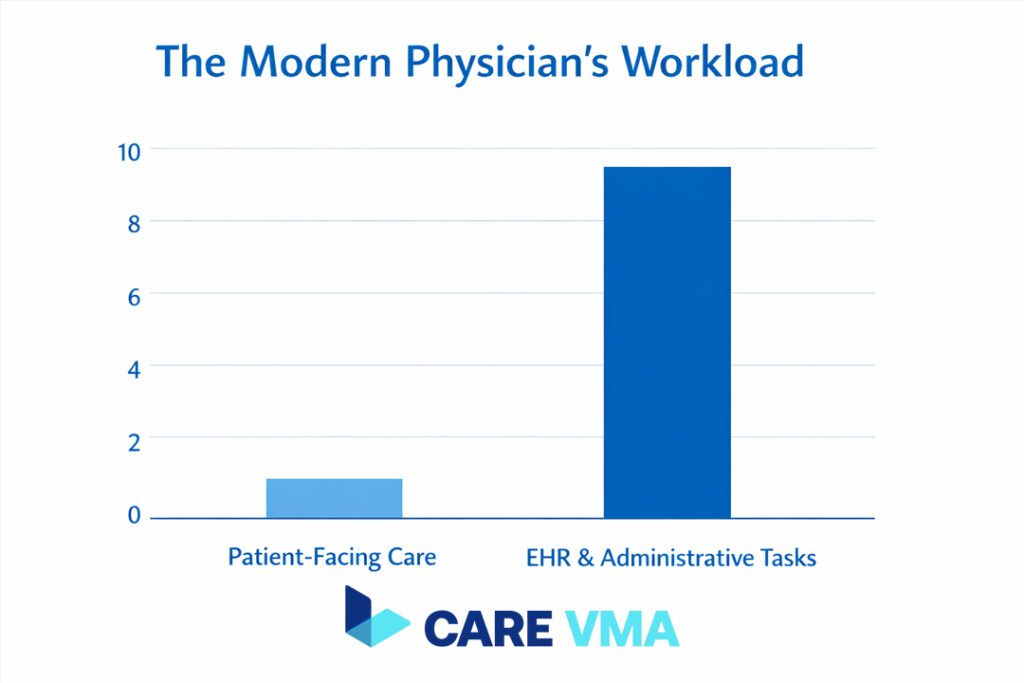
The modern medical landscape is defined by a paradox: technology designed to streamline care has created an overwhelming administrative load. Physicians now spend between 15 to 20 hours per week on administrative tasks, a significant portion of which is dedicated to EHR data entry. This “pajama time” spent charting after hours directly contributes to burnout, reduces career satisfaction, and pulls focus away from the primary mission of patient care. The cost is measured not just in hours, but in the quality of care and the well-being of our healthcare providers.
Elevating Healthcare Efficiency Through Care VMA
True efficiency in a clinical setting is not about working faster, but about working smarter. It means delegating the right tasks to the right professionals to optimize the entire clinic workflow. Care VMA reclaims valuable physician time by integrating seamlessly into your practice to manage critical, time-consuming processes. This includes services like real-time medical scribing during patient encounters, managing the complexities of prior authorizations, and coordinating patient referrals to ensure continuity of care. Evidence supports this model; a study published in the Journal of General Internal Medicine found that documentation support can reduce physician burnout by as much as 50 percent. By handling these essential duties, our VMAs empower doctors to operate at the top of their license. Understanding the full scope of administrative and clinical tasks your medical VAs can handle is the first step toward transforming your practice.
Why Modern Doctors Need a Virtual Assistant in 2026?
In an increasingly competitive healthcare market, integrating a Virtual Assistant is no longer a luxury but a strategic necessity. Practices that leverage VMAs gain a significant competitive edge through enhanced operational speed, improved EHR data accuracy, and the ability to scale their operations without the substantial overhead costs of hiring in-house staff and expanding physical office space. This model provides the agility needed to adapt to the post-pandemic standards of healthcare delivery, where efficiency and patient experience are paramount.
Data Security and HIPAA Standards in Virtual Services
A primary concern for any practice considering a virtual partnership is the security of Protected Health Information (PHI). We built our entire system with this at the core. Care VMA ensures unwavering HIPAA compliance through a multi-layered security protocol. This includes military-grade encryption for all data transmission, secure VPN access for our assistants, and regular, rigorous audits of our infrastructure. Our VMAs undergo extensive training not just on their administrative roles but on the critical importance of data privacy, ensuring your patients’ information and your practice’s integrity are protected at all times.
Enhanced Patient Satisfaction Through Face-to-Face Focus
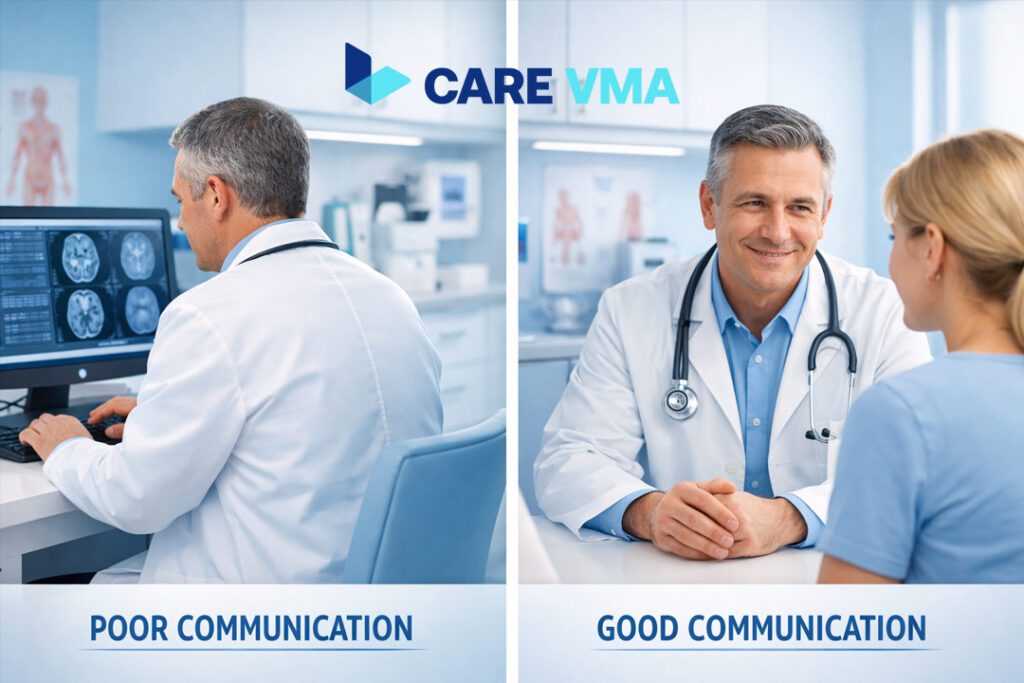
When a physician is liberated from the screen, the quality of patient interaction transforms. Patients feel more heard, understood, and valued when their doctor can maintain eye contact and engage in conversation without the distraction of constant typing. This focus on the human connection directly impacts patient satisfaction scores (HCAHPS) and builds the trust that is foundational to effective healthcare. By offloading the documentation burden to a real-time VMA, you are not just improving your own workflow; you are investing in a better patient experience. This approach is central to improving patient engagement and fostering long-term loyalty.
FAQ (Frequently Asked Questions from Doctors)
Is the Care VMA service completely secure and HIPAA compliant?
Yes, absolutely. The entire Care VMA infrastructure uses military-grade encryption and strict data access protocols that are audited regularly to ensure 100 percent HIPAA compliance.
How does a VMA integrate with the EHR system I already use?
Our VMAs are trained on various major EHR platforms, including Epic, Cerner, and Athenahealth. They work through a secure VPN connection to perform real-time data input directly into your existing system with minimal disruption.
How long does it take to see efficiency results?
Most clinics report significant time savings of up to 2-3 hours per physician per day within the first week after the initial workflow integration is complete.
Conclusion and Your Next Step
Elevating healthcare efficiency is no longer an option—it is essential for the survival and success of the modern medical practice. The path to overcoming administrative burnout and reclaiming your passion for medicine does not require more hours in the day; it requires a smarter, more strategic workflow. Care VMA acts as your dedicated clinical workflow partner, providing the support you need to shift your focus from paperwork back to your patients.
Reclaim your valuable time today. Schedule a free 15-minute Strategic Consultation with Care VMA’s expert team to optimize your clinic’s workflow. Take the first step toward a more efficient and fulfilling practice with a Virtual Medical Assistant.