Disclaimer: This article provides information on healthcare management and operations. It is not intended as medical or financial advice.
Every claim denial notification feels like a direct hit to your practice’s cash flow. Denial Management is the reactive process of appealing claims already rejected, while Denial Prevention is the proactive strategy of ensuring claims are paid on the first submission through advanced analysis and technology. The endless cycle of manual appeals not only consumes your team’s valuable time but also delays revenue you have rightfully earned. What if you could stop these financial fires before they even start? The key is to shift your entire approach from reactive to proactive.
This guide outlines a modern strategy for 2026, transforming your revenue cycle from a source of stress into a pillar of financial stability.
Dissecting the Root Cause: Why 90% of Denials Are Preventable?
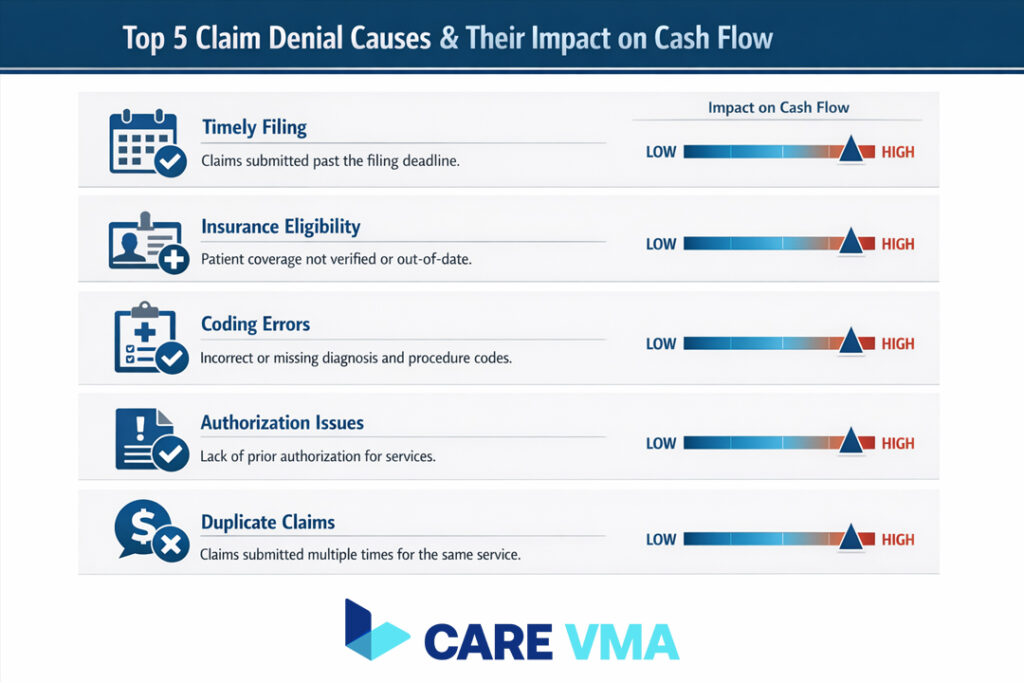
The fundamental difference between denial management and prevention lies in timing. Management is the costly process of correcting mistakes after the fact. Prevention is the efficient strategy of building a system that avoids those mistakes in the first place. According to industry analysis from sources like the American Health Information Management Association (AHIMA), up to 90% of all claim denials are preventable, stemming from administrative or process errors, not clinical disputes.
This means the majority of your lost revenue is due to correctable issues within your workflow.
Common Denial Causes Eroding Your Profit
- Registration and Eligibility Verification Errors: Simple data entry mistakes, such as a misspelled name or an incorrect policy number, are among the most frequent reasons for rejection.
- Incomplete or Invalid Information: A claim with missing fields, invalid diagnosis codes, or lack of provider details will be immediately returned by payers.
- Failure to Obtain Prior Authorization: Many procedures require pre-approval from the insurer. Overlooking this step results in an almost certain denial, a problem that specialized insurance verification and prior authorization support can solve.
- Duplicate Claims or Exceeding Filing Deadlines: Submitting the same claim twice or missing a payer’s timely filing window leads to unnecessary administrative work and lost revenue.
- Lack of Medical Necessity: This complex denial occurs when the payer’s system does not see a clear link between the diagnosis and the treatment provided, often due to weak clinical documentation.
The Reactive Strategy: A 5-Step Guide to Effective Denial Management
Before you can build a proactive system, you must efficiently handle the denials you currently face. Mastering this reactive process shows operational competence and provides the data needed for future prevention. This is where many practices burn out staff, highlighting how medical virtual assistants reduce burnout by taking over these repetitive tasks.
Step 1: Rapid Identification and Categorization
Immediately sort incoming denials based on remittance advice. Group them by payer, reason code, and dollar value. This allows you to prioritize high-value claims that can be quickly resolved.
Step 2: Root Cause Analysis
For each denial category, dig deeper. Was it a front-desk registration error? A coding mistake? A recurring issue with a specific payer? Answering these questions is critical for your prevention strategy.
Step 3: Correction and Resubmission
For simple administrative errors, correct the claim and resubmit it through your clearinghouse as quickly as possible. Track these resubmissions diligently to ensure they are processed.
Step 4: Formal Appeals for Clinical Denials
Denials based on medical necessity require a formal, evidence-based appeal. This involves gathering supporting clinical documentation, physician notes, and a formal letter explaining why the service was necessary.
Step 5: Tracking and Trend Analysis
Use a dashboard or tracking system to monitor the status of all appealed and resubmitted claims. Analyze this data monthly to identify patterns that will inform your long-term prevention efforts. The cost of this rework is significant, with industry estimates placing the cost to rework a single claim between $25 and $118.
Care VMA’s Modern Solution: Shifting to Proactive Denial Prevention
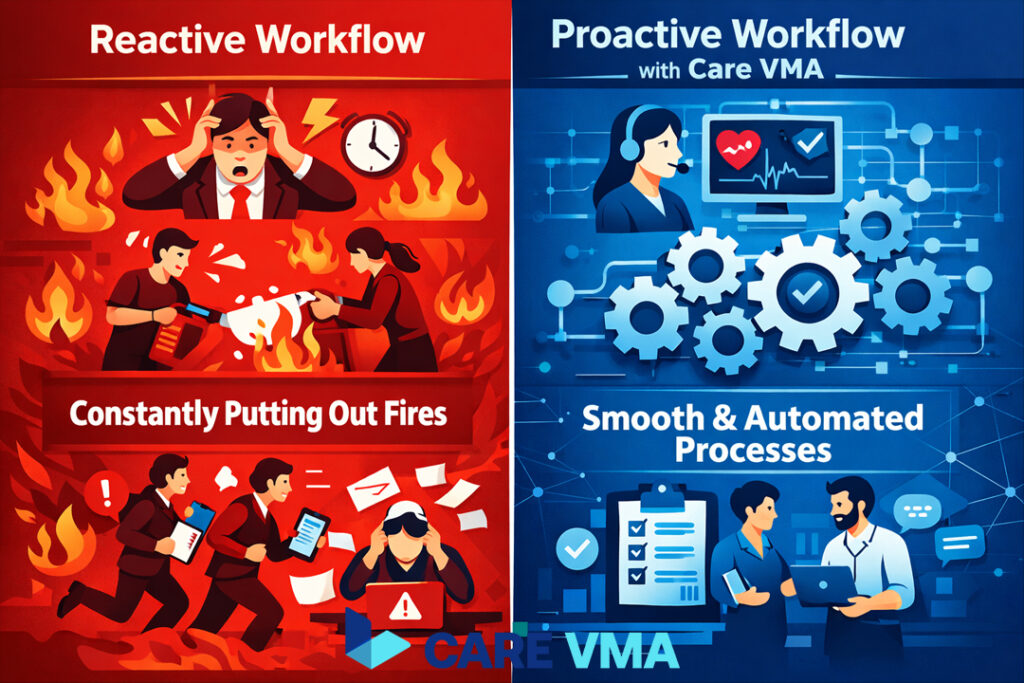
Continuously managing denials is like running on a treadmill—it uses a lot of energy but gets you nowhere new. The future of RCM is prevention, using technology to build a “clean claims” engine. This proactive approach is the core of modern revenue integrity.
Foundation: Real-Time Eligibility Verification
The first line of defense is ensuring patient insurance information is accurate before any service is rendered. Modern systems integrate with payers to verify coverage in real-time, flagging inactive policies or coverage limitations instantly. This single step eliminates a huge percentage of common administrative denials.
Automation of Prior Authorization
Instead of relying on manual checklists, AI-driven platforms can automatically scan scheduled services and flag those that require prior authorization from the patient’s specific payer. The system can even initiate the authorization request, freeing up your staff’s time for more complex tasks.
The Power of AI-Driven Clinical Documentation Improvement (CDI)
Denials for “medical necessity” are the most difficult to fight. AI-powered CDI tools assist clinicians by analyzing their notes in real-time. The system can prompt for more specificity or suggest additional details needed to justify a diagnosis or treatment, ensuring the documentation is robust enough to satisfy payer requirements from the start. This process can be supported by a trained professional who understands what a medical scribe does to ensure accuracy.
Predictive Analytics: Stopping Denials Before They Happen
This is the next frontier. Unlike simple claim scrubbers that check for errors after the fact, predictive analytics platforms analyze your historical data to identify high-risk claims before they are even submitted. The system might flag a claim based on the payer, the procedure codes used, or the patient’s history, alerting your team to review it for potential issues. Our clients have successfully reduced denial rates by up to 40% with proactive RCM implementation.
FAQ (Common Questions from Practice Managers)
Is an AI-based RCM solution too expensive for a small practice?
No. Our service models are scalable to your practice’s size. The investment is often recouped quickly through improved cash flow, reduced administrative costs for appeals, and capturing previously lost revenue.
How long does it take to implement a new prevention system?
Our onboarding process is designed for efficiency, with a target for initial implementation within a few weeks. The Care VMA team supports you at every stage to ensure a smooth transition with minimal disruption to your daily operations.
How do we convince our clinical team to adapt to a CDI program?
We focus on the benefits for clinicians: it reduces future requests for additional information and ensures they are properly compensated for the care they provide. Our platforms are designed to be intuitive and integrate seamlessly into existing EHR workflows.
Conclusion & Your Next Step
Managing claim denials is no longer just an administrative task; it is a core strategy for the financial health of your practice. It is time to stop reacting to financial fires and start building a fire-resistant revenue cycle with a proactive, technology-driven approach.
Do not let denied claims dictate your cash flow. Schedule a free “RCM Health Check” with our specialists to identify the weak points in your revenue cycle. See how a dedicated Medical Billing Virtual Assistant from Care VMA can transform those weaknesses into strengths.