![Patient Engagement: Medical VAs & AI in 2026 [The Guide]](https://carevmahealth.com/wp-content/uploads/2024/09/Patient-Engagement-1024x683.jpg)
Disclaimer: This guide is intended for healthcare professionals, practice managers, and administrators. It is for informational purposes and does not constitute medical advice for patients.
Are your clinical staff drowning in administrative tasks? The constant juggle of scheduling, reminders, and patient queries leads to burnout, while patient no-shows and the demand for instant digital access strain your practice’s efficiency and bottom line. This administrative overload doesn’t just impact your team; it risks diminishing the quality of patient care. The solution lies in strategic technological adoption. Medical virtual assistants (VAs) and artificial intelligence (AI) are technologies transforming patient interactions in 2026 by automating administrative tasks and providing 24/7 support, allowing clinical staff to focus on high-value care.
The 2026 Challenge: Balancing Technology and The Human Touch
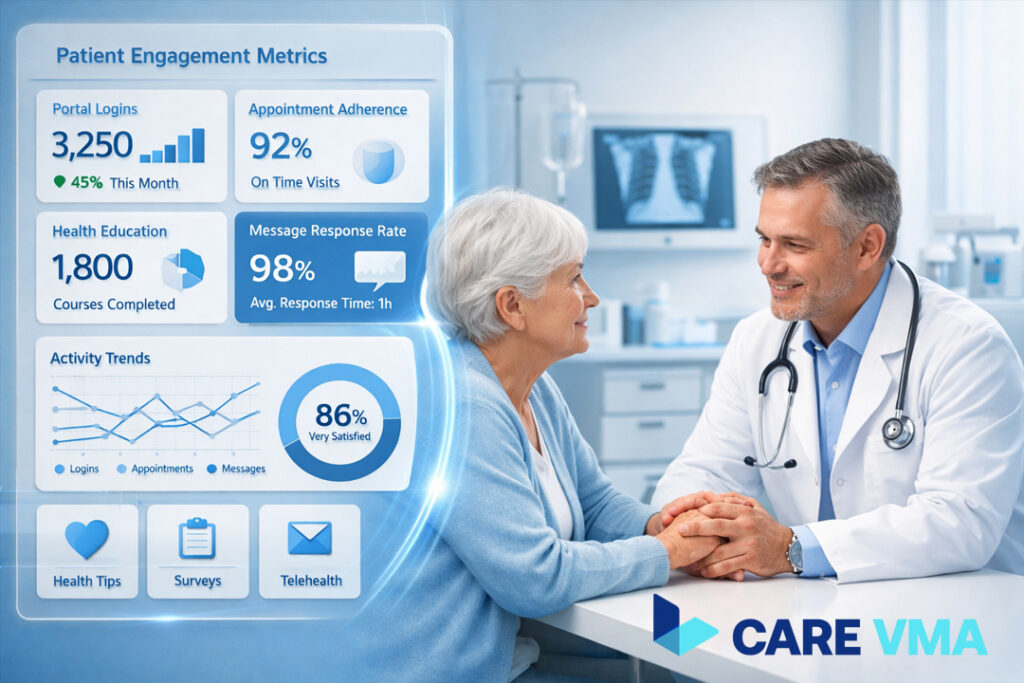
The modern healthcare landscape presents a significant dilemma: how to leverage powerful new technologies without losing the essential human connection that underpins patient trust. While AI offers unprecedented efficiency, it’s crucial to remember that patients still value human interaction. According to recent industry data, a staggering 88% of patients prefer to receive medical information directly from their doctor over an AI system. This highlights a critical market sentiment-technology should not be a replacement for clinicians, but an enhancement. At Care VMA, we design our solutions to augment your practice, empowering your team to deliver more focused, empathetic care by automating the tasks that get in the way.
“In the digital age, our greatest challenge is not just to implement new tools, but to integrate them in a way that amplifies the physician-patient relationship. The right technology frees clinicians to do what they do best: care for people.” – Healthcare Innovation Expert
8 Ways Medical VAs & AI Are Revolutionizing Patient Interactions in 2026
In 2026, the synergy between Medical VAs and AI is not just a concept but a practical reality that redefines patient engagement. By automating workflows and personalizing communication, these technologies address the core operational challenges faced by modern practices.
Proactive Support and 24/7 Patient Access
Patients’ questions don’t adhere to a 9-to-5 schedule. AI-powered VAs provide round-the-clock support, answering common queries about appointments, preparation instructions, and office logistics. This instant access reduces patient anxiety and decreases inbound call volume, freeing up your front-desk staff.
Automation of Tedious Administrative Tasks
Repetitive tasks like appointment scheduling, rescheduling, and sending reminders are primary drivers of administrative burden. Medical VAs automate this entire sequence. This not only ensures a streamlined process but also significantly impacts your bottom line. For instance, one medical center reported a 47% increase in digital bookings after implementing an AI chatbot. By taking over these duties, VAs allow your team to achieve true clinic workflow optimization and focus on more complex patient needs.
Personalized Patient Communication and Education
Generic, one-size-fits-all communication is no longer effective. AI analyzes patient data to deliver personalized educational content, pre-visit instructions, and post-procedure follow-ups. This tailored approach improves health literacy and ensures patients are better prepared and more engaged in their care journey.
Improved Medication Adherence and Chronic Care Management
For patients with chronic conditions, consistent management is key. Medical VAs are instrumental in sending personalized medication reminders and facilitating daily check-ins. This proactive engagement is proven to increase treatment plan adherence by up to 25%, directly improving patient outcomes with chronic care management.
Initial Symptom Checking and Intelligent Triage
Advanced VAs can perform initial symptom assessments, guiding patients to the appropriate level of care-whether it’s scheduling a routine visit, recommending urgent care, or providing self-care instructions. This intelligent triage helps manage patient flow and reduces unnecessary emergency department visits.
Real-time Data Integration from Wearable Devices
The rise of health-monitoring wearables provides a constant stream of valuable patient data. In 2026, AI systems seamlessly integrate with these devices, allowing for continuous monitoring of vital signs and early detection of potential health issues, especially for patients in remote monitoring programs.
The Evolution from Reactive Chatbots to Proactive Agentic AI
The technology has moved beyond simple, reactive chatbots. The future is proactive, “agentic AI” that detects patterns in real-time and can adapt its communication strategy. This next-generation AI learns when a patient is most responsive and can adjust its outreach timing and channels accordingly, ensuring messages are seen and acted upon.
Powering the Telemedicine 2.0 Experience
Medical VAs are the backbone of Telemedicine 2.0. They handle pre-visit intake, manage dynamic questionnaires, and provide multilingual support, creating a smoother and more efficient virtual care experience for both patients and providers.
The Care VMA Solution: Augmenting Your Team, Not Replacing It
Understanding the power of this technology is the first step. The next is implementing a solution that views technology as a tool to empower your human staff. This is the core of the Care VMA philosophy-The Augmented Practice. We don’t replace your team; we supercharge it.
From Overload to Optimized Workflow
Care VMA’s platform is engineered to directly address administrative overload. Our AI-driven assistants handle the entire patient communication lifecycle-from initial booking and reminders to post-visit follow-ups and feedback collection. This reduces manual steps, minimizes human error, and gives your staff the bandwidth to handle tasks requiring a human touch. Our solutions are a direct answer to the question of how Medical Virtual Assistants reduce burnout in practices across the country.
Measuring ROI: Clear Success Metrics with Care VMA
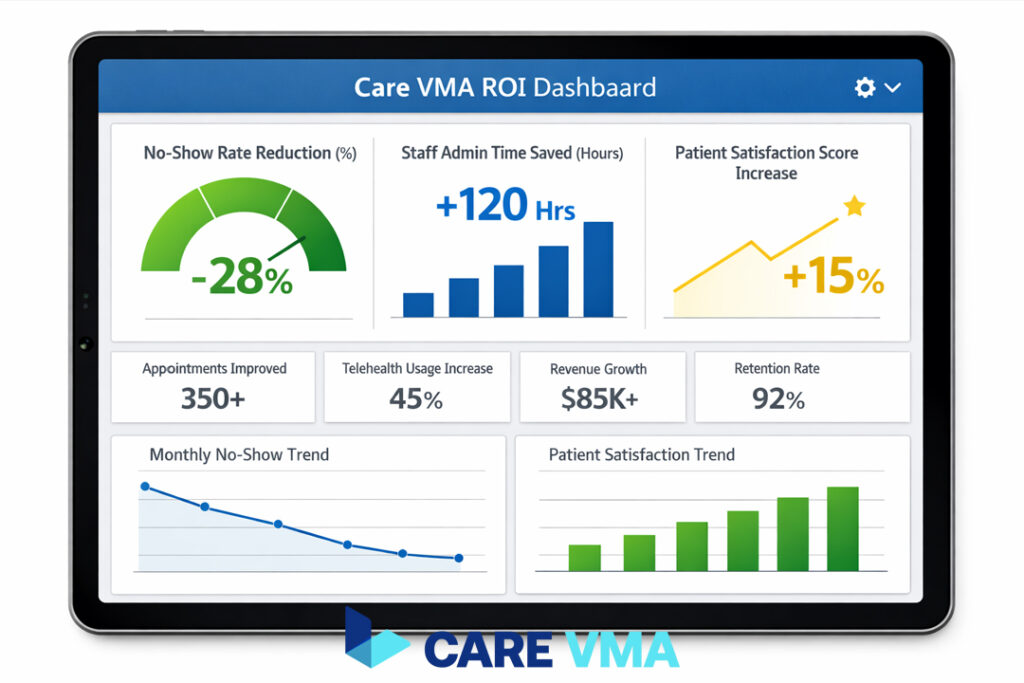
Investing in technology requires a clear return. Our platform provides a transparent analytics dashboard to track the metrics that matter most to your practice’s health:
- Lowered No-Show Rates: Quantify the revenue recovered from previously missed appointments.
- Increased Staff Efficiency: Measure the hours of administrative time saved, which can be reallocated to patient-facing activities.
- Higher Patient Satisfaction: Track patient feedback scores to see the direct impact of improved communication and accessibility.
Building Patient Trust by Freeing Up Doctor’s Time
By automating the administrative noise, Care VMA gives your most valuable asset-your doctors-more time. This time can be reinvested into what truly builds patient trust and loyalty: longer, more in-depth consultations, thoughtful follow-ups, and the capacity to handle complex cases with undivided attention. Our technology strengthens the doctor-patient relationship by removing the barriers that stand in its way.
FAQ: Implementing Medical VAs in Your Practice
Is patient data secure when using AI and virtual assistants?
Absolutely. Care VMA is built on a foundation of security and compliance. We adhere strictly to HIPAA regulations and employ robust security measures, including end-to-end data encryption and strict access controls, to ensure all patient health information is protected.
How long does it take to integrate the Care VMA system?
Our integration process is designed to be seamless and minimally disruptive. Depending on the complexity of your existing EMR and workflow, a typical implementation can be completed in a matter of weeks. Our dedicated implementation team provides full support to ensure a smooth transition for your practice.
Will my patients feel like they are talking to a robot?
Modern conversational AI is designed to be natural and empathetic. Furthermore, our system is designed to handle routine, predictable requests (like “What time is my appointment?”). This ensures that when a patient has a more complex or sensitive issue, a human member of your team is available and ready to provide the nuanced, empathetic care they deserve.
Conclusion & Next Steps
In 2026, embracing intelligent automation is no longer about staying ahead of the technological curve; it’s about delivering the most efficient and patient-centric care possible. Delaying adoption means overlooking an opportunity to streamline your operations, reduce staff burnout, and dedicate more quality time to the human side of medicine. Medical VAs and AI are the keys to unlocking a future where your practice runs more smoothly and your patient relationships are stronger than ever.
Ready to reduce administrative workload and elevate your patient interactions? Schedule a free demo of the Care VMA platform and see how our proactive AI can transform your practice in 2026. Discover our Virtual Medical Assistant Services today.